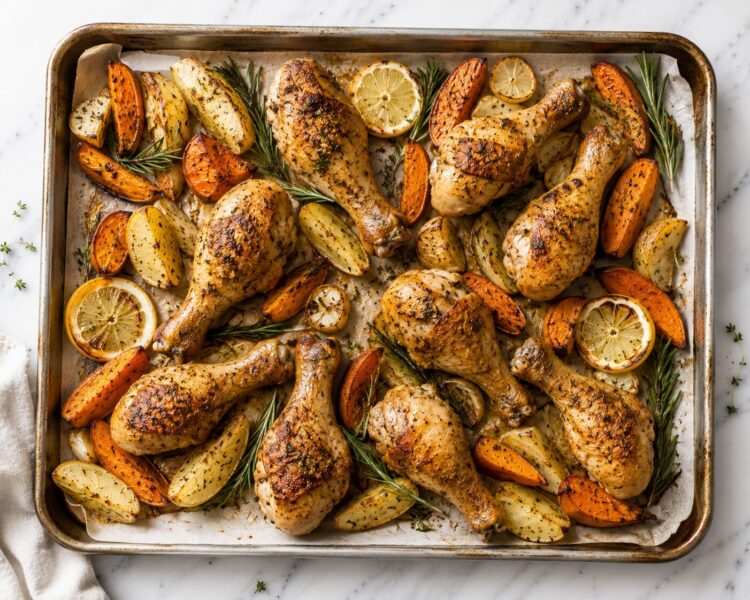
There is a particular kind of weeknight dinner that earns its place in the permanent rotation — not because it is impressive enough for a dinner party or photogenic enough for social media, though it is certainly both of those things. It earns its place because it is genuinely useful. The kind of dinner that solves Tuesday.
Sheet Pan Lemon Garlic Chicken Legs and Potatoes is that dinner.
One pan. One marinade. Thirty-five minutes in the oven. No babysitting, no stirring, no flipping. The oven does every bit of the work while you do whatever you actually need to do — help with homework, take a phone call, sit down for ten minutes of quiet, or simply stand in the kitchen and smell something incredible happening without any effort from you.
The lemon-garlic marinade is the recipe’s heart. Built from fresh lemon juice, lemon zest, minced garlic, smoked paprika, cumin, ground coriander, dried oregano and thyme — it is a spice blend that reads as distinctly Mediterranean but works across cuisines and palates. The lemon zest is what separates this marinade from a generic garlic-herb coating: zest contains the volatile essential oils of the lemon peel that are far more intense and more aromatic than juice alone, and they perfume the chicken deeply during the marination period in a way that transforms the finished dish.
The result is chicken with genuinely crispy, deeply golden skin; juicy, tender meat that falls from the bone; and alongside it, roasted potato and sweet potato wedges that have absorbed the spiced, lemony drippings from the chicken above them and crisped at the edges into something that is worth eating on their own.
This guide gives you the complete recipe with all the expert details — including the cuts that matter, why the marination time is genuinely important, how to manage a potato and sweet potato on the same tray, and the complete answers to every question that comes up with this style of baked chicken dinner.
Why This Recipe Belongs in Your Regular Weeknight Rotation
Before the recipe details, the case for why this specific combination of technique and flavour earns consistent placement in a busy household:
No flipping required. Unlike most roasted chicken recipes that recommend turning the pieces halfway through cooking, this recipe produces evenly browned, properly cooked chicken without any mid-cook intervention. The high temperature (230°C / 446°F) creates enough ambient oven heat that the chicken cooks and colours on all sides without repositioning.
One pan, minimal cleanup. Line the sheet pan with parchment paper before assembling. After dinner, the parchment lifts out with the mess in it, and the pan itself needs only a quick rinse. Weeknight dinner with Monday-morning cleanup levels of effort.
The marinade is transferable. Once you have made this lemon-garlic marinade, you will discover it works with almost everything — chicken thighs, whole spatchcocked chicken, vegetables, lamb chops. Learning this recipe means learning a versatile spice profile that earns its way into dozens of other dishes.
High protein for the calories. Each serving provides 32.9 grams of protein at 467 calories — a genuinely strong macronutrient profile for a dinner that tastes this indulgent. The bone-in, skin-on drumstick format provides significantly more flavour than boneless skinless chicken at the same calorie level.
Meal-prep ready. The marinated chicken and potatoes can be assembled the night before and refrigerated until cooking time. Leftovers keep for three days in the refrigerator and reheat well in the oven. This is a recipe that makes two days of eating from one cooking session.
Understanding the Ingredients: Why Each One Matters
Chicken: Why Bone-In, Skin-On Is the Right Choice
The recipe specifies bone-in, skin-on chicken drumsticks — and this is not a casual suggestion. It is the fundamental specification that makes the recipe work the way it does.
The bone retains and radiates heat during cooking, which means the meat around the bone cooks from the inside out as well as from the outside in. The result is more evenly cooked meat that is less likely to dry at the exterior before the interior is fully done.
The skin serves two purposes. During roasting, the fat beneath the skin renders slowly, basting the meat from above as it liquefies. This natural self-basting keeps the meat moist despite the high cooking temperature. The skin itself crisps in the oven heat, creating the golden, slightly caramelised exterior that makes properly roasted chicken drumsticks worth making from scratch.
The drumstick shape is ideal for a sheet pan dinner because the natural curvature of the piece means it sits elevated from the pan surface — air circulates underneath as well as around it, helping all surfaces brown more evenly than a flat piece of chicken would.
If you prefer to use bone-in thighs or whole chicken leg quarters (thigh and drumstick attached), the recipe works identically — increase cooking time by 5-8 minutes for quarters.
The Lemon-Garlic Marinade: Breaking Down Each Component
Lemon juice and zest together: The juice provides acidity that begins gently denaturing the surface proteins of the chicken, creating a slightly more porous surface that absorbs the oil and spices more readily. The zest provides intensity: the essential oils in the peel contain the most concentrated lemon flavour available — far stronger and more complex than juice alone. Using both is not redundant; they contribute different things.
10-12 garlic cloves, minced: This is a generous quantity — and intentionally so. The marination period mellows raw garlic significantly, developing it from sharp and pungent to deep and sweet-savoury by the time cooking begins. By the end of 35 minutes at 230°C, the garlic has become slightly caramelised and nutty. Do not reduce this quantity significantly; it is the other pillar of the flavour profile alongside lemon.
Smoked paprika vs regular paprika: Smoked paprika contributes a subtle woodsmoke quality that is part of what makes this marinade taste more complex than the ingredient list suggests. Regular paprika works as a substitute — it provides colour and mild sweetness — but the smoky dimension is noticeably absent. Seek out smoked paprika if you do not already have it; it is one of the most versatile flavour additions a pantry can hold.
Ground cumin and coriander: These two spices work together as the earthy, warm base note of the marinade. Cumin provides the distinctive warm, slightly bitter earthiness; coriander adds a lighter, slightly citrus-floral note that bridges the lemon and the cumin. Together, they give the marinade its Mediterranean character.
Dried oregano and thyme: The herb component of the Mediterranean flavour profile. Dried herbs work better than fresh in marinades that are meant to marinate overnight or for extended periods — fresh herbs can oxidise and develop an off flavour during prolonged contact with acid. Both oregano and thyme are also heat-stable enough to survive the high-temperature oven roasting without burning.
Olive oil (3 tablespoons, divided): Two tablespoons go into the marinade; one is drizzled over the assembled sheet pan before roasting. The oil carries the fat-soluble flavour compounds (from garlic, paprika, and herbs) and ensures they are distributed across every surface of every chicken piece and potato wedge. Olive oil’s fruity character also complements the lemon particularly well.
Potatoes and Sweet Potatoes
The recipe uses a combination of regular potatoes and sweet potatoes — an inspired pairing that produces two different but complementary textures and flavours on the same tray.
Regular potatoes develop crispy, golden edges and a fluffy interior that absorbs the chicken and spice drippings magnificently. Sweet potatoes caramelise more quickly at the edges (their natural sugar content causes more pronounced Maillard browning) and develop a softly sweet interior that contrasts beautifully with the savoury, spiced chicken.
The size caveat: Some varieties of sweet potatoes cook faster than regular potatoes. If your sweet potatoes are particularly small or soft-fleshed, cut them into slightly larger wedges than the regular potato pieces to compensate. Alternatively, add the sweet potato wedges to the tray 10 minutes after the regular potatoes, allowing the regular potatoes a head start.
Full Ingredients List (Serves 6)
Chicken
- 12 bone-in, skin-on chicken drumsticks (or 6 bone-in skin-on thighs, or 6 chicken leg quarters)
First Seasoning
- 1½ teaspoons salt
- ½ teaspoon black pepper
Lemon Garlic Marinade
- 10-12 garlic cloves, finely minced
- 1 large lemon — juice extracted + zest finely grated (separately)
- 1½ teaspoons chili powder — adjust to heat preference
- 2 teaspoons ground coriander
- 1 teaspoon ground cumin
- 1 teaspoon smoked paprika (or regular)
- ½ teaspoon dried oregano
- 1 teaspoon dried thyme
- 3 tablespoons olive oil (2 for the marinade, 1 for drizzling over the pan)
Vegetables
- 2 medium regular potatoes, peeled or unpeeled, cut into thick wedges
- 2 medium sweet potatoes, peeled, cut into thick wedges
- ½ teaspoon salt (for the potatoes)
Step-by-Step: How to Make Sheet Pan Lemon Garlic Chicken Legs and Potatoes
Step 1 — Prepare and Salt the Chicken (30 minutes refrigerator time)
Clean the chicken drumsticks under running water. Pat completely dry with kitchen paper. Using a sharp knife, make 2-3 diagonal cuts across the thickest part of each drumstick, cutting down to the bone. These cuts serve a specific purpose: they allow the marinade to penetrate the thickest part of the meat rather than only coating the surface, and they allow the bone-adjacent meat to reach safe temperature more reliably.
Season all the drumsticks evenly with 1½ teaspoons salt and ½ teaspoon black pepper, rubbing it into the cuts as well as the exterior. Arrange in a large bowl or deep dish, cover, and refrigerate for 30 minutes. This first seasoning draws a small amount of moisture to the surface, which then gets reabsorbed during the rest period, carrying the salt deeper into the meat — a simple technique borrowed from brining without any of the equipment.
Step 2 — Make the Lemon Garlic Marinade
While the chicken rests in the refrigerator, prepare all the marinade components. Mince the garlic as finely as possible — large garlic pieces can burn at the high roasting temperature, turning bitter. Fine mincing ensures it caramelises evenly rather than scorching.
Zest the lemon before juicing it — once the lemon is cut and juiced, zesting becomes awkward and you lose most of the zest. Use a microplane or the fine side of a box grater. Collect the zest and juice separately.
Combine all the marinade ingredients — garlic, lemon zest and juice, all the spices and herbs, and 2 tablespoons of olive oil — into a smooth, well-mixed paste.
Step 3 — Marinate (2 hours minimum, overnight maximum)
Remove the salted drumsticks from the refrigerator. Pour the marinade over the chicken and toss thoroughly, working the mixture into the cuts you made and beneath the skin as much as possible. Getting marinade under the skin is the most impactful action you can take for flavour — the spices in direct contact with the meat surface produce incomparably more depth than spices sitting only on top of the skin.
Cover the bowl tightly with cling film or transfer to a zip-lock bag. Refrigerate for a minimum of 2 hours. For a more flavourful result, marinate overnight — up to 12 hours. Beyond that, the lemon acid begins to affect the meat’s texture negatively.
The 30-minute rule before cooking: Remove the marinated chicken from the refrigerator 30 minutes before it goes into the oven. Room-temperature chicken (relative to refrigerator temperature) enters the oven at a more even baseline and cooks more uniformly from the start. Cold chicken from the refrigerator cooks unevenly — the exterior over-colours before the interior reaches a safe temperature.
Step 4 — Prepare the Potatoes
Preheat the oven to 230°C / 446°F with a rack positioned in the upper-middle section. Allow the oven to preheat fully — a minimum of 15-20 minutes at this temperature to ensure the cavity is genuinely at the stated temperature before food enters.
Cut the regular potatoes into thick wedges — approximately 2cm wide at the thickest point. Cut the sweet potatoes slightly thicker (or into larger pieces) if they are a soft-fleshed variety. Add the potato and sweet potato wedges to the bowl with the marinated chicken, season with ½ teaspoon salt, and toss everything together until the wedges are coated with the residual marinade. The potatoes do not need a separate marinade — the spiced marinade residue on the chicken is more than enough to season them.
Step 5 — Assemble the Sheet Pan
Line a large rimmed baking sheet with parchment paper. If you have 12 drumsticks plus 4 potatoes worth of wedges, you will likely need two sheet pans — do not overcrowd. Single-layer arrangement is essential for both the chicken and the potatoes; pieces stacked on each other steam rather than roast.
Arrange the chicken drumsticks across the lined pan, angled so they maximise surface area exposure. Distribute the potato and sweet potato wedges around and between the chicken pieces. Drizzle the remaining 1 tablespoon of olive oil over the entire pan.
Step 6 — Roast at High Temperature (30-35 minutes, no flipping)
Place the sheet pan in the preheated oven. Roast at 230°C / 446°F for 30 minutes undisturbed. No flipping the chicken, no stirring the potatoes.
The high temperature accomplishes several things simultaneously: it renders the fat beneath the chicken skin quickly (allowing it to crisp), it creates sufficient ambient oven heat to cook the underside of the chicken through convection rather than direct pan contact, and it caramelises the sugars in both the marinade and the sweet potato rapidly.
After 30 minutes, check: the chicken should have deep, golden-brown skin with slightly darker edges. The potato wedges should be golden on the exposed surfaces and caramelised at the thinner edges. If the chicken looks pale or the skin has not fully crisped, return to the oven for 5 more minutes.
The doneness test: Insert an instant-read thermometer into the thickest part of the largest drumstick, ensuring it does not touch the bone. The internal temperature must read at least 74°C / 165°F for food safety. Alternatively, cut through to the bone at the thickest point — the meat should show no pink at all, and the juices should run clear.
Step 7 — Rest and Serve
Remove the sheet pan from the oven and allow the chicken to rest for 5 minutes before serving. This rest period allows the muscle fibres — which contract under high heat — to relax and reabsorb the juices that have been pushed toward the surface during cooking. Chicken cut immediately after leaving the oven loses a visible amount of juice; chicken rested for 5 minutes stays noticeably juicier.
Making It a Complete Mediterranean Dinner
The sheet pan chicken and potatoes is a complete protein-and-carbohydrate meal, but it becomes a full Mediterranean dining experience with a few quick additions:
The essential accompaniment:
- Greek yogurt dill sauce (tzatziki): The cooling tartness of yogurt with cucumber and dill against the warmly spiced chicken is the perfect complement. Takes 5 minutes to assemble while the chicken rests.
For colour and freshness:
- Simple tomato-cucumber-herb salad: Diced cucumber, cherry tomatoes, red onion, fresh parsley, lemon juice, and olive oil. The acidity of this salad cuts through the richness of the chicken skin.
- Roasted red pepper salad: Char, peel, and slice red peppers, dress with garlic and vinegar. Mediterranean and beautiful.
For a more substantial spread:
- Feta paprika dip: Crumbled feta blended with roasted peppers, paprika, and olive oil. Serve with pita or flatbread alongside.
- Couscous or bulgur wheat: The lemony drippings from the sheet pan stirred through cooked couscous make the grain an extraordinary side dish with almost no additional effort.
The keto adaptation: Replace the potato and sweet potato wedges with carrot sticks, thick-cut turnip wedges, and radish halves. All three hold up to high-heat roasting and absorb the marinade beautifully. Substitute butter for the finishing olive oil drizzle. The spice and chicken components require no change.
5 Variations Worth Exploring
Variation 1 — Whole Chicken Legs (Quarters)
Use 6 whole chicken leg quarters (thigh and drumstick attached) instead of 12 individual drumsticks. The same marinade, the same arrangement, the same temperature — but increase roasting time to 40-45 minutes. The larger pieces produce even juicier meat because the thigh portion is significantly fattier than the drumstick alone.
Variation 2 — Bone-In Thighs Only
Bone-in, skin-on chicken thighs produce arguably the juiciest result of any chicken cut — the thigh muscle is more intramuscularly fat-threaded than the drumstick. Cook at 230°C for 30-35 minutes. Thighs are more forgiving of slightly longer cooking times than drumsticks.
Variation 3 — Honey Lemon Garlic (Sweet Version)
Add 2 tablespoons of honey to the marinade and reduce the chili powder to ½ teaspoon. The honey caramelises during roasting, creating a beautiful lacquered, sticky-crispy skin with a sweet-sour character. Particularly popular with children.
Variation 4 — Za’atar Mediterranean Version
Replace the cumin and coriander with 2 tablespoons of za’atar spice blend (a Middle Eastern herb-spice mix of dried thyme, oregano, sesame, and sumac). Keep the lemon and garlic base identical. The sumac in za’atar adds a fruity sourness that complements lemon beautifully and produces a more distinctly Levantine flavour profile.
Variation 5 — Spicy Harissa Version
Replace the chili powder, cumin, and coriander with 2 tablespoons of harissa paste (Tunisian spiced chili paste). The harissa contains its own spice blend and provides deeper, more complex heat than plain chili powder. Reduce the olive oil in the marinade by 1 tablespoon since harissa already contains oil.
Storage, Meal Prep, and Reheating
Refrigerator
Cool the chicken and potatoes completely before storing. Transfer to an airtight container in the refrigerator for up to 3 days. The flavours actually deepen overnight as the spices continue to develop in the fat.
Reheating
Oven method (best for maintaining crispness): Arrange on a sheet pan and reheat at 180°C / 355°F for 12-15 minutes until heated through. The skin will regain most of its crispness.
Microwave (quick but soft skin): 2-3 minutes covered on medium power. The skin will soften; acceptable if crispness is not a priority.
Freezer
Both the chicken and the potatoes freeze well for up to 1 month. Cool completely, wrap individual portions in cling film, and place in a zip-lock freezer bag. Thaw overnight in the refrigerator and reheat in the oven.
Make-ahead meal prep option: Marinate the chicken and cut the potatoes up to 24 hours in advance. Store separately (the potatoes in cold water to prevent browning; drain and dry before cooking). Assemble the sheet pan just before roasting.
Nutrition Information (Per Serving — 2 drumsticks + potato portion, 1 of 6)
| Nutrient | Amount | % Daily Value |
|---|---|---|
| Calories | 467 kcal | — |
| Protein | 32.9g | 66% |
| Fat | 23.1g | 36% |
| Saturated Fat | 5.2g | 33% |
| Carbohydrates | 32.3g | 11% |
| Fiber | 5.2g | 22% |
| Sugar | 4.3g | 5% |
| Potassium | 1008.8mg | 29% |
| Vitamin A | 11,097 IU | 222% |
| Vitamin C | 27.2mg | 33% |
| Iron | 3.1mg | 17% |
| Calcium | 78.8mg | 8% |
The vitamin A content (222% DV) is primarily from the sweet potato; the high potassium (29% DV) from the combination of chicken, potato, and sweet potato. At nearly 33g protein per serving, this is a genuinely high-protein dinner that supports muscle maintenance and satiety.
Frequently Asked Questions
Q1. Do you need to flip the chicken when baking chicken legs in the oven?
No — and this is one of the most useful aspects of this recipe. At 230°C / 446°F, the oven’s ambient heat is intense enough to cook the underside of bone-in chicken drumsticks through convection without direct pan contact being necessary. The skin on the upper surface crisps from radiant oven heat. The skin on the underside crisps from pan-surface contact through the parchment. No flipping produces evenly browned, fully cooked drumsticks every time.
Q2. How do you keep baked chicken legs from drying out?
Four things prevent dry chicken in this recipe. First, the bone and skin together provide both internal heat retention (bone conducts and radiates heat evenly) and external fat self-basting (rendering skin fat bastes the meat). Second, the lemon juice in the marinade briefly denatures surface proteins before cooking, creating a surface that seals moisture in more effectively. Third, the high temperature (230°C) produces a rapid crust that locks internal moisture before it can escape. Fourth, resting the chicken for 5 minutes after cooking allows muscle fibres to relax and reabsorb internal juices. Avoid any of these and the chicken will be drier.
Q3. Should you bake chicken legs covered or uncovered?
Uncovered — for this recipe and for skin-on chicken legs generally. Covering traps steam, which prevents the skin from crisping and instead produces a soft, slightly flabby skin and pale exterior. The whole advantage of bone-in, skin-on chicken is the skin — covering it defeats the purpose. Boneless, skinless chicken breasts (which have no fat protection and can dry out quickly) benefit from partial covering; skin-on legs do not need it at any point.
Q4. How do you tell when chicken drumsticks are fully cooked?
The most reliable method is an instant-read meat thermometer inserted into the thickest part of the drumstick without touching the bone — it should read at least 74°C / 165°F. Visual indicators that suggest doneness (though should be confirmed by thermometer): skin is deeply golden and crispy; juices run clear with no pink when the meat is cut to the bone; no visible pink at the bone when you make a cut to the deepest point.
Q5. Can I use just potatoes without sweet potatoes?
Yes, absolutely. The sweet potato adds colour, natural sweetness, and nutritional variety (particularly the extraordinary Vitamin A content — 222% DV per serving comes almost entirely from sweet potato), but the recipe works entirely well with regular potato wedges alone. Use 4 medium regular potatoes cut into thick wedges to maintain the same overall volume of vegetables. The flavour is excellent; you simply lose the sweet-savoury contrast that makes the mixed version particularly interesting.
The Dinner That Makes Itself While You Do Something Else
The sheet pan dinner format exists to solve a real problem: the gap between wanting to cook genuinely good food and having the time and energy to stand at the stove executing it. This recipe fills that gap completely.
Make the marinade in the morning or evening before. Let the chicken sit overnight while you sleep. Come home tomorrow, cut the potatoes, assemble the pan, slide it into the oven, and 35 minutes later serve something that smells like a restaurant kitchen and tastes like you have been cooking for hours.
That is the actual value of a recipe like this — not just that it is good, but that it is good within the real constraints of a real week.
Make this recipe and share your results below! Tell us which chicken cuts you used, whether you tried the honey-lemon variation or the za’atar version, and whether anyone at the table asked for seconds before the first plate was finished. We especially want to hear from anyone who managed the overnight marinade — the flavour difference at full marination is worth knowing about.
Pairs perfectly with: Greek Yogurt Tzatziki | Cucumber Tomato Salad | Roasted Garlic Sauce | Couscous | Pita Bread | Feta Dip
Also explore: Air Fryer Chicken Tikka | Butter Chicken | Sheet Pan Roast Vegetables | Tandoori Chicken | Mediterranean Chicken Shawarma