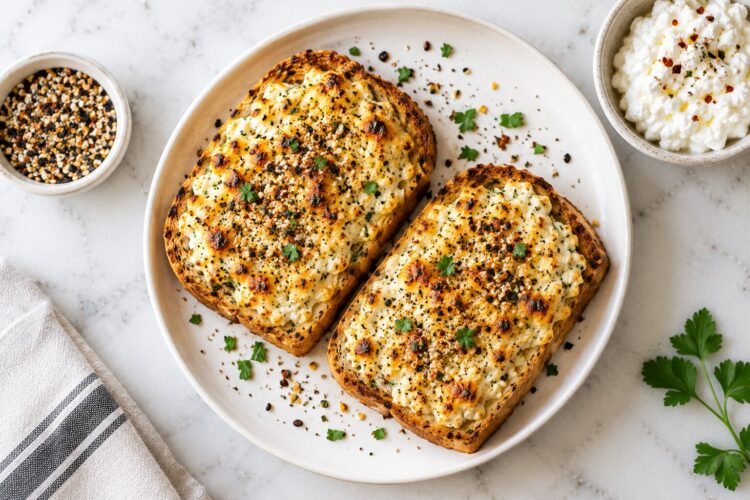
There are high-protein breakfasts that require forty minutes, a blender, and a level of morning motivation most people simply don’t have. And then there is cottage cheese toast — which requires two slices of bread, half a cup of cottage cheese, one egg, and twelve minutes from start to finish.
This is not cottage cheese spread on toast (though that is also excellent). This is something better: a mixture of cottage cheese and egg, seasoned and spread thick over sturdy bread, then baked or air-fried until the top turns golden and the filling sets into something custardy, savory, and genuinely filling. It is the kind of breakfast that keeps you satisfied until lunch without any of the mid-morning energy crash that comes from cereal or plain toast.
At 27 grams of protein per serving and under 300 calories, cottage cheese toast has earned its reputation as one of the most efficient high-protein breakfasts you can make at home. This guide covers the full recipe, the science of why it works, every variation worth trying, and answers to every question you might have before making it for the first time.
Why Cottage Cheese Toast Became a Breakfast Phenomenon
Cottage cheese has been a staple of high-protein diets for decades — bodybuilders, athletes, and nutrition-conscious eaters have long known that it packs more protein per calorie than almost any other dairy food. But for years, it had an image problem. It was seen as bland, textured, and a bit retro — something your grandmother ate on a diet in the 1970s.
The combination of cottage cheese with eggs on toast changed that narrative completely. The egg, when baked with the cottage cheese, acts as a binder that transforms the lumpy, wet texture of raw cottage cheese into something smooth, custardy, and deeply satisfying. The heat of the oven or air fryer browns the surface and creates a slight crust that contrasts with the creamy interior. The result looks and feels like something deliberate and delicious — not a diet food.
Here is why this breakfast stands out nutritionally:
| Nutrient | Per 2-Slice Serving |
|---|---|
| Calories | 295 kcal |
| Protein | 27g |
| Carbohydrates | 28g |
| Fibre | 3g |
| Fat | 8g |
| Cholesterol | 191mg |
| Sodium | 783mg |
27 grams of protein before 9am — from a recipe that takes 12 minutes — is genuinely difficult to beat. For context, a large chicken breast contains approximately 31g of protein. A Greek yoghurt parfait typically delivers 15-18g. Two scrambled eggs on toast provide around 14-16g. Cottage cheese toast sits comfortably at the top of the fast-breakfast protein rankings.
Ingredients (Serves 1)
| Ingredient | Amount | Notes |
|---|---|---|
| Bread (sturdy variety) | 2 slices | Whole wheat, sourdough, or high-protein bread |
| Cottage cheese | ½ cup | Full-fat or low-fat; full-fat produces richer result |
| Egg | 1 large | Acts as binder; essential for set texture |
| Everything bagel seasoning | 1 tsp | Or any seasoning of your choice |
Choosing the Right Bread
The bread you choose matters more in this recipe than in most toast applications. Because the cottage cheese and egg mixture is wet and heavy, a thin or soft bread will become soggy before the filling has time to set and brown properly.
Best options:
- Sourdough — dense, chewy crumb holds the topping well; the slight tang pairs beautifully with the mild cottage cheese
- Whole wheat sandwich bread — accessible, fibre-rich, and sturdy enough for the topping
- High-protein bread — if you want to push the protein content even further, several commercially available high-protein breads add 5-10g protein per slice
- Dave’s Killer Bread, Ezekiel bread, or any seeded loaf — all work excellently; the seeds add texture contrast
Avoid: Thin white sandwich bread, brioche, or any soft, enriched bread — these absorb the moisture from the filling before it can bake into a custardy set, producing a soggy base.
Choosing Your Cottage Cheese
Full-fat cottage cheese produces a richer, creamier, more flavourful result. The higher fat content also means slightly less moisture, which helps the topping set more evenly.
Low-fat (2%) cottage cheese works well and reduces the calorie count. The texture is slightly wetter, which may require an extra minute of cooking time.
Non-fat cottage cheese is not recommended — the extremely high water content makes it difficult to achieve a properly set, golden topping without overcooking the bread.
Small-curd vs large-curd: Small-curd cottage cheese blends more smoothly into the egg and produces a more uniform topping. Large-curd works fine but produces a slightly bumpier surface texture.
How to Make Cottage Cheese Toast: Step-by-Step
Prep time: 2 minutes Cook time: 5-8 minutes (air fryer) or 10-15 minutes (oven) Total time: 12 minutes Serves: 1
Step 1 — Mix the Topping
In a small bowl, combine:
- ½ cup cottage cheese
- 1 large egg
- 1 teaspoon everything bagel seasoning (or your chosen seasoning)
Stir vigorously with a fork for 30-45 seconds until the egg is fully incorporated into the cottage cheese and the mixture looks uniform. It will still be slightly lumpy from the cheese curds — this is correct.
Do not blend the mixture in a food processor or blender unless you specifically want a very smooth, pourable topping. The fork-mixed version produces a better, more textured result with visible curds that brown nicely.
Step 2 — Spread onto the Bread
Place your 2 bread slices on a flat surface. Spoon the cottage cheese mixture onto the bread and spread evenly, going all the way to the edges. Aim for a generous, approximately ¼-inch-thick layer across the entire surface of each slice.
Tip: If your mixture seems very wet (this depends on the water content of your specific cottage cheese brand), let the bread slices sit for 60 seconds after spreading to allow any excess moisture to absorb slightly before cooking.
Step 3A — Air Fryer Method (Recommended)
Preheat your air fryer to 400°F (200°C) for 3 minutes.
Carefully lift each bread slice and place it in the air fryer basket. Move slowly and keep the slices level — the topping is liquid and will slide off the edges if tilted.
Air fry at 400°F for 5-8 minutes, checking at 5 minutes. The toast is done when:
- The surface is visibly golden and slightly puffed
- The edges show light browning
- The centre no longer jiggles when you gently shake the basket
Allow to rest 1-2 minutes before eating. The filling continues to set during this rest period and will be much easier to handle.
Step 3B — Oven Method
Preheat your oven to 400°F (200°C). Place the prepared toast slices on a baking sheet lined with parchment paper.
Bake for 10-15 minutes until the topping is set and golden. The oven produces a slightly drier, more evenly cooked result than the air fryer — good if you want a firmer texture.
Optional final step: Switch the oven to broil for the final 60-90 seconds to get deeper browning on the surface. Watch carefully — it can go from golden to burnt very quickly under the broiler.
Step 3C — Toaster Oven Method
If you don’t have a full oven or air fryer, a toaster oven works well. Set to toast mode or 400°F and cook until the surface is golden brown — typically 8-12 minutes depending on your model. Watch the first time you make it, as toaster ovens vary significantly.
Pro Tips for Perfect Cottage Cheese Toast Every Time
Pre-toast the bread for a crispier base. The most common issue people encounter is a slightly soggy bottom crust. To prevent this: air fry the plain bread slices for 3-4 minutes first until lightly toasted, then add the cottage cheese topping and cook for the full time. The pre-toasted crust creates a moisture barrier that prevents sogginess.
Drain wet cottage cheese. If your cottage cheese brand is particularly watery, spoon it into a fine-mesh strainer for 5 minutes before mixing with the egg. Even a small reduction in moisture makes a noticeable difference in how well the topping sets.
Season generously. Cottage cheese is mild and the bread is neutral — under-seasoned toasts taste flat. Everything bagel seasoning is the standard choice (its combination of sesame seeds, poppy seeds, garlic, onion, and salt is ideally suited to this application), but do not be shy with the amount.
Don’t skip the rest. Pulling the toast from the oven and cutting into it immediately causes the still-liquid centre to run. Waiting 90 seconds allows the egg to fully set and makes for a much cleaner, more satisfying eating experience.
Scale up easily. This recipe scales to any number of slices — simply use a proportional amount of the cottage cheese mixture. One batch (½ cup cottage cheese + 1 egg) covers approximately 2-3 standard slices depending on bread size and how thickly you spread.
Cottage Cheese Toast Toppings & Variations
The base recipe is the foundation. What you put on top — or fold into the mixture — is where cottage cheese toast becomes truly personalised.
Savory Cottage Cheese Toast Ideas
Everything Bagel Classic (the original) Stick to the base recipe with everything bagel seasoning. Top with thinly sliced cucumber, red onion, and a few capers for a lox-inspired version without the smoked salmon.
Avocado Cottage Cheese Toast After baking, spread a layer of mashed avocado over the golden top. Add a pinch of red pepper flakes, black pepper, and a squeeze of lime. This version delivers healthy fats alongside the protein hit and makes for one of the most satisfying breakfasts in the rotation.
Caprese Style Top the baked toast with cherry tomato halves, fresh basil leaves, and a thin drizzle of balsamic glaze. The warm cottage cheese base with cool fresh toppings creates an excellent contrast.
Spinach and Garlic Fold 2 tablespoons of finely chopped sautéed spinach and ½ teaspoon of garlic powder into the cottage cheese mixture before spreading. The spinach adds colour, iron, and a mild savouriness that works especially well with sourdough bread.
Bacon and Green Onion Fold in 1 tablespoon of crumbled cooked bacon and 1 tablespoon of thinly sliced green onion. This is the most indulgent savory version and the one most likely to convert non-cottage-cheese-eaters.
Spicy Sriracha Drizzle sriracha or hot honey over the baked toast immediately before serving. The heat cuts through the richness of the cottage cheese and egg perfectly.
Sweet Cottage Cheese Toast Ideas
Berry and Honey After baking, top with fresh blueberries, sliced strawberries, or raspberries. Drizzle with honey and a pinch of cinnamon. Use a milder seasoning (just a pinch of salt) in the base mixture for the sweet version.
Cinnamon Apple Fold ¼ teaspoon of cinnamon into the cottage cheese mixture before baking. Top the finished toast with thin slices of crisp apple and a drizzle of maple syrup. This version tastes like a cross between French toast and cheesecake — in the best possible way.
Peach and Jam Top the baked toast with thin slices of ripe peach and a teaspoon of your favourite jam. Stone fruits are particularly good on cottage cheese toast because their tartness balances the mild dairy richness.
Banana and Nut Butter Add sliced banana and a thin drizzle of almond or peanut butter. This sweet version is particularly popular as a pre-workout breakfast — carbohydrates, protein, and healthy fat in one compact package.
Sweet vs Savory: Which Cottage Cheese Toast Should You Make?
| Savory | Sweet | |
|---|---|---|
| Best seasoning | Everything bagel, garlic, herbs | Cinnamon, vanilla, pinch of salt |
| Best bread | Sourdough, seeded loaf | Whole wheat, brioche-style |
| Best toppings | Avocado, veg, eggs, hot sauce | Berries, fruit, honey, maple syrup |
| Protein focus | Higher (with egg additions) | Moderate |
| Best time | Weekday breakfast, savoury brunch | Weekend brunch, sweet tooth mornings |
How Does Cottage Cheese Toast Compare to Other High-Protein Breakfasts?
| Breakfast | Approx. Protein | Approx. Calories | Time |
|---|---|---|---|
| Cottage cheese toast (this recipe) | 27g | 295 kcal | 12 min |
| Scrambled eggs on whole wheat (2 eggs) | 16g | 280 kcal | 10 min |
| Greek yoghurt parfait | 15-18g | 250-320 kcal | 5 min |
| Protein smoothie (whey-based) | 25-30g | 300-400 kcal | 5 min |
| Avocado toast with poached egg | 12-15g | 320-380 kcal | 15 min |
| Overnight oats with milk | 10-14g | 350-420 kcal | 5 min (prep night before) |
Cottage cheese toast delivers protein numbers that rival a protein smoothie while also providing fibre, complex carbohydrates, and the satiety that comes from eating actual food rather than drinking it.
Frequently Asked Questions
Q1. Can I make cottage cheese toast without an air fryer?
Absolutely. The oven method is the most reliable alternative: preheat to 400°F (200°C), place the prepared toast on a parchment-lined baking tray, and bake for 10-15 minutes until the topping is golden and set. A toaster oven also works well — set it to toast mode and watch for the surface to turn golden. The air fryer produces a slightly crispier result in less time, but both oven methods produce excellent cottage cheese toast.
Q2. Why is my cottage cheese toast soggy?
Sogginess in cottage cheese toast usually comes from one of three causes: the bread is too soft (switch to sourdough or a dense whole grain loaf), the cottage cheese is too watery (drain it briefly in a strainer before mixing, or choose full-fat), or the toast wasn’t cooked long enough (the topping needs to reach a fully golden, set surface before it stops releasing moisture). Pre-toasting the plain bread for 3-4 minutes before adding the topping is the most reliable fix.
Q3. How much protein is in cottage cheese toast?
This recipe (2 slices of whole wheat bread, ½ cup cottage cheese, 1 egg) provides approximately 27 grams of protein per serving. The protein comes primarily from the cottage cheese (approximately 14g per ½ cup) and the egg (approximately 6g), with the whole wheat bread contributing an additional 5-7g. To increase protein further, use high-protein bread, add a second egg to the mixture, or top the finished toast with a fried or poached egg.
Q4. Can I meal prep cottage cheese toast?
The cooked toast does not store or reheat well — the topping loses its custardy texture and the bread becomes tough when refrigerated and reheated. However, the uncooked mixture (cottage cheese + egg + seasoning) can be prepared the night before and kept in an airtight container in the refrigerator for up to 24 hours. In the morning, simply spread it on fresh bread and bake as directed. This makes the total morning prep time under 2 minutes.
Q5. Is cottage cheese toast suitable for weight loss?
At 295 calories and 27g of protein per serving, cottage cheese toast is very well suited to a weight-loss eating pattern. High-protein breakfasts consistently outperform lower-protein alternatives in satiety research — people who start the day with 25+ grams of protein report lower hunger scores and consume fewer calories at subsequent meals. The combination of complete protein from the dairy and egg, fibre from the whole grain bread, and the physical bulk of the toast produces lasting fullness that cereal or plain toast simply cannot match.
The High-Protein Breakfast Worth Making Every Single Morning
Twelve minutes. 27 grams of protein. Two slices of bread and a handful of pantry staples. Cottage cheese toast is the breakfast that makes high-protein eating feel effortless — not like a nutrition strategy, just like a really good morning.
Make the savory version on Monday with everything bagel seasoning and avocado. Make the sweet version on Saturday with fresh berries and honey. Make the spinach-garlic version when you want to feel particularly virtuous. The method stays the same; the possibilities are genuinely endless.
Tried this recipe? Drop your favourite topping combination in the comments below — we want to know whether you went savory with sriracha, sweet with cinnamon apple, or created something completely your own. And leave a star rating to help other readers find this recipe.
More high-protein breakfast recipes on KitchenWhisper.in:
- Mushroom Omelette – Fluffy, Spiced & Ready in 10 Min
- Air Fryer Omelette – Hands-Free Breakfast
- Air Fryer Eggs – Perfect Results Every Time