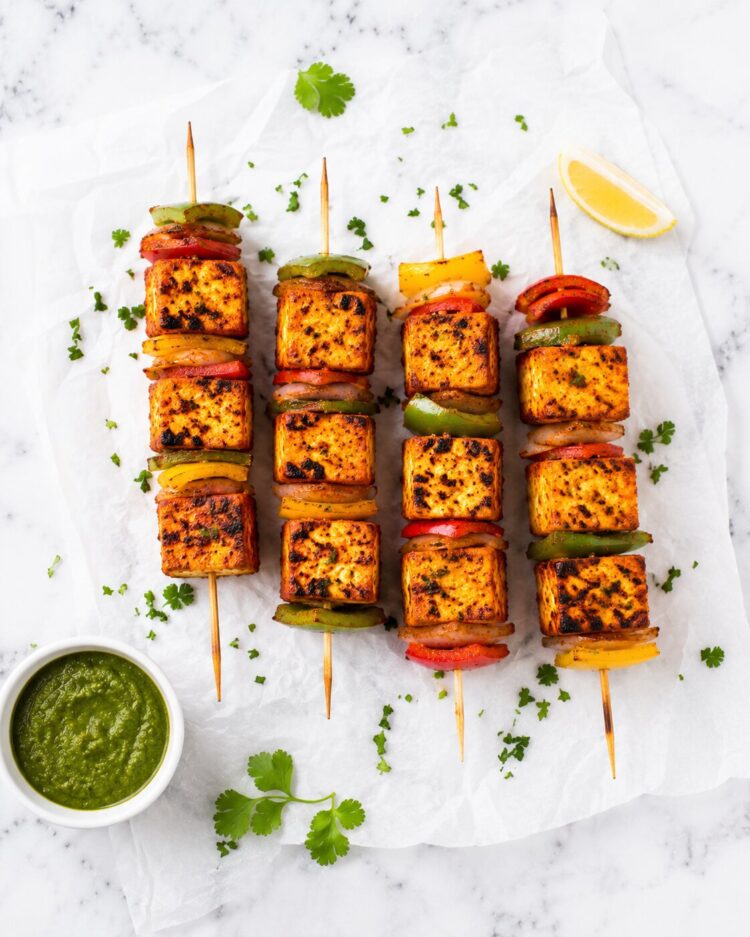
When your weight loss journey hits that particular mid-afternoon hour — around 4 PM — when you are legitimately hungry and every snack in the kitchen seems designed to undo the morning’s discipline, what you need is something that is genuinely satisfying, requires almost no preparation, and actually supports your goals rather than quietly working against them.
Paneer Tikka is that answer.
Not the restaurant version — the one that arrives glistening with butter after spending time in a 500°C tandoor with a marinade designed more for flavour than for nutritional efficiency. That version is extraordinary, but it can carry 350–450 calories per serving.
This version gives you all the authentic character — the same yogurt-spice marinade with Kashmiri red chili, the same char marks from high heat, the same smoky-spiced aroma — at approximately 180–220 calories per serving with 15 grams of protein. Yes, paneer tikka is healthy for weight loss when grilled or air-fried. It is high in protein, low in carbs, and helps keep you full for longer.
The difference is low-fat paneer, minimal oil, and a cooking method (air fryer or grill pan) that achieves authentic char without the need for a tandoor or constant basting with butter.
Why Paneer Tikka Works as a Weight Loss Snack
The Protein-Snack Advantage
Most commercial snacks — biscuits, chips, namkeen, even many fruit options — are primarily carbohydrate-based. They provide a quick energy hit that dissipates within 30–45 minutes, leaving hunger behind.
A protein-based snack like Low Calorie Paneer Tikka works completely differently. Protein triggers the release of satiety hormones (GLP-1 and PYY) while suppressing ghrelin — the hormone that produces the feeling of hunger. The result: 15 grams of protein from a serving of paneer tikka suppresses appetite for 2–3 hours, reducing total daily calorie intake without any sense of deprivation.
Low-Fat Paneer: The Calorie Revolution
The biggest calorie reduction in this recipe comes from using low-fat paneer. Low-fat paneer is one of the highest protein-to-calorie foods available, with 28g protein and only 160 calories per 100g, compared to regular paneer at 265 calories per 100g.
The protein content per 100g is actually higher in low-fat paneer (28g) than regular paneer (18–20g) — making the low-fat version not just lower in calories but also nutritionally superior for weight loss purposes.
Negligible Carbohydrate Profile
Paneer is one of the lowest-carbohydrate high-protein foods available for vegetarians. At just 1–3.5g carbohydrates per 100g, paneer tikka produces virtually no blood sugar impact, meaning:
- No post-snack insulin spike
- No fat-storage signalling
- No subsequent sugar craving
- Stable blood sugar maintained until the next meal
This makes Low Calorie Paneer Tikka suitable for diabetics, PCOS management, keto diets, and anyone following a low-carb weight loss approach.
Calorie Comparison: Low Calorie vs Restaurant Paneer Tikka
Understanding what changes — and what does not — between the restaurant version and this recipe helps you make the recipe intelligently rather than just following it mechanically.
| Component | Restaurant Version | This Recipe |
|---|---|---|
| Paneer type | Full-fat (265 kcal/100g) | Low-fat (160 kcal/100g) |
| Cooking method | Tandoor at 450°C+ | Air fryer 200°C or grill pan |
| Oil/butter used | 2-4 tbsp for basting | 0-1 tsp oil spray |
| Marinade cream | Often heavy cream | Thick low-fat yogurt |
| Calories per 150g serving | 320-450 kcal | 180-220 kcal |
| Protein per serving | 15-18g | 15-18g |
| Carbohydrates | 5-8g | 4-6g |
| Char and flavour | Tandoor-authentic | Very close — high heat creates similar result |
The protein content is virtually identical between versions — the calorie difference is entirely in fat reduction. You lose nothing nutritionally significant by switching to the low-calorie version.
Ingredients for Low Calorie Paneer Tikka (Serves 2, approximately 150g per serving)
Main Ingredient
- 200g low-fat paneer — cut into 3–4cm cubes or rectangles, approximately 2–2.5cm thick
Marinade (First Stage — 10 Minutes)
- ½ teaspoon Kashmiri red chili powder — deep colour, mild heat
- ½ teaspoon lemon juice
- ¼ teaspoon salt
Marinade (Second Stage — Main Marinade)
- 3 tablespoons thick low-fat plain yogurt (hung curd / Greek yogurt — must be thick; watery yogurt creates a marinade that runs off the paneer rather than coating it)
- 1 teaspoon ginger-garlic paste (fresh preferred)
- ½ teaspoon Kashmiri red chili powder
- ¼ teaspoon turmeric powder
- ½ teaspoon cumin powder (roasted)
- ½ teaspoon coriander powder
- ½ teaspoon garam masala
- ¼ teaspoon chaat masala
- ½ teaspoon dried fenugreek leaves (kasuri methi), crushed
- 1 teaspoon lemon juice
- ½ teaspoon oil (optional — adds a tiny amount of fat that helps browning and prevents sticking)
- Salt to taste
- A pinch of black salt (kala namak) — adds authentic tandoori character
Vegetables (Optional, Low-Calorie Additions)
- 1 medium capsicum (green, red, or yellow), cut into 3cm squares — adds negligible calories but significant Vitamin C
- 1 medium onion, cut into quarters and layers separated — adds fiber and natural sweetness
- 8–10 cherry tomatoes — optional; add in last 3 minutes only as they cook faster
For Cooking
- Oil spray — 2–3 sprays maximum; or brush 1 tsp total over the entire batch
To Serve
- Fresh coriander and mint, finely chopped
- Lemon wedges
- Green mint chutney (made with mint, coriander, garlic, green chili, lemon juice, and a pinch of salt — zero added fat, approximately 15 kcal per 2 tablespoons)
- Sliced raw onion rings (no calories, adds authentic tikka platter aesthetic)
The Two-Stage Marinade: Why It Matters
Most home recipes use a single marinade. This recipe uses two — and the distinction is important.
First stage (basic rub): Red chili, salt, and lemon juice are rubbed directly onto the paneer cubes and left for 10 minutes. The lemon acid very slightly firms the outer surface of the paneer, helping it hold its shape during high-heat cooking. The chili and salt begin flavouring the paneer at the surface level. This stage is what many restaurant kitchens do before the main marinade.
Second stage (full marinade): The yogurt-spice mixture is applied over the first-stage coating and the paneer rests for 2–4 hours (minimum 30 minutes). The yogurt acts as a barrier that prevents the high heat from directly drying out the paneer — the casein proteins in yogurt form a protective coating that blisters and chars in the heat, creating the iconic tikka surface while the interior stays moist.
This is why restaurant tandoor paneer tikka has that distinctive slightly blistered, lightly charred exterior with a soft, moist interior. Replicating this at home requires both stages.
3 Cooking Methods: Air Fryer, Grill Pan, and Oven
Method 1 — Air Fryer (Best for Calorie Control)
Preheat air fryer to 200°C (390°F) for 3 minutes. Thread marinated paneer and vegetables alternately onto soaked wooden skewers, or simply arrange in a single layer in the air fryer basket.
Spray lightly with oil (2–3 sprays total). Air fry for 12–14 minutes, turning or shaking once at the 7-minute mark. The paneer should emerge with visible browning and slight charring on the exposed edges, firm to the touch, and aromatic.
Why air fryer is ideal for weight loss: The circulating hot air creates an almost-tandoor environment that browns and chars the paneer without any added fat, while the basket allows rendered fat from the yogurt to drip away rather than pooling around the food.
Method 2 — Iron Grill Pan (Best Char)
Thread paneer and vegetables onto skewers. Heat an iron grill pan or cast-iron skillet to the highest heat your stove allows — let it preheat for 4–5 full minutes. Brush or spray lightly with oil.
Place the skewers on the grill pan without crowding. Do not move for 60–90 seconds — allow proper char marks to form. Rotate 90° for cross-hatch marks, then flip and repeat on the other side.
Total time: 5–6 minutes per batch. The result is the most authentic char pattern — closer to tandoor results than any other home method.
Method 3 — Oven Broiler / Grill (Easiest)
Preheat oven to maximum temperature (250°C/480°F) with the broiler/top grill element on. Line a baking tray with aluminium foil and place a wire rack on top. Thread paneer and vegetables onto skewers and arrange on the rack — the rack elevates them so heat circulates underneath.
Broil 8–10 minutes, turning once halfway. Watch carefully — the difference between beautifully charred and burned is under 2 minutes at this temperature.
The Complete Step-by-Step Process
Step 1 — Prep the Paneer
Pat the paneer cubes completely dry with kitchen paper. Surface moisture is the enemy of good tikka — it prevents the marinade from adhering properly and creates steam rather than char during cooking.
Apply the first-stage marinade: rub the Kashmiri red chili, salt, and lemon juice evenly over all surfaces of each paneer cube. Set aside for 10 minutes.
Step 2 — Apply Full Marinade
In a bowl, combine all second-stage marinade ingredients and mix into a thick, uniform paste. Add the first-stage-marinated paneer cubes. Toss gently but thoroughly to coat every surface, including sides and bottom.
Cover and refrigerate for a minimum of 30 minutes — 2–4 hours is ideal. If marinating overnight, reduce the yogurt by 1 tablespoon (longer marination means more acid contact, which can begin breaking down the paneer if too much is used).
Step 3 — Skewer
Soak wooden skewers in water for 15 minutes before use (prevents burning in the air fryer or oven). Thread paneer cubes alternating with capsicum pieces and onion layers — this gives the finished tikka its characteristic colourful look and ensures the vegetables cook alongside the paneer.
Leave a small gap between pieces on the skewer — this allows hot air to circulate completely around each piece rather than the touching surfaces steaming.
Step 4 — Cook
Follow whichever method you have chosen from the three above. Regardless of method: the finished paneer tikka should be:
- Visibly golden to slightly charred at the edges and surfaces
- Firm to gentle pressure (not soft or yielding — that indicates under-cooking)
- Slightly shrunk from its raw size (normal — moisture loss during cooking)
- Deeply aromatic when you hold it close
Step 5 — Rest and Plate
Rest the cooked tikka for 2 minutes off the heat before serving. This allows the surface moisture to redistribute slightly and the internal temperature to even out. Serve on a platter with fresh coriander, mint, raw onion rings, and lemon wedges. Mint chutney alongside is non-negotiable — its cold, herby freshness contrasts perfectly with the hot, spiced tikka.
Complete Nutrition Per Serving (Approx. 150g Paneer + Vegetables)
| Nutrient | Amount | Context |
|---|---|---|
| Calories | 180–220 kcal | Snack-appropriate |
| Protein | 14–16g | High satiety snack |
| Carbohydrates | 6–10g | Low-GI, from vegetables |
| Fat | 8–12g | Primarily dairy fat |
| Fiber | 2–3g | From vegetables |
| Calcium | ~300mg | 30% daily requirement |
| Vitamin C | ~40mg | From capsicum |
| GI | Very Low | Minimal blood sugar impact |
5 Low-Calorie Variations
Variation 1 — Ajwain Paneer Tikka (Digestive Support)
Add ½ teaspoon of ajwain (carom seeds) to the marinade. Ajwain’s active compound thymol supports digestive enzyme secretion — useful for anyone who finds paneer’s high protein content heavy on the digestive system in the evening.
Variation 2 — Tandoori Paneer Tikka with Dhungar (Smoky Flavour)
After air-frying, place the cooked tikka in a heatproof bowl. Place a small piece of burning charcoal in a small foil cup in the centre of the bowl. Drop 3 drops of ghee on the coal, cover immediately for 90 seconds. The smoke infuses the tikka with tandoor character. Extraordinary — one of the best upgrades to any tikka recipe.
Variation 3 — Malai-Free Paneer Tikka
Traditional malai tikka (cream-based marinade) is rich and high-calorie. Make a low-calorie version: replace yogurt with cashew cream (blend 10 soaked cashews with 3 tablespoons water) + white pepper + garam masala + ginger paste. No Kashmiri chili — this version stays pale and creamy-looking.
Variation 4 — Paneer & Mushroom Tikka (Volume Eating)
Replace 50g of paneer with 100g of large button mushrooms or portobello mushroom caps. The mushrooms are nearly calorie-free and absorb the marinade beautifully. Total calories drop by approximately 60 kcal while the volume (and eating time) of the dish increases — ideal for weight loss.
Variation 5 — Cold Paneer Tikka Wrap (Meal Prep)
After cooking and cooling, wrap 4–5 paneer tikka pieces in a whole wheat roti with lettuce, mint chutney, and sliced cucumber. This converts the snack into a complete lunch meal with approximately 350 calories and 22g protein.
Expert Tips for the Best Low-Calorie Paneer Tikka
Hung curd (strained yogurt) is non-negotiable. Watery yogurt runs off the paneer in the heat, leaving a flat, under-flavoured surface. Strain yogurt through a muslin cloth for 30–60 minutes, or use Greek yogurt directly. The thick coating blisters and chars properly under heat.
Do not crowd the pan or basket. Paneer cubes that touch each other steam rather than char. Leave space between every piece — this is the single most common reason home tikka is pale and soft rather than golden and charred.
The air fryer is your best tool. At 200°C with its circulating heat, the air fryer achieves a near-tandoor effect in 12 minutes with zero added fat. The results are genuinely impressive for a home appliance.
Kashmiri red chili is not optional. Many home cooks substitute regular red chili powder. The colour is the same but the heat level is dramatically different — Kashmiri chili provides the characteristic deep orange-red colour with very mild heat. Regular red chili at the same quantity will be aggressively spicy. If Kashmiri chili is unavailable, use sweet paprika.
Serve immediately. Paneer tikka deteriorates within 15–20 minutes of cooking — the crust softens, the paneer firms up as it cools, and the aromatics of the spices fade. Tikka is a dish of the moment. Have your accompaniments ready before you start cooking.
Frequently Asked Questions
Q1. How many calories does low-calorie paneer tikka have?
The low-calorie version in this recipe — made with low-fat paneer, minimal oil spray, and thick yogurt marinade, cooked in an air fryer or on a grill pan — contains approximately 180–220 calories per 150g serving. This compares to 320–450 calories for the restaurant version. The protein content (14–16g) remains virtually the same as the restaurant version.
Q2. Is paneer tikka healthy for weight loss?
Yes, paneer tikka is healthy for weight loss when grilled or air-fried. It is high in protein, low in carbs, and helps keep you full for longer. The key variables are the paneer type (low-fat dramatically reduces calories), the cooking method (air fryer or grill — not deep fry), and the marinade (yogurt-based rather than cream-based). Made correctly, it is one of the best high-protein, low-calorie Indian snacks available.
Q3. Can I make paneer tikka without an oven or air fryer?
Yes — the grill pan method (Method 2 above) works excellently on a regular gas stovetop with a cast-iron pan. Heat the pan for 4–5 minutes until very hot, lightly brush with oil, and cook the tikka skewers at maximum heat, turning every 60–90 seconds. The char marks will be excellent and the result will be very close to the air fryer version in terms of flavour and texture.
Q4. Can I marinate paneer tikka overnight?
Yes, with a small adjustment. Reduce the yogurt in the marinade by 1 tablespoon (use 2 tablespoons instead of 3) for overnight marination. The lemon juice in the marinade, combined with the extended acid contact time of overnight marination, can begin breaking down the paneer’s surface if too much yogurt is used. With reduced marinade, overnight marination actually produces slightly more flavourful, deeply-spiced tikka with excellent colour.
Q5. How do I prevent paneer tikka from becoming dry or rubbery?
Dry, rubbery paneer tikka is almost always caused by overcooking. Paneer has no fat running through it (unlike meat) — once the surface moisture is gone, there is nothing to keep it tender. Remove from heat as soon as you see visible charring on the surfaces and the paneer feels firm (not soft) to a gentle press. In the air fryer, 12–14 minutes at 200°C is the target — not longer. Using low-fat paneer, which has slightly less moisture than full-fat, requires vigilance about timing.
Your Healthiest Snack Decision of the Week
The 4 PM hunger problem is real, persistent, and responsible for more diet derailments than any other meal-time challenge. Grilled snacks that are high in protein and genuinely satisfying are the solution — and Low Calorie Paneer Tikka is among the very best available in Indian cuisine.
180–220 calories. 15 grams of protein. Authentic spiced marinade. Air-fryer char. Mint chutney. Lemon squeeze.
Make a batch Sunday evening. Reheat in the air fryer for 4 minutes when the 4 PM hunger arrives. Problem solved — without compromise.
Tried this recipe? Share your results below! Tell us which cooking method you used, whether you tried the dhungar smoky variation, and how it compared to restaurant paneer tikka. And if you found a marinade ratio that worked better for your taste, share that too.
Pairs perfectly with: Mint-Coriander Chutney | Raw Onion Rings | Lemon Wedge | Chaas (Buttermilk)
Also explore: Grilled Paneer Salad | Low Calorie Paneer Bhurji | Moong Dal Chilla | High Protein Poha