Let’s talk honestly about potatoes for a moment.
They are the most versatile vegetable in the world — boiled, roasted, mashed, fried, curried, smashed, baked — and yet somehow, the best version of them is always the one that is golden on the outside, tender on the inside, and seasoned in a way that makes you reach for another piece before you have finished the first.
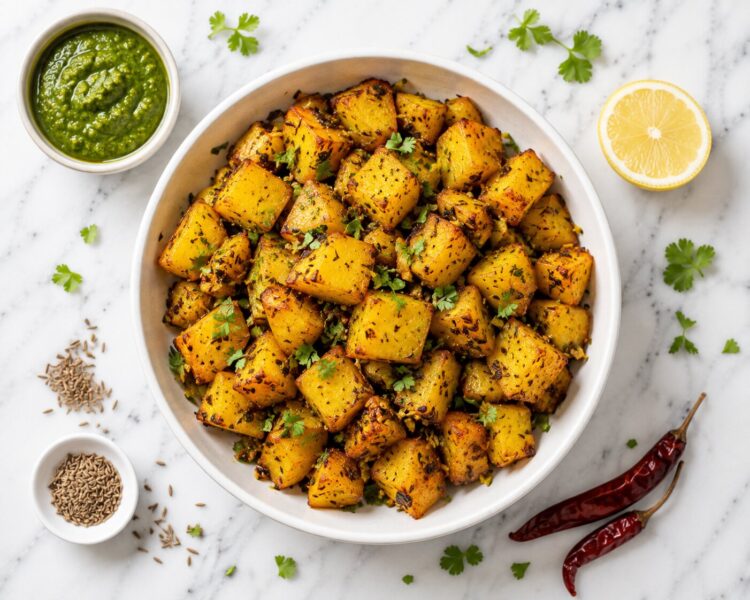
Air Fryer Bombay Potatoes — known in Indian kitchens as Jeera Aloo or Aloo Fry — is that version. Crispy, golden potato cubes seasoned with toasted cumin seeds, turmeric, garam masala, and chili powder, cooked in the air fryer with less than a tablespoon of oil per serving. Done in 25 minutes. Vegan, gluten-free, and versatile enough to serve alongside dal and rice for a full Indian meal or as a standalone side dish for almost any occasion.
This recipe uses a two-stage cooking method that is the key to getting genuinely crispy potatoes in an air fryer — not just cooked through, but properly golden on multiple surfaces with that satisfying resistance when you bite in. It is a technique that produces a noticeably better result than simply tossing spiced raw potatoes into the basket and hoping for the best.
This guide gives you the complete recipe, the science behind the two-stage method, a full guide to potato variety choices, all the regional variations and spice alternatives worth knowing, and every expert tip that makes the difference between good and outstanding.
What Are Bombay Potatoes? The Name Behind the Dish
The phrase “Bombay potatoes” is largely a British-Indian restaurant creation — the naming convention that saw many North Indian dishes labelled with “Bombay” (now Mumbai) in post-partition Britain as shorthand for Indian-influenced cooking. The dish itself corresponds most closely to the Indian kitchen staple of jeera aloo (cumin potatoes) or simply aloo fry — a spiced, stir-fried potato preparation that exists in some form in virtually every regional cuisine across India.
At its core, jeera aloo is a dry potato preparation: cubed or diced potatoes cooked with cumin seeds bloomed in oil, seasoned with turmeric and chili, and finished with garam masala. It is the foundational potato dish of everyday North Indian cooking — the one made when the refrigerator is sparse, when a quick side dish is needed, when nothing else is available but potatoes and spices.
The air fryer version of this dish preserves all the authentic flavour of the stovetop original while delivering something the stovetop version struggles to achieve without deep frying: genuinely crispy potato surfaces. The circulating hot air of the air fryer does in 25 minutes what a skillet can only do in much longer cooking times with significantly more oil.
Why This Recipe Works: The Two-Stage Method Explained
Most air fryer potato recipes season everything upfront and cook in a single continuous batch. This recipe uses a deliberate two-stage approach — and the difference in the final result is significant.
Stage 1: Cook Unseasoned with Oil (12-13 minutes)
The potatoes go into the air fryer with just oil — no salt, no spices. This first stage is about structure. Without salt, the potatoes retain their surface moisture slightly longer, which allows the starch on the exterior to gelatinise evenly before the dehydration phase begins. The result is a more uniformly golden exterior rather than patchy browning.
Stage 2: Coat with Spice Mix and Finish (8-10 minutes)
After the first cook, the potatoes are removed from the basket, tossed in a spice-oil mixture, and returned for the second cook phase. This approach means the spices go onto partially-cooked potatoes that have a golden, slightly sticky surface — perfect for the coating to adhere to. Spices added to raw potatoes at the start often burn during the first 12 minutes of high-heat cooking; spices added halfway through are exposed to only half the cooking time and brown beautifully without burning.
The result of the two-stage method: Every potato cube has a seasoned, golden surface with no patches of burned spice and no pale, underdone undersides. This is the technique that produces restaurant-quality texture rather than a functional but unremarkable result.
The Soaking Step: Small Effort, Big Payoff
Soaking the peeled, cubed potatoes in cold water for 30 minutes to 4 hours before air frying is listed as optional in many recipes. In practice, it makes a meaningful difference — and understanding why helps you decide when it is worth doing.
Raw potato flesh contains a high concentration of surface starch. When that surface starch hits hot air or oil immediately, it forms an uneven, slightly gummy coating that can prevent uniform browning. Soaking the potatoes in cold water draws out this surface starch (you can see the water turn cloudy white within minutes). The potato surfaces that enter the air fryer after soaking are lower in free starch — they dry to a cleaner, more even surface that crisps more uniformly.
The practical guide to soaking:
- 30 minutes — the minimum effective soak; produces noticeably better results than no soak
- 2-3 hours — the sweet spot for most weeknight cooks; significantly crisper results
- 4 hours — the maximum recommended; beyond this, the potatoes begin to lose texture
- Overnight — soaking overnight in the refrigerator works if you plan to cook in the morning
After soaking, drain completely and pat thoroughly dry with a kitchen towel. Surface moisture must be removed before oil is added — wet potatoes in oil will steam in the first minutes of cooking rather than crisping.
Ingredients for Air Fryer Bombay Potatoes (Serves 3-4)
The Potatoes
500g (1 lb) potatoes — peeled and cut into 2-3cm (approximately 1-inch) cubes. See the full variety guide below.
What size to cut: Uniform size is the most important cutting decision. Inconsistent pieces produce some that are crispy and done while others are still firm inside. Take the extra minute to cut evenly.
Stage 1 — Initial Cook
- 1 tablespoon oil — high smoke point oil recommended (see oil guide below)
Stage 2 — Spice Coating
- 1 tablespoon oil (same high smoke point variety)
- 1 tablespoon cumin seeds (jeera) — the defining flavour; do not substitute with ground cumin for the same effect
- ¼ teaspoon turmeric powder
- ½ teaspoon garam masala powder
- ½ teaspoon red chili powder (or paprika for milder version)
- Salt to taste — added at the coating stage, not the initial cook
Optional Additions (See Regional Variations Below)
- ½ teaspoon coriander powder
- ¼ teaspoon amchur (dry mango powder) — adds tartness
- ½ teaspoon kasuri methi (dried fenugreek) — adds herbal depth
- 1 teaspoon lemon juice — added after cooking as a bright finish
- Pinch of asafoetida (hing) — classic North Indian addition
The Potato Variety Guide: Which Works Best?
This decision is worth making deliberately rather than just using whatever is in the pantry. Different potato varieties produce genuinely different results.
| Variety | Starch Level | Texture When Cooked | Best For | Notes |
|---|---|---|---|---|
| Russet | Very high | Fluffy, breaks down at edges | Maximum crispness | Gold standard for air frying |
| Yukon Gold | Medium-high | Creamy, slightly buttery | Balanced texture | Holds shape, some crisping |
| King Edward | High | Floury, fluffy | Very crispy result | Classic British roasting potato |
| Red potatoes | Medium-low | Waxy, holds shape | Less crispy, denser | Good if you want firm cubes |
| Baby potatoes | Variable | Skin crisps well | Rustic presentation | Halve rather than cube |
| Maris Piper | High | Fluffy | Excellent crispness | Classic Indian restaurant choice |
For the crispiest result: Russet, King Edward, or Maris Piper (high starch varieties). For firmer cubes that hold their shape: Yukon Gold or red potatoes (medium starch varieties).
The soaking note applies especially to high-starch varieties. Russet potatoes particularly benefit from the water soak — they contain the most surface starch and produce the most noticeably improved results from a proper soak.
The Oil Guide: Choosing Correctly
This recipe calls for a high smoke point oil — and that recommendation is specific and important. The air fryer at 190°C / 375°F is operating at temperatures that cause many oils to approach their smoke point. An oil that reaches its smoke point produces acrid smoke, bitter flavour, and potentially harmful compounds.
| Oil | Smoke Point | Flavour | Notes |
|---|---|---|---|
| Avocado oil | ~270°C | Neutral | Best overall choice |
| Rice bran oil | ~254°C | Neutral | Widely available in India and UK |
| Sunflower oil | ~230°C | Neutral | Most accessible and affordable |
| Refined coconut oil | ~232°C | Very mild | Good for subtle coconut undertone |
| Sesame oil (refined) | ~210°C | Nutty | Adds a distinctive flavour |
| Macadamia oil | ~210°C | Buttery | Excellent flavour, more expensive |
| Olive oil (extra virgin) | ~190-207°C | Fruity | At the edge of recommended range |
Avoid: Unrefined coconut oil (~177°C), butter (~150°C), or any unrefined oil — all will smoke at 190°C.
Step-by-Step: How to Make Air Fryer Bombay Potatoes
Step 1 — Soak and Dry the Potatoes
Peel the potatoes and cut into 2-3cm uniform cubes. Transfer to a large bowl, cover generously with cold water, and leave to soak for 30 minutes minimum (longer if you have time).
After soaking, drain thoroughly in a colander and spread on a clean kitchen towel. Pat the surfaces dry — pressing firmly to remove all visible surface moisture. The potatoes should look dry and matte, not glistening with any water droplets.
Step 2 — First Coat: Oil Only
Transfer the dry potato cubes to a mixing bowl. Add 1 tablespoon of oil and toss until every surface of every piece is lightly coated. No seasoning goes in at this stage.
Why no salt yet? Salt draws moisture out of vegetables through osmosis. Adding salt to raw potatoes before the first cook phase draws moisture to the surface — exactly the opposite of what you want. Keep salt back until Stage 2.
Step 3 — Preheat and First Air Fry
Preheat the air fryer to 190°C / 375°F for 5 minutes. A proper preheat is important here — the immediate blast of heat on the potato surfaces triggers rapid surface drying that starts the crisping process from the very first minute.
Arrange the oiled potato cubes in a single layer in the preheated basket. Leave space between pieces — do not pile them or allow significant touching. If your air fryer basket is small, work in batches.
Air fry at 190°C / 375°F for 12-13 minutes, stirring or shaking once at the 6-7 minute mark. At the end of the first cook, the potatoes should look pale golden, be cooked through when pierced with a fork, and have some golden browning on the surfaces that were in contact with the basket.
Remove the potatoes from the basket using a spatula and transfer back to the mixing bowl.
Step 4 — Make the Spice Coating
In the same mixing bowl (or a fresh one if you prefer), combine the second tablespoon of oil, cumin seeds, turmeric, garam masala, red chili powder, and salt. Mix into a uniform paste. Add any optional extras at this stage — coriander powder, amchur, hing, kasuri methi.
Taste the spice mixture on a small amount of potato — it should taste intensely seasoned, because it will coat all the pieces and mellows during the second cook. Adjust salt and spices.
Step 5 — Coat the Par-Cooked Potatoes
Pour the partially-cooked potatoes into the spice mixture. Toss thoroughly until every piece is evenly coated with the spice-oil mixture. The slightly golden, slightly sticky surface of the par-cooked potatoes helps the coating adhere much better than raw potato surfaces would.
Step 6 — Second Air Fry
Return the spice-coated potatoes to the air fryer basket in a single layer. Air fry at 190°C / 375°F for 8-10 minutes until the potatoes are deeply golden on multiple surfaces, the spices are toasted and fragrant, and the exterior is visibly crispy.
Check at 8 minutes — depending on the size of your potato cubes and your air fryer model, they may be perfect at this point. If you want deeper colour and crunch, continue for the remaining 1-2 minutes. Optionally, spray lightly with oil spray midway through the second cook for extra surface crisping.
Step 7 — Serve Immediately
Bombay potatoes are at their absolute best served immediately — the crispness fades as they sit. Serve directly from the basket onto plates or a serving bowl. Finish with a squeeze of fresh lemon juice if using.
Regional Variations: The Beautiful Versatility of Indian Potato Cooking
The base recipe you have just made is a foundation, not a ceiling. Indian cuisine offers extraordinary regional diversity in spiced potato preparations — each using the same basic canvas differently:
1. Mustard Seed Version (South Indian-Inspired)
Replace cumin seeds with 1 teaspoon mustard seeds plus 8-10 curry leaves. Add to the oil in Stage 2, allow the mustard seeds to pop briefly (they pop in the air fryer just as in a pan — you will hear them). This creates a tangier, more South Indian flavour profile.
2. Garlic Jeera Aloo
Add 4 finely minced garlic cloves to the spice coating in Stage 2. The garlic develops a rich, slightly caramelised flavour during the second cook phase. Popular in Rajasthan and UP.
3. Bombay Potatoes with Onion and Tomato
Dice 1 small onion into similar-sized pieces as the potato cubes and add to the basket from Stage 1. After the first cook, add the potatoes and onion to the spice coating together. In Stage 2, add 1 small tomato (cubed, seeds removed) for the final 5 minutes. This produces a more substantial, more saucy preparation closer to a dry curry.
4. Amchur (Dry Mango) Version — Tangiest and Most Versatile
Add ½ teaspoon amchur (dry mango powder) and ½ teaspoon coriander powder to the Stage 2 spice coating. This produces a noticeably tangier potato fry that works exceptionally well as a filling for parathas or as a side dish alongside plain dal.
5. Simple Minimalist Version (When Spices Are Limited)
No Indian spices at home? Use a blend of garlic powder, onion powder, smoked paprika, and a pinch of curry powder if available. Finish with lemon juice rather than amchur. The result is less authentically Indian but still a genuinely good spiced potato dish.
6. Crispy Bombay Baby Potatoes
Use 500g baby potatoes, halved (no cubing required). Do not soak — baby potatoes have thinner skin and do not need the surface starch treatment. Skip Stage 1; simply coat in the spice mixture and air fry at 190°C for 18-20 minutes total, shaking at the 10-minute mark. The skins crisp beautifully and the interiors stay creamy.
What to Serve With Bombay Potatoes
The versatility of this dish is genuinely extraordinary. It works across an enormous range of serving contexts:
As a Side Dish in an Indian Meal:
- Alongside yellow dal (chana dal, moong dal, masoor dal) with basmati rice — the classic everyday combination
- With any simple Indian curry and chapati / roti
- As part of a thali spread alongside raita, pickle, and papad
- Alongside any lentil dish — the crispy potato provides the texture contrast that soft dal cooking lacks
As a Main Course:
- Serve with a large bowl of plain yogurt and a green chutney — quick, satisfying, complete
- Wrapped in a warm roti or paratha with sliced onion and mint chutney — an excellent quick wrap
- Over a bowl of steamed rice with a dollop of ghee — the simplest and one of the most satisfying combinations
As a Starter / Appetiser:
- Served in small bowls with mint-coriander chutney and tamarind chutney alongside chai
- As a party snack bowl — the crispy exterior holds up well for 15-20 minutes, making it viable for serving to guests
Fusion Uses:
- Stuffed into warm pita bread with cucumber, tomato, and yogurt sauce — a satisfying fusion wrap
- Served over salad greens with a cumin-lemon dressing — the warm, spiced potatoes wilt the greens slightly and the combination is excellent
- As a filling for loaded baked potatoes — scoop out a jacket potato, mix the flesh with the Bombay potato spice mix, air fry the shell at 200°C for 5 minutes, then fill with the spiced potato mixture and top with cheese
Expert Tips for Maximum Crispness
Dry the potatoes completely before oiling. Any surface water creates steam in the first minutes of cooking, delaying the crisping phase. This step makes the single biggest textural difference.
Use the two-stage cooking method every time. The temptation to skip Stage 1 and cook seasoned potatoes the whole time is understandable — but the two-stage approach genuinely produces a superior result because the spices do not burn during the initial high-heat drying phase.
Do not overcrowd the basket. Even 20% overcrowding produces meaningfully less crispy results. The air must circulate around every piece of food for the heat to reach all surfaces simultaneously.
Preheat the air fryer. This is important specifically for potatoes. An immediate burst of heat on entry is what starts the surface-drying and crisping process from the very first minute. A cold start means the first 3-4 minutes are spent heating up rather than cooking.
Stir or shake halfway through each cooking stage. This ensures surfaces that are face-down against the basket get repositioned to where they can receive direct airflow and crisp on multiple sides, not just one.
Serve immediately. The crispy coating softens within 15-20 minutes as steam from the hot potato interior migrates outward. These are best enjoyed the moment they leave the basket.
Storage and Reheating
Storage: Store cooled Bombay potatoes in an airtight container in the refrigerator for 3-4 days. The exterior will soften considerably — they are genuinely much better fresh. Plan quantities to finish in one sitting wherever possible.
Reheating: The air fryer is the only method that restores meaningful crispness to leftover Bombay potatoes. Air fry at 200°C / 400°F for 4-6 minutes until warmed through and the exterior has crisped again. The reheated version is not as crispy as fresh but is still enjoyable. Microwave reheating produces soft, somewhat mushy potatoes — acceptable if crispness is not a priority.
Freezing: Not recommended. Cooked potato cubes do not freeze well — the freezing and thawing process breaks down the cellular structure and produces a waterlogged, soft, unappetising result regardless of reheating method.
Nutrition Information (Per Serving — 1 of 4)
| Nutrient | Amount | Notes |
|---|---|---|
| Calories | ~195-220 kcal | Varies by potato variety and oil used |
| Carbohydrates | 35-40g | Primarily from potato starch |
| Protein | 3-4g | From potato |
| Fat | 7-9g | From the 2 tbsp oil per batch |
| Fiber | 3-4g | From potato skin and flesh |
| Vitamin C | ~20mg | 22% DV |
| Potassium | ~620mg | 18% DV |
| Vitamin B6 | ~0.4mg | 25% DV |
| Iron | ~1mg | 6% DV |
Compared to deep-fried aloo fry (approximately 350-400 calories per serving with 18-22g fat), the air fryer version delivers the same crispy result at 45-50% fewer calories and 65-70% less fat. For a dish eaten regularly as a side dish, that difference compounds meaningfully over a week or month of eating.
Frequently Asked Questions
Q1. Do I need to peel the potatoes for Bombay potatoes?
No — unpeeled potatoes work well and the skin becomes deliciously crispy in the air fryer, adding texture and extra fibre. Scrub the potatoes thoroughly under running water if leaving the skin on. This is particularly good with Yukon Gold, baby potatoes, and red varieties where the skin is thinner and more pleasant to eat. Russet and Maris Piper have thicker, more prominent skins that some people prefer peeled.
Q2. Can I use frozen potatoes instead of fresh?
Yes, with adjustments. Frozen diced or cubed potatoes (not frozen chips) can be used directly from frozen — skip the soaking step entirely. Start at Stage 2 immediately: add the frozen cubes to the air fryer at 190°C / 375°F for 15-18 minutes, shaking twice during cooking. At the 12-15 minute mark, remove, coat in the spice mixture, and return for 5-6 minutes. The texture will be slightly softer than fresh but the spiced flavour is identical.
Q3. Can I make this without oil for a truly oil-free version?
You can reduce the oil significantly — using oil spray (2-3 sprays per stage instead of a tablespoon) rather than poured oil reduces the total fat to under 2g per serving. A completely oil-free version is possible but produces significantly less crispy results, as the oil is part of what conducts heat to the potato surfaces and facilitates browning. For the crispiest result with minimum oil, use oil spray at each stage rather than eliminating oil entirely.
Q4. My potatoes are not getting crispy. What am I doing wrong?
Four most likely causes. First and most common: potatoes not dried properly after soaking — any residual surface moisture prevents crisping during the first cook phase. Second: overcrowded basket — every piece needs breathing room. Third: skipping the preheat — a cold-start fryer means the first several minutes are heating up rather than crisping. Fourth: not using the two-stage method — seasoning added too early can create a barrier that traps moisture. Address these in order and crispness issues almost always resolve.
Q5. Can I add other vegetables alongside the potatoes?
Yes — several vegetables work well added partway through the cooking. Diced onion (added from Stage 1) turns wonderfully soft and slightly caramelised. Capsicum / bell pepper pieces (added at Stage 2) crisp up beautifully and add colour. Peas (frozen, added in the last 5 minutes of Stage 2 only) stay bright green and pop with flavour. Cauliflower florets of similar size (added from Stage 1) cook in approximately the same time and produce an excellent aloo-gobi variation. For any vegetable addition, ensure pieces are roughly the same size as the potato cubes for even cooking.
The Potato Side Dish That Earns a Permanent Spot in Your Rotation
There is a reason Jeera Aloo / Bombay Potatoes has been a staple of Indian everyday cooking for generations — and a reason it became one of the first Indian dishes to popularise on British restaurant menus. It is honest, it is satisfying, it is deeply flavourful from ingredients that everyone has, and it is endlessly adaptable to whatever else is on the table.
The air fryer makes it faster and significantly less oily than the traditional skillet version, without sacrificing any of the character that makes it worth making in the first place. The two-stage technique is the difference between a functional potato side dish and one that genuinely earns the compliments.
Make it tonight — as a side to dal and rice, stuffed into a roti wrap, or just eaten straight from the bowl with a cup of chai and absolutely no apologies.
Share your results in the comments below! Tell us which potato variety you used, whether you tried the mustard seed or garlic variation, and what you served alongside. And if you developed a spice ratio that was perfect for your household — we want that recipe too.
Pairs perfectly with: Yellow Dal | Basmati Rice | Roti / Chapati | Mint-Coriander Chutney | Plain Yogurt | Pickle
Also explore: Air Fryer Roast Potatoes | Air Fryer Samosa Pinwheels | Air Fryer Paneer Tikka | Air Fryer Chicken Tikka