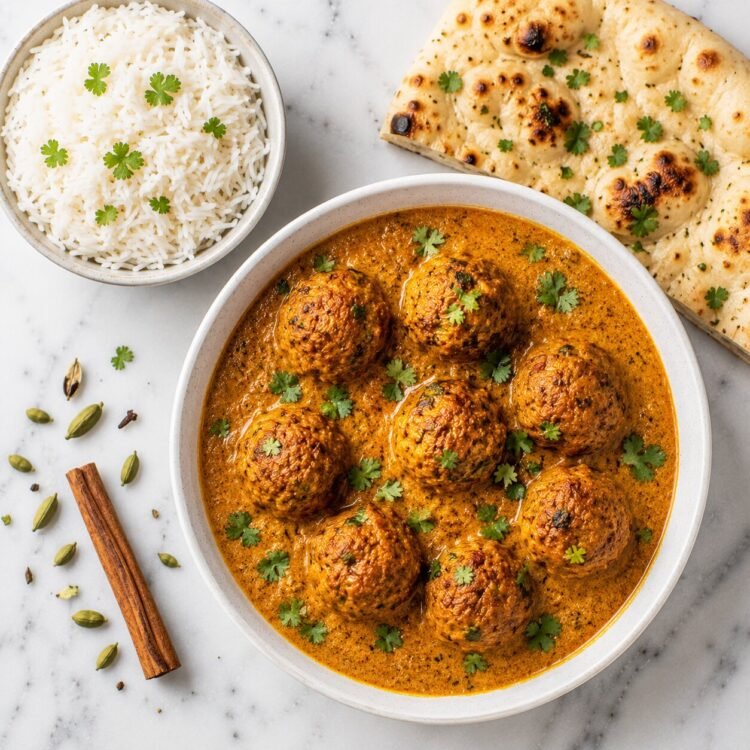
Some of the best Indian dishes you will ever eat rely on a trick that sounds almost too simple to justify how good the result tastes.
Chicken Meatball Curry is that trick.
Ground chicken. Onions. Tomatoes. A handful of toasted coconut and almonds. Whole spices already sitting in your pantry. Fifty minutes from start to finish. And the outcome is a rich, restaurant-style curry with a gravy so silky you’d swear there was cream hiding in it somewhere — there isn’t.
Kofta curry occupies an interesting space in Indian home cooking. It is comforting enough for a weeknight dinner, impressive enough to serve guests, and forgiving enough that first-timers rarely get it wrong if they follow the sequence properly. Most restaurant versions lean on heavy cream, butter, or deep-fried meatballs to get that indulgent texture. This version rebuilds the dish around a different principle entirely: toasted coconut and almonds, blended into a paste, do the same creamy job that dairy usually does — without the saturated fat or the dairy at all.
The chicken version of kofta curry has become a household favorite for practical reasons. Ground chicken cooks faster than the traditional lamb or mutton keema used in classic koftas, it costs less, and it takes on the surrounding gravy’s flavor beautifully because of how finely it’s ground. Add oats into the mix for fiber and binding, and you get a meatball that’s tender, high in protein, and noticeably lighter than its restaurant counterpart.
This guide walks through the complete recipe with every technique explained — why toasting the coconut matters, how to know your gravy is ready for the koftas, the exact simmering method that keeps meatballs intact, plus four variations and answers to the most common questions people run into the first time they make this dish.
What Makes This Chicken Meatball Curry Different from Other Indian Chicken Curries
The defining feature of any kofta curry is that the protein is shaped into balls rather than cooked as whole pieces or shredded mince directly into the gravy. That single structural choice changes the cooking method, the texture, and even how the dish holds up over time.
Contained flavor, not diluted flavor. Because the ground chicken is bound into meatballs rather than scattered loose into the gravy (as in keema curry), each bite delivers a distinct, juicy center surrounded by sauce — rather than a uniformly mixed texture. It’s a completely different eating experience from keema, even though the base spices overlap.
No frying required. Traditional koftas are often shallow-fried or deep-fried before being added to the gravy, which gives them a firmer crust but adds significant oil and calories. This recipe poaches the raw koftas directly in the simmering gravy, which keeps them tender and juicy while cutting out the added fat almost entirely.
Coconut-almond paste instead of cream or cashews. Most North Indian kofta curries use cashew paste or dairy cream for richness. This version leans into a coastal technique — toasting coconut and almonds together before blending — which delivers the same silky mouthfeel with more fiber, healthy fats, and zero dairy.
Oats inside the meatballs. A small amount of ground oats acts as a binder in place of breadcrumbs, adding fiber and keeping the koftas soft rather than dense.
Genuinely make-ahead friendly. Because the koftas cook inside the gravy rather than being fried separately, the whole dish reheats and freezes exceptionally well without the meatballs turning tough or rubbery.
The Two-Part Technique: Koftas and Coconut-Almond Gravy
Unlike a single-pot curry, this recipe has two components that come together at the end — the chicken koftas and the coconut-almond paste — plus the onion-tomato gravy base that ties them together. Understanding what’s happening at each stage makes you dramatically better at the recipe.
Why the Green Paste Gets Split in Two
The ginger-garlic-chili-coriander paste is blended once, then divided — half goes into the raw meatball mixture, half goes into the gravy base. This isn’t a shortcut; it’s intentional. Splitting the paste means the aromatic flavor shows up in both components independently, rather than being concentrated in only one. The koftas taste seasoned on their own, and the gravy has its own aromatic backbone, so the dish tastes layered rather than one-note.
Why Toasting the Coconut and Almonds Is Non-Negotiable
Raw grated coconut blended straight into a paste tastes flat and slightly grassy. Toasting it first — along with the almonds, cinnamon, cloves, and cardamom — triggers the same browning reactions that make roasted nuts taste dramatically better than raw ones. The natural oils in the coconut and almonds release and caramelize slightly, and the whole spices infuse their aromatic oils directly into the fat as everything toasts together in the pan.
Skipping this step is the single biggest reason a homemade version of this curry can taste noticeably worse than the restaurant one. Five extra minutes of toasting is where most of the “why does this taste so good” reaction comes from.
Oil Separation: The Same Rule Applies Here Too
Just like in any proper Indian curry, the onion-tomato gravy base needs to be cooked until the oil visibly separates and pools at the edges before you add water and bring it to a boil. This tells you:
- The raw tomato moisture has cooked off
- The spices have bloomed fully into the oil
- The base is concentrated enough to support the koftas simmering in it for 15 minutes without turning watery
Adding water too early, before oil separation, results in a thin, underdeveloped gravy that never quite reaches the depth you’re looking for.
Why the Koftas Go In Raw, Not Pre-Cooked
The raw koftas are dropped directly into the boiling gravy, then the heat is lowered to a gentle simmer. Cooking them this way — rather than browning them in a pan first — means every bit of flavor that would normally be left behind in a frying pan instead gets absorbed straight into the gravy as the meatballs cook. It’s a two-way exchange: the gravy seasons the koftas, and the koftas’ juices enrich the gravy.
Ingredients for Chicken Meatball Curry (Serves 4)
For the Chicken Meatballs (Kofta)
- 500g (about 1.1 lb) minced chicken — thigh mince gives juicier, richer koftas; breast mince keeps things leaner. Either works well.
- 1 tablespoon ginger, finely chopped
- 1 tablespoon garlic, finely chopped
- 3 green chillies, chopped (adjust to taste; remove seeds for a milder version)
- ¼ cup fresh coriander leaves and stems, chopped, plus extra for garnish
- 1 tablespoon instant oats, coarsely ground — the fiber-boosting binder
- 2 red onions, divided — 1 finely chopped for the koftas, 1 sliced for the gravy
- ½ teaspoon salt
For the Gravy
- 1 tablespoon oil — olive oil or any neutral cooking oil
- 1 bay leaf
- 2 tomatoes, pureed
- ½ teaspoon chili powder (or cayenne pepper)
- ½ teaspoon coriander powder
- ¼ teaspoon ground turmeric
- ½ teaspoon salt
For the Coconut-Almond Paste (“Healthy Cream”)
- 2 tablespoons almonds
- ¼ cup grated coconut — fresh, if available
- 1 (2-inch) cinnamon stick
- 3 cloves
- 3 cardamom pods
Optional Additions
- 1 teaspoon garam masala, stirred in at the end for extra warmth
- Squeeze of lemon or lime juice, for brightness before serving
- 1 extra green chili, sliced, for a spicier finish
Key Ingredient Decisions
Chicken Thigh Mince vs. Breast Mince (for the Koftas)
| Thigh Mince | Breast Mince | |
|---|---|---|
| Fat content | Higher (~10-12%) | Lower (~3-4%) |
| Flavor | Richer, more forgiving | Lighter, milder |
| Texture in koftas | Juicier, stays tender | Can firm up if overcooked |
| Protein | ~19g/100g | ~23g/100g |
| Best for | Maximum juiciness | Maximum protein, minimum fat |
For the juiciest koftas: thigh mince. For the leanest, highest-protein version: breast mince, simmered gently and not overcooked.
Coconut-Almond Paste vs. Cream or Cashew Paste
Traditional North Indian kofta curries typically use cream or a cashew-based paste for richness. This recipe’s coconut-almond paste is a deliberate swap:
- Nutritionally lighter — no saturated dairy fat, and the fats present are largely unsaturated
- More fiber — both coconut and almonds contribute dietary fiber that cream and cashews do not match
- Naturally dairy-free — makes the dish suitable for lactose-intolerant eaters without any recipe changes
- Deeper flavor when toasted — the roasting step gives this paste a nuttier, more complex character than a plain cashew or cream-based gravy
Step-by-Step: How to Make Chicken Meatball Curry
Step 1 — Make the Chicken Koftas (10 minutes)
Blend the green chillies, ginger, garlic, and coriander leaves and stems into a smooth paste. Set aside half for the gravy.
In a mixing bowl, combine the ground chicken with half of the green paste, a tablespoon of finely chopped onion, the ground oats, and salt. Mix gently by hand — just until combined, no more.
Shape into lime-sized balls. This makes about 16 to 20 koftas.
Tip: For smoother koftas without the occasional crunch of onion, skip the chopped onion in the meatball mixture entirely.
Step 2 — Make the Coconut-Almond Paste (10 minutes)
Heat a small amount of oil in a pan and add the cinnamon stick, cloves, cardamom, and almonds. Toast for about 5 minutes on medium heat, stirring frequently.
Add the sliced onions and fry for 2-3 minutes until softened.
Stir in the grated coconut and roast until it turns golden brown — this step builds most of the flavor, so don’t rush it.
Let the mixture cool slightly, then blend with water into a smooth, thick paste.
Step 3 — Build the Gravy — Cook to Oil Separation (10 minutes)
In the same pan, heat the remaining oil and add the bay leaf along with the rest of the finely chopped onions. Sauté until golden.
Add the remaining half of the green paste and cook for 2-3 minutes until fragrant.
Pour in the pureed tomatoes, then add the chili powder, coriander powder, turmeric, and salt. Sauté on medium heat until the oil visibly separates at the edges of the pan — this is your cue the base is ready.
Add water and bring the gravy to a boil.
Step 4 — Simmer the Koftas (15 minutes)
Once the gravy is boiling, reduce the heat to low and gently drop in the raw koftas one at a time.
Cover the pan and simmer for 15 minutes, until the koftas are fully cooked through. Avoid stirring vigorously — a gentle shake of the pan is enough to move things around without breaking the meatballs apart.
Step 5 — Finish with the Coconut-Almond Paste (5 minutes)
Stir in the coconut-almond paste, mixing gently. Simmer for another 5 minutes to let the flavors meld and the gravy thicken slightly.
Garnish with freshly chopped coriander leaves and serve hot.
Total time: About 50 minutes — 15 minutes active prep, 35 minutes cooking.
4 Variations That Transform the Recipe
Variation 1 — Spinach Chicken Kofta Curry
Stir in 2 cups of blanched, pureed spinach along with the tomato puree in Step 3. The earthy greens pair beautifully with the coconut-almond richness and add an extra dose of iron and fiber to the dish — a nod to the popular North Indian palak kofta style.
Variation 2 — Egg-Bound Koftas for Extra Structure
If your koftas tend to fall apart during simmering, mix in one lightly beaten egg along with the ground oats in Step 1. The egg acts as an additional binder, giving the meatballs more structural integrity without changing the flavor.
Variation 3 — Restaurant-Style Richer Gravy
After adding the coconut-almond paste in Step 5, stir in 2 tablespoons of cashew paste and a small pinch of sugar to balance the richness. This pushes the curry closer to a restaurant-style shahi kofta curry while still keeping it cream-free.
Variation 4 — Low-Calorie Version
Use only breast mince for the koftas, reduce the almonds in the paste by half, and skip any optional garam masala or cashew additions. This trims the calorie count further while keeping the protein content high — ideal for anyone tracking macros closely.
What to Serve with Chicken Meatball Curry
The mild sweetness of the coconut-almond gravy pairs well with a wide range of sides:
Classic Indian accompaniments:
- Steamed basmati rice or pulao — lets the gravy shine
- Roti, naan, or paratha — perfect for scooping
- Lemon turmeric rice — adds citrusy contrast
- Low-carb cauliflower rice — a lighter alternative
Simple vegetable sides:
- Roasted tandoori cauliflower
- Sautéed okra (ladies finger) stir-fry
- Chickpea salad with lemon dressing
- Lentil salad with honey-ginger dressing
For a full meal:
- Cucumber raita for a cooling contrast
- Sliced onion with lime and chaat masala
- Mango or lime pickle on the side
Make-Ahead and Storage Guide
- Refrigerator: Store the finished curry in an airtight container for up to 4 days.
- Freezer: Freeze for up to 1 month; thaw overnight in the fridge before reheating.
- Uncooked koftas: Shape and freeze raw meatballs separately for up to a month, or refrigerate for up to 4 days. Thaw before adding to the simmering gravy.
- Reheating: Warm gently on the stovetop over low-medium heat, adding a splash of water if the gravy has thickened too much in storage.
Nutrition Information (Per Serving — 1 of 4)
| Nutrient | Amount | Notes |
|---|---|---|
| Calories | 270-280 kcal | Based on standard recipe with thigh/breast mix |
| Protein | ~27g | Excellent high-protein main |
| Fat | Moderate | Mostly unsaturated, from coconut and almonds |
| Fiber | Boosted | From oats in koftas plus coconut |
| Sodium | ~450-500mg | Varies with salt added |
| Dairy | None | Naturally dairy-free |
Using breast mince instead of thigh mince increases protein slightly further while trimming a few grams of fat — a simple swap for anyone prioritizing lean protein.
Expert Tips for Perfect Chicken Meatball Curry Every Time
Don’t skip toasting the coconut and almonds. This is where the majority of the flavor in the finished gravy comes from — raw coconut paste tastes noticeably flatter.
Mix the kofta mixture gently. Overworking ground chicken by hand makes the meatballs dense and rubbery instead of soft and juicy.
Wait for oil separation before adding water to the gravy. Adding water too early results in a thinner, less developed base.
Simmer, don’t boil, once the koftas are in. A rolling boil risks breaking the meatballs apart; a gentle simmer keeps them intact while they cook through.
Add the coconut-almond paste only at the end. Adding it too early and simmering it for too long can cause the paste to separate slightly; stirring it in during the last 5 minutes keeps the gravy smooth.
Taste before serving. Since both the koftas and the gravy are salted separately, always taste the finished dish before making further adjustments.
Frequently Asked Questions
Q1. Can I make chicken meatball curry without a blender?
Yes, though it takes a bit more effort. Finely mince the ginger, garlic, and chillies by hand for the green paste, and use finely ground almond flour along with desiccated coconut in place of blending fresh coconut and almonds into a paste. The texture will be slightly less smooth, but the flavor will still come through clearly.
Q2. Can I use ground turkey instead of chicken for the koftas?
Yes — ground turkey is a very close substitute in terms of texture and cooking time. It works particularly well with dark meat (thigh) turkey mince, which stays moist during the 15-minute simmer, whereas turkey breast mince can dry out slightly if overcooked. No other changes to the recipe are needed.
Q3. Why did my meatballs fall apart in the curry?
This usually happens for one of two reasons: the gravy was boiling too vigorously rather than gently simmering once the koftas went in, or the meatball mixture wasn’t bound well enough. Make sure the oats are ground finely, mix the chicken mixture just enough to hold together, and always drop to a low simmer — never a rolling boil — after adding the raw koftas.
Q4. Is this chicken kofta curry gluten-free?
Yes, as long as the oats used are certified gluten-free, since standard oats can sometimes be cross-contaminated with wheat during processing. Every other ingredient in the recipe is naturally gluten-free.
Q5. Can I make this curry spicier or milder?
Absolutely. Reduce or remove the green chillies and chili powder for a milder, kid-friendly version, or add an extra chili along with a pinch of garam masala for more heat and depth. The base recipe is intentionally moderate, making it easy to adjust in either direction.
Fifty Minutes to a New Favorite Curry
Chicken Meatball Curry proves that “creamy” doesn’t have to mean “dairy,” and that indulgent-tasting food doesn’t have to come loaded with extra fat and calories. Toasted coconut and almonds, a well-built onion-tomato gravy, and juicy oat-bound koftas come together into a dish that feels like restaurant comfort food while staying genuinely nourishing.
Whether you’re meal-prepping for the week, cooking for family, or just craving something warm and spiced, this recipe is flexible, freezer-friendly, and satisfying from the first bite to the last spoonful of gravy.
Try this recipe and share your results in the comments below! Let us know whether you used thigh or breast mince, which variation you tried (the spinach version is especially worth making), and what you served it with. If this becomes your new go-to curry — which it likely will — we’d genuinely love to hear about it.
Pairs perfectly with: Steamed Basmati Rice | Plain Roti | Garlic Naan | Lemon Turmeric Rice | Cucumber Raita | Kachumber Salad
Also explore: Chicken Keema Curry | Kerala Chicken Curry | Butter Chicken | Chicken Rogan Josh | Palak Kofta Curry