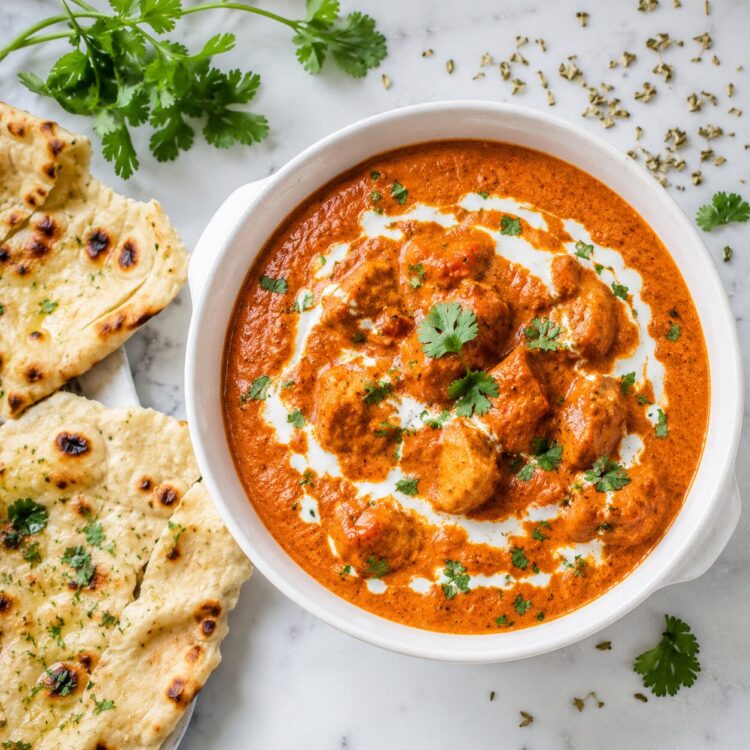
Some dishes define an entire cuisine in the world’s imagination. When people who have never visited India think about Indian food, there is one dish that appears in their minds first, almost without exception.
Butter Chicken.
Murgh Makhani — to use its proper name — is India’s most recognised culinary export. It is served in Indian restaurants on every continent, ordered millions of times every week, and consistently ranked as one of the most popular dishes globally. A 2024 survey by TasteAtlas placed Butter Chicken in the top five most loved dishes in the world. Not just in Indian cuisine. In the world.
And yet, for all its global fame, truly authentic Murgh Makhani — the kind made with properly marinated grilled chicken, a scratch-built tomato-cashew sauce cooked low and slow in real butter, finished with crushed kasuri methi — is something most people have never actually tasted. What passes for Butter Chicken at most restaurants is a shortcut version that sacrifices the layers of flavor that make the real dish extraordinary.
This recipe gives you the authentic version. The one worth making. The one that will make you realise why this dish conquered the world in the first place.
The Origin Story: A Happy Accident That Became a Legend
Butter Chicken was born in Delhi in the 1950s — and like many great culinary creations, it happened partly by accident.
Kundan Lal Gujral, founder of the legendary Moti Mahal restaurant in Daryaganj, is credited with creating the tandoori cooking method. His successor and protégé, Kundan Lal Jaggi, reportedly invented Murgh Makhani by simmering leftover tandoori chicken pieces in a rich tomato-butter sauce to prevent them from drying out between service periods.
The dish worked so spectacularly well that it became a permanent fixture on the menu — and then spread across the world. The combination of smoky grilled chicken, sweet-tart tomato, rich butter, and the subtle bitterness of kasuri methi proved to be one of those rare flavor combinations that transcends cultural boundaries and appeals to almost every palate on earth.
Butter Chicken vs. Chicken Tikka Masala: Finally, the Definitive Difference
These two dishes are confused constantly — even at Indian restaurants. Here is the clearest comparison:
| Feature | Butter Chicken (Murgh Makhani) | Chicken Tikka Masala |
|---|---|---|
| Origin | Delhi, 1950s (Moti Mahal) | Punjab / UK-Indian restaurants |
| Onions in sauce | Traditionally none (optional) | Essential — caramelised onion base |
| Sauce character | Silky, smooth, pourable | Thicker, more textured |
| Spice level | Mild — sweet and aromatic | Medium to spicy |
| Cooking fat | Butter (essential) | Oil or ghee |
| Key flavour note | Kasuri methi, cardamom | Tomato, caramelised onion, cumin |
| Colour | Pale to medium orange | Deeper red-orange |
| Chicken type | Grilled/tandoori | Tikka (charred cubes) |
The simplest way to remember: Butter Chicken is a gentle, creamy, buttery dish where the sauce takes centre stage. Tikka Masala is bolder, spicier, and built on a caramelised onion foundation. Both are excellent — they are simply different dishes.
What Makes This Recipe Authentic
Most shortcut Butter Chicken recipes skip two things that define the authentic version. Both matter enormously.
1. The two-stage marinade The chicken is first treated with red chili, salt, and lemon juice — a resting step that seasons the meat deeply. Only then is the full yogurt-spice marinade added. This approach comes directly from restaurant kitchens in India and produces chicken that is seasoned all the way through, not just on the surface.
2. Cashew cream in the sauce — not just heavy cream Authentic Murgh Makhani sauce derives its silkiness from a smooth paste of cashews blended with tomatoes, not just cream stirred in at the end. The cashews thicken the sauce, add a subtle nuttiness, and create that characteristic velvet texture that distinguishes the real dish from pale imitations. Heavy cream is added at the very end — a finishing touch, not a structural ingredient.
Ingredients (Serves 4)
For the Chicken Marinade
- 500g boneless chicken — thighs preferred, breast works with longer marination
- ¾ tablespoon lemon juice
- ½ teaspoon Kashmiri red chili powder
- ¼ teaspoon salt
- 1 tablespoon neutral oil
- ¾ tablespoon ginger-garlic paste
- ⅓ cup hung curd (strained yogurt) or thick Greek yogurt
- ¾ teaspoon garam masala
- 1 teaspoon coriander powder
- ½ teaspoon cumin powder
- 1 teaspoon kasuri methi (dried fenugreek leaves), crushed
- ⅛ teaspoon turmeric
For the Sauce
- 2 tablespoons unsalted butter (plus 1 extra tablespoon for finishing)
- 1 tablespoon neutral oil
- 1 medium onion, roughly sliced (optional but recommended)
- 600g fresh ripe tomatoes, roughly chopped — or 1 cup passata / canned tomato puree
- 28 whole cashews (about ⅓ cup / 42g)
- ¾ tablespoon ginger-garlic paste
- 1–2 green chilies, deseeded and slit
- 1–2 teaspoons Kashmiri red chili powder
- 1–1½ teaspoons garam masala
- 1 teaspoon coriander powder
- ½ teaspoon cumin powder
- ½ tablespoon kasuri methi, crushed between palms
- 1 cinnamon stick (2 inches)
- 4 green cardamoms, lightly crushed
- 4 cloves
- 1–1½ cups hot water
- 1 teaspoon sugar or honey (to balance acidity)
- Salt to taste
- 2–3 tablespoons heavy cream (for finishing)
For Garnish
- A swirl of cold cream or a small knob of butter
- Fresh coriander leaves, chopped
- A pinch of Kashmiri red chili powder
Key Ingredient Notes
Kasuri Methi — The Non-Negotiable
Kasuri methi (dried fenugreek leaves) is the single most important flavour element in authentic Butter Chicken. Nothing replicates it. It has a distinctive slightly bitter, herbal quality that, when crushed and added to the hot sauce, transforms the entire dish. Always crush it between your palms before adding — this releases the essential oils. Available at every Indian grocery store and most supermarkets.
Hung Curd vs Regular Dahi
The marinade requires thick, strained yogurt — not regular liquid dahi. Regular yogurt releases too much moisture when the chicken is grilled, washing away the marinade and leaving bland meat. Make hung curd by straining plain yogurt through a clean muslin cloth for 30-60 minutes until thick and cream-cheese-like in consistency. Greek yogurt is a ready-made equivalent and works perfectly.
Kashmiri Red Chili Powder
Kashmiri chili is a mild variety prized primarily for its deep, vivid colour rather than heat. It gives Butter Chicken its characteristic bright orange-red hue without making the dish fiery. If unavailable, use a combination of sweet paprika and a small pinch of cayenne (3:1 ratio) as a substitute.
Tomato Quality Matters
Use the ripest, sweetest tomatoes available. Under-ripe or overly acidic tomatoes require more sugar to balance and produce a less rounded sauce. If using canned tomatoes, choose whole peeled or passata without added citric acid. A small addition of tomato paste at the end can boost intensity if needed.
How to Make Authentic Butter Chicken: Step-by-Step
Stage 1 — First Marinade (20 Minutes)
Pat the chicken pieces completely dry with kitchen paper. Moisture on the surface prevents proper searing. Add the Kashmiri red chili powder, lemon juice, and salt. Toss well until every piece is evenly coated.
Cover the bowl and set aside at room temperature for 20 minutes. This first marinade seasons the meat at its surface and allows the acidity of the lemon juice to begin breaking down the proteins.
Stage 2 — Full Marinade (Minimum 12 Hours)
After the initial 20-minute rest, add all remaining marinade ingredients: ginger-garlic paste, hung curd, garam masala, coriander powder, cumin powder, kasuri methi, and turmeric. Mix thoroughly until every piece is fully coated.
Cover tightly and refrigerate for a minimum of 12 hours. Overnight is ideal. For exceptional results, 24-36 hours is even better — the longer marination gives the spices more time to penetrate the meat and the yogurt more time to tenderise the proteins.
Chicken breast vs thigh: Thighs have higher fat content and stay juicy even with longer cooking. If using breast, 12 hours is the minimum — without adequate marination time, breast dries out rapidly during grilling.
Stage 3 — Prepare the Tomato-Cashew Paste
If using fresh tomatoes: roughly chop them, combine with the cashews and the sautéed onion (see below) in a blender, add ½ cup water, and blend to a completely smooth puree. For the smoothest possible sauce, strain through a fine-mesh sieve and discard the fibrous residue.
For the onion: Heat 1 tablespoon oil in a pan over medium heat. Add the sliced onion and sauté for 7-8 minutes until softened and just beginning to colour. Do not caramelise — you want them soft and translucent, not brown. Cool slightly, then add to the blender with the tomatoes and cashews.
The onion is optional in authentic Murgh Makhani but adds body and helps balance the acidity of the tomatoes, especially when using canned varieties.
Cashew tip: If your blender is not powerful, soak the cashews in hot water for 30 minutes before blending. This softens them completely and ensures a lump-free, silky sauce. Alternatively, blend them separately first into a fine paste, then add tomatoes and blend together.
Stage 4 — Build the Sauce
Bring the chicken out of the refrigerator 30 minutes before cooking — grilling cold chicken results in uneven cooking.
In a wide, heavy-bottomed pan or kadai, melt 2 tablespoons of butter over medium heat. Add the cinnamon stick, cardamoms, and cloves. Fry for 60-90 seconds until they sizzle and release their perfume. Keep stirring — whole spices burn within seconds.
Add the ginger-garlic paste and green chilies. Fry for 1-2 minutes until the raw pungent smell gives way to a sweeter, cooked aroma.
Turn the heat off completely. Add the red chili powder, garam masala, coriander powder, and cumin powder to the hot butter. Stir vigorously for 30 seconds. The residual heat is enough to bloom the ground spices without burning them — this is the technique that prevents the bitter taste that comes from scorched spice powders.
Turn the heat back to medium and pour in the tomato-cashew puree. Stir well to incorporate the spice butter fully. Bring to a gentle boil, then cover partially and simmer over medium heat for 12-15 minutes, stirring every 2-3 minutes to prevent the bottom from catching. The sauce should reduce, deepen in colour, and thicken noticeably. You will see traces of butter beginning to separate and pool at the surface — this is the sign that the sauce is ready for the next step.
Pour in 1–1½ cups of hot water, stir thoroughly, and simmer for another 10 minutes until the sauce reaches a thick, flowing consistency and oil/butter is clearly visible at the surface.
Stage 5 — Grill the Chicken
Oven method (preferred): Preheat oven to 240°C (460°F) for at least 15 minutes. Thread chicken pieces onto soaked wooden skewers or arrange spaced apart on a greased wire rack over a baking tray. Roast for 20-22 minutes, turning once halfway through, until the exterior is slightly charred at the edges and the chicken is cooked through. The slight char is critical — it adds the smoky quality that authentic Murgh Makhani is famous for.
Tawa/pan method: Heat 1 tablespoon butter or ghee in a heavy pan over medium heat. Add chicken pieces spacing them apart. Cook without disturbing for 2 minutes, then flip. Continue cooking until the moisture evaporates and the chicken is cooked through. To get colour: increase heat to high and sear for 60 seconds per side until lightly golden. Cook in batches — crowding the pan causes steaming instead of searing.
Critical: Do not overcook the chicken at this stage. It will cook further in the sauce — remove it the moment it is just cooked through. Overcooked chicken in the marinade stage becomes dry and chewy regardless of how good the sauce is.
Stage 6 — Bring It All Together
Add the grilled chicken pieces directly into the simmering sauce. Stir gently to coat each piece. Reduce heat to low and simmer together for 8-10 minutes — long enough for the chicken to absorb the sauce flavors but not so long that it overcooks.
Taste carefully and adjust: add salt, a teaspoon of sugar or honey if the tomatoes are sharp, or a little more garam masala if the spicing needs lifting.
Add the crushed kasuri methi and stir through. This is the step that takes the dish from good to extraordinary — the warm fenugreek perfume blooms instantly into the sauce.
Remove from heat. Stir in the heavy cream. Add the final tablespoon of cold butter, swirling the pan gently rather than stirring vigorously — this creates a glossy, restaurant-style finish. The cold butter emulsifies into the hot sauce and adds a silkiness that no amount of additional cream can replicate.
Stage 7 — Serve
Ladle into a wide serving bowl. Add a generous swirl of cream directly on the surface. Place a small knob of cold butter in the centre and let it melt naturally. Scatter a few fresh coriander leaves and a pinch of Kashmiri red chili powder for colour.
Serve immediately while the surface is still glistening.
What to Serve with Butter Chicken
The essentials:
- Butter naan — the most indulgent pairing; the soft bread is ideal for capturing every last drop of sauce
- Garlic naan — adds another aromatic layer
- Steamed basmati rice — the classic, elegant choice; the fluffy separate grains contrast beautifully with the creamy sauce
- Jeera rice — cumin-scented rice that complements the makhani spices perfectly
- Laccha paratha — flaky, layered flatbread; excellent for a more everyday serving
For a complete feast:
- Cucumber raita — provides cooling contrast to the rich curry
- Dal makhani — both dishes share buttery richness and work together beautifully
- Roasted papad — adds crunch
- Kachumber salad — raw onion, tomato, cucumber; the acidity cuts through the cream
Expert Tips for the Best Results
Marinate for at least 12 hours — no shortcuts. The overnight marinade is what separates genuinely tender, flavor-packed chicken from ordinary chicken curry. Plan ahead and your result will be incomparably better.
Use a heavy-bottomed pan for the sauce. Thin pans create hot spots that burn the tomato paste before it cooks properly. A cast-iron pan or heavy stainless-steel kadai gives you even, controlled heat throughout.
Strain the sauce for restaurant quality. After blending the tomato-cashew puree, passing it through a fine-mesh strainer removes all fibrous residue and creates the characteristic silky, smooth texture. This single step is what makes the difference between home-style and restaurant-quality.
Never add cream while the sauce is boiling. Always reduce heat to low before adding cream. High heat curdles dairy, creating an unpleasant grainy texture. Once cream is added, gentle heat only.
The cold butter finish is essential. Swirling a tablespoon of cold butter into the finished sauce — beurre monté technique — creates an emulsified, glossy sauce that looks and tastes like it was made in a professional kitchen.
Rest before serving. Let the assembled dish sit covered for 5 minutes after turning off the heat. The chicken continues absorbing sauce and the flavors meld in a way that immediate serving does not allow.
Variations Worth Exploring
Dairy-Free Butter Chicken: Replace butter with vegan butter or coconut oil, hung curd with thick coconut yogurt, and heavy cream with full-fat coconut cream. The coconut adds its own complementary sweetness that works surprisingly well.
Lighter Version: Replace cashews with ¼ cup almond flour blended into the sauce, reduce butter to 1 tablespoon, and use low-fat yogurt. Skip the cream or use a tablespoon of evaporated skimmed milk instead. You lose some richness but retain the essential flavor profile.
Smoked Butter Chicken (Dhungar Method): After assembling the finished curry, place a small piece of burning charcoal in a foil cup in the centre of the pan. Drizzle 2-3 drops of ghee on the coal and immediately cover the pan for 2 minutes. The smoke infuses the sauce with a tandoor-like depth that is extraordinary.
With Bone-In Chicken: Use bone-in thighs or drumsticks for a more intensely flavored sauce. Marinate for 24 hours and increase the grilling time by 8-10 minutes. The bones release gelatin into the sauce during simmering, making it richer and more unctuous.
Storage and Reheating
Refrigerator: Store in an airtight container for up to 3 days. The sauce deepens in flavor overnight — day-two Butter Chicken is legitimately better than freshly made.
Reheating: Warm gently over low heat, adding 2-3 tablespoons of water to loosen the sauce as it thickens on refrigeration. Never boil reheated Butter Chicken — the cream can separate and the chicken becomes tough. Gentle heat only.
Freezer: The sauce (without chicken) freezes beautifully for up to 1 month. Freeze sauce and grilled chicken separately. Thaw overnight in the refrigerator and reheat together on the stovetop.
Meal prep strategy: Make a double batch of sauce and freeze in portions. On busy evenings, simply grill fresh chicken (15 minutes) and heat the pre-made sauce — restaurant-quality Butter Chicken in 20 minutes.
Nutrition Information (Per Serving, Approximate — 1 of 4)
| Nutrient | Amount |
|---|---|
| Calories | ~420 kcal |
| Protein | 32g |
| Carbohydrates | 14g |
| Fat | 28g |
| Saturated Fat | 11g |
| Fiber | 3g |
| Iron | 3mg (17% DV) |
| Calcium | 95mg |
Frequently Asked Questions
Q1. What is the difference between Butter Chicken and Chicken Makhani?
They are the same dish with two different names. Murgh Makhani translates literally to “chicken in butter” — murgh meaning chicken, makhani meaning buttery or made with butter. “Butter Chicken” is the English name that became universally adopted outside India. The dish is identical regardless of which name appears on the menu.
Q2. Why does restaurant Butter Chicken taste different from homemade?
Three main reasons: First, restaurant versions use tandoor-grilled chicken — the extreme heat of a clay oven creates a charred, smoky crust impossible to replicate exactly at home. Second, professional kitchens use very large quantities of butter and cream. Third, restaurants often use pre-made spice blends that have been refined over years. To close the gap at home: grill at the highest oven temperature possible, use real butter generously, and invest in quality fresh garam masala.
Q3. Can I make Butter Chicken without cashews?
Yes. Replace cashews with ¼ to ⅓ cup heavy cream added at the very end (after removing from heat). The sauce will be slightly less thick and less nutty in flavour but still delicious. Alternatively, use soaked and peeled almonds blended to a smooth paste — the flavour profile is different but works well. For a nut-free, lower-fat version, blend 2 tablespoons of poppy seeds (khus khus) soaked in hot water with the tomatoes.
Q4. How long should I marinate the chicken for best results?
The minimum for acceptable results is 4 hours. For good results: 12 hours. For the best possible results: 24-36 hours. The yogurt in the marinade works slowly — it tenderises the proteins gradually and the spices penetrate deeper over time. If you are genuinely short on time, use chicken thighs (they tolerate shorter marination better than breast) and add 1 tablespoon of papaya paste or raw pineapple juice to accelerate tenderisation.
Q5. Is Butter Chicken spicy?
Authentic Murgh Makhani is traditionally a mild dish — the Kashmiri red chili provides colour rather than heat, and the creaminess of the sauce softens any spice further. The recipe as written here is suitable for most palates including children (skip the green chilies for kids). To make it spicier: add regular red chili powder alongside the Kashmiri variety, increase the green chilies, or add a pinch of black pepper to the sauce. To make it milder: reduce all chili to the minimum and increase the cream slightly.
Now Make the Dish That Won Over the World
Authentic Butter Chicken is one of those recipes that justifies the planning it requires. The overnight marinade. The careful sauce-building. The grilling, the simmering, the cold butter finish. Each step is simple. Together, they produce something that earns its place as one of the genuinely great dishes of the world.
Make it once properly — with the full overnight marination, the strained tomato-cashew sauce, and the kasuri methi finish — and you will taste the difference immediately. Not just from takeaway. From every version you have made before.
Try this Butter Chicken recipe and share your results in the comments! Tell us how long you marinated, which cooking method you used for the chicken, and whether your family agreed it was better than the restaurant version. If you found a variation that works brilliantly, share that too — this recipe welcomes your creativity.
Pairs perfectly with: Butter Naan | Garlic Naan | Steamed Basmati Rice | Jeera Rice | Laccha Paratha | Cucumber Raita | Dal Makhani
Also try: Chicken Tikka Masala | Chicken Biryani | Dhaba Style Chicken Curry | Creamy Chicken Handi