Every Indian meal has a quiet hero — and it is rarely the dish that gets all the attention.
The biryani gets the praise. The dal makhani gets the second helpings. The paratha gets photographed. But the small bowl of cucumber raita sitting modestly beside them? That is what makes the whole meal work. It is the cool against the heat, the calm against the bold, the creamy against the crisp.
Kheere Ka Raita — Cucumber Raita — is one of those recipes that looks almost too simple to matter. Yogurt. Cucumber. A few spices. A handful of herbs. And yet, every experienced Indian cook knows that a well-made raita elevates an entire spread in a way that nothing else quite can. It refreshes the palate between bites, cools the heat of spicy dishes, aids digestion after rich food, and brings a lightness to heavy meals that feels almost medicinal.
Because, in the Ayurvedic tradition that shaped Indian cuisine over thousands of years, it literally is medicinal.
This guide gives you the definitive cucumber raita recipe — the technique, the science, the Ayurvedic wisdom behind it, every expert tip for getting it right, all the variations worth making, and the full story of why this humble little bowl deserves far more credit than it usually gets.
The Ancient Wisdom Behind Raita: Why Indians Have Always Served Yogurt with Meals
Long before modern nutritionists began talking about gut health, probiotics, and digestive enzymes, Ayurvedic practitioners had already figured out something important: fermented dairy is a digestive powerhouse, and combining it with the right herbs and spices turns it into something even more potent.
Raita — in all its forms — is an expression of that wisdom.
What Ayurveda Says About Cucumber and Yogurt
In Ayurveda, foods are classified by their energetic qualities: heating (ushna) or cooling (sheeta), heavy or light, dry or unctuous. Most spices — chili, black pepper, garam masala, mustard — are heating by nature. They stimulate digestion, raise body temperature, and can, when consumed in excess, create what Ayurveda calls pitta imbalance: inflammation, acidity, irritability, skin issues.
Cucumber is classified as deeply cooling — one of the most sheeta vegetables available. It pacifies pitta, hydrates the tissues, and soothes the digestive tract. Yogurt, similarly, is cooling and nourishing — though Ayurveda recommends consuming it at room temperature rather than ice-cold for optimal digestive benefit, and always with spices like cumin and black salt that make it easier to digest.
When you combine cucumber and yogurt with roasted cumin — itself a powerful digestive stimulant — and add the cooling freshness of mint, you create a dish that actively counterbalances the heating quality of the rest of the meal. This is not coincidence. It is centuries of accumulated dietary wisdom expressed in a ten-minute recipe.
The Modern Science Confirms It
Contemporary nutritional science supports the Ayurvedic rationale:
- Yogurt’s probiotics (live Lactobacillus cultures) support gut microbiome health and reduce inflammation
- Cumin contains compounds that stimulate digestive enzyme secretion, reduce gas and bloating, and improve nutrient absorption
- Cucumber is 96% water by weight and contains antioxidants including flavonoids and tannins that reduce inflammation
- Mint contains menthol, which relaxes the muscles of the digestive tract and eases indigestion and bloating
- Black salt (kala namak) contains trace minerals including sulfur compounds that stimulate bile production and support liver function
Every ingredient in a properly made kheere ka raita has a specific, evidence-backed reason for being there. This is not accidental flavor combination — it is functional food design.
What Makes a Perfect Kheere Ka Raita: The 4 Non-Negotiables
Before we get into the recipe, it helps to understand what separates an outstanding cucumber raita from a mediocre one. There are four things that matter most:
1. Properly squeezed cucumber. Cucumber is mostly water. If you grate it and add it directly to yogurt without squeezing, the raita becomes watery within minutes. Squeeze thoroughly in a clean muslin cloth or kitchen towel — this is the single most important technique in the recipe.
2. Whisked yogurt. Un-whisked yogurt has a lumpy, grainy consistency that never comes together properly. A full 45 seconds of vigorous whisking transforms it into something silky and pourable.
3. Roasted cumin powder — not raw. The difference between raw cumin powder and freshly dry-roasted cumin is profound. Roasting drives off moisture, concentrates the essential oils, and develops a smoky, nutty depth that raw cumin simply cannot replicate. Make it fresh for the best result.
4. Black salt (kala namak). Regular salt makes raita taste like salted yogurt. Black salt makes it taste like raita. The distinctive sulfurous, umami-forward quality of kala namak is irreplaceable in this dish.
Ingredients for Kheere Ka Raita (Serves 4)
The Essentials
Plain Yogurt / Dahi (1 cup, chilled) Use fresh homemade dahi for the most authentic flavor — its natural sourness and live cultures are both superior to commercial yogurt. If using store-bought, choose full-fat variety for the creamiest result. Avoid yogurt that has been thickened with gelatin or starch.
Homemade dahi tip: Set your dahi in an earthen pot (matki) if possible — the clay is slightly porous and allows gentle evaporation that concentrates the flavor and gives the dahi a thicker, richer consistency ideal for raita.
Grated Cucumber / Kheera (½ cup, squeezed dry) Use the variety available to you — Indian kheera (smaller, thin-skinned), long English cucumber, or ridge gourd cucumber. Peel, grate on the large holes of a box grater, then squeeze out all excess water in a clean cloth. Reserve the squeezed cucumber water — it is hydrating and nutritious; drink it or add it to your dal.
Cold Milk or Water (½ cup) Thins the yogurt to a pourable, sauce-like consistency. Cold milk gives a slightly richer mouthfeel. Cold water keeps it lighter and lower in calories. Both are correct — use whichever suits your preference and the richness of the rest of the meal.
Fresh Mint Leaves / Pudina (2 tablespoons, finely chopped) Mint is the cooling, aromatic backbone of this raita. Use fresh spearmint — the most widely available variety in Indian markets. The difference between fresh and dried mint here is significant; dried mint gives a dusty, flat character that does not work well in cold yogurt dishes.
Fresh Coriander / Hara Dhania (1 tablespoon, finely chopped) Adds a fresh, grassy brightness. Chop finely so it distributes evenly through the raita rather than appearing in large clumps.
Roasted Cumin Powder / Bhuna Jeera (½ teaspoon) The aromatic heart of the dish. See the method below for making fresh roasted cumin powder — it takes five minutes and makes an enormous difference.
Black Salt / Kala Namak (1 teaspoon) Available at every Indian grocery store and most general provision stores. Has a distinctive eggy, sulfurous aroma when raw that mellows into a deep savory quality in the finished raita. Start with ¾ teaspoon if using for the first time and adjust to taste.
Green Chili / Hari Mirch (1 teaspoon, finely chopped) — Optional A small amount of green chili adds warmth without heat — a gentle background note that contrasts pleasantly with the cool yogurt. Use fresh green chilies rather than pickled or jarred. Skip for a completely mild raita suitable for children and sensitive palates.
Optional Additions to Enhance the Dish
- Chaat masala (¼ teaspoon) — adds tanginess and complexity
- Red chili powder or Kashmiri red chili powder — for color and mild heat as a garnish
- Pomegranate seeds (2 tablespoons) — sweet, jewel-like, beautiful for special occasions
- Grated carrot (2 tablespoons) — adds natural sweetness and color contrast
- Boondi (¼ cup, soaked) — the classic texture addition that transforms cucumber raita into something more substantial
How to Make the Perfect Kheere Ka Raita: Step-by-Step
Step 1 — Make Roasted Cumin Powder (5 minutes, do this first)
Heat a small heavy-bottomed pan or tawa over low-medium heat. Add 2-3 tablespoons of whole jeera (cumin seeds) — no oil, no water. Dry roast, stirring constantly with a wooden spoon or shaking the pan continuously, for 3-4 minutes until the seeds darken to a deep brown and release a warm, nutty, smoky aroma that fills the kitchen. They should not be black or burning — stop at deep brown.
Transfer immediately to a plate and spread out to cool completely. Never grind hot spices — the steam creates moisture that turns the powder clumpy. Once cool, grind to a fine powder in a spice grinder, blender, or mortar and pestle.
Store the remainder in a small airtight jar. It keeps its potency for 2-3 months and improves almost every raita, chaat, and chaas you make.
Step 2 — Prep the Cucumber
Wash the cucumber thoroughly. Peel using a vegetable peeler. If using Indian kheera with large seeds, halve it lengthwise and use a spoon to scrape out the seed channel before grating. For English or seedless varieties, simply peel and grate directly.
Grate on the large holes of a box grater into a bowl. Transfer the grated cucumber to a clean cotton kitchen cloth or several layers of muslin. Gather the cloth into a bundle and twist it tightly over the sink, squeezing firmly to extract as much liquid as possible.
Open the cloth — the cucumber should look compact and feel almost dry to the touch. Set aside. Pour the extracted cucumber water into a glass and refrigerate — drink it during the day; it is gently hydrating and full of trace minerals.
Step 3 — Whisk the Yogurt
Add the chilled dahi to a wide mixing bowl. Using a fork, hand whisk, or small balloon whisk, beat it vigorously for 45-60 seconds until it is completely smooth, creamy, and slightly airy. There should be no lumps, clumps, or grainy texture remaining.
This step is non-negotiable. The whisking breaks down the protein structure of the yogurt slightly and incorporates a small amount of air, transforming the texture from thick and dense to silky and pourable — the foundation of a well-made raita.
Step 4 — Build the Raita
Pour the cold milk into the whisked yogurt gradually, stirring as you go, until you reach a consistency that is thick but flows easily when you tilt the bowl — somewhere between a thick lassi and a loose sour cream. The exact amount of milk will vary depending on the thickness of your dahi.
Add the squeezed grated cucumber, chopped mint, chopped coriander, and green chili (if using). Fold everything together gently using a spoon — do not whisk at this stage, as aggressive stirring will bruise the herbs and turn them dark.
Add the roasted cumin powder and black salt. Stir gently to distribute. Taste carefully and adjust: more black salt for depth, more cumin for smokiness, more mint for freshness.
Step 5 — Rest and Serve
For the best flavor, cover the bowl with cling wrap or a plate and refrigerate for 30-60 minutes before serving. During this resting time, the cucumber releases a little of its remaining moisture into the yogurt — enough to gently perfume it — and the cumin blooms into the cold dairy, creating a more unified, rounded flavor.
If you’re in a hurry, serve immediately — it is still delicious freshly made. But the rested version is noticeably more flavorful.
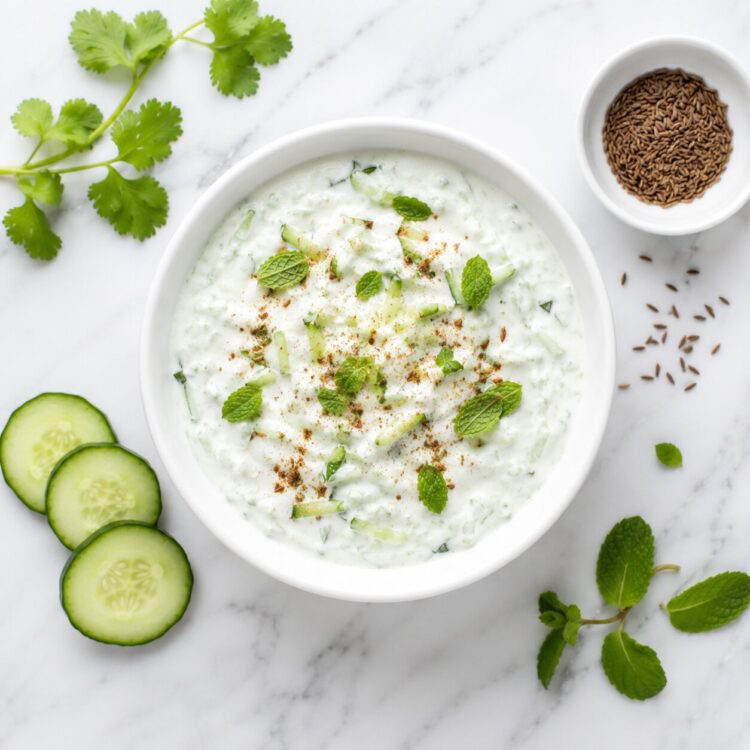
Garnish before bringing to the table: A light dusting of roasted cumin powder, a small pinch of Kashmiri red chili powder for a streak of deep color, two or three fresh mint leaves laid flat, and a few thin cucumber rounds arranged around the rim of the bowl.
7 Variations of Kheere Ka Raita Worth Making
1. Pudina Kheere Ka Raita (Mint-Forward)
Double the mint to 4 tablespoons and add 1 tablespoon of fresh mint chutney to the yogurt base. The result is a vivid green-flecked, intensely minty raita that works brilliantly alongside heavy, fatty dishes like biryani or mutton curry.
2. Boondi Kheere Ka Raita
Soak ¼ cup of plain boondi in warm water for 5-7 minutes, then squeeze gently and add alongside the cucumber. The boondi absorbs yogurt and becomes soft and slightly spongy — a beloved textural element that makes the raita more filling and substantial.
3. Anar Kheere Ka Raita (Pomegranate Cucumber)
Add ¼ cup of fresh pomegranate arils to the finished raita. The jewel-like seeds add bursts of sweet-tart juice, beautiful color, and an elegant visual appeal that makes this version ideal for formal dinners and festive occasions.
4. Lahsuni Kheere Ka Raita (Garlic Cucumber)
Grate 1 small garlic clove directly into the yogurt before whisking. The raw garlic integrates completely into the base and adds a pungent warmth that works particularly well alongside mild dishes where you want the raita to provide more flavor rather than just cooling.
5. Masaledar Kheere Ka Raita (Spiced)
Add ¼ teaspoon of chaat masala and a pinch of aamchur (dry mango powder) alongside the cumin and black salt. This version has more tang and complexity — closer to a chaat-style raita — and works well as a dip with papdi or as a sauce for aloo tikki.
6. Gajar Kheere Ka Raita (Carrot and Cucumber)
Add 3 tablespoons of finely grated carrot to the cucumber. The natural sweetness of carrot balances the slight bitterness of cucumber beautifully, adds a warm orange color, and boosts the nutritional profile significantly. A wonderful everyday version.
7. Vegan Kheere Ka Raita
Replace dairy dahi with plain, unsweetened coconut curd or cashew curd (available at specialty stores or easy to make at home). Replace milk with a small amount of unsweetened coconut water or plain plant milk. All the spices and herbs remain the same. The result is creamier than most expect — coconut curd in particular makes a silky, delicious vegan raita.
What to Serve Kheere Ka Raita With
The versatility of cucumber raita is part of what makes it so valuable in an Indian kitchen. It genuinely improves almost everything it sits beside:
Rice Dishes — The Classic Pairings:
- Chicken biryani or vegetable biryani — the most iconic combination; the raita cools the spiced rice and provides creamy contrast to the textured grains
- Vegetable pulao or matar pulao — lighter rice dishes where the raita provides the main flavor interest
- Jeera rice with dal — the raita bridges the simplicity of the rice with the richness of the dal
- Tomato rice or lemon rice — the acidity of both dishes is beautifully balanced by the cooling yogurt
Flatbreads — An Underrated Pairing:
- Stuffed parathas (aloo, paneer, gobi, mooli) — traditionally served with raita and pickle; the cool, creamy yogurt is the perfect foil for the spiced, fried filling
- Plain roti or phulka — even a simple everyday dal-roti meal feels more complete with a small bowl of raita on the side
- Missi roti — the strong besan flavor of missi roti pairs particularly well with the cool freshness of mint-heavy raita
Snacks and Starters:
- Alongside seekh kebab, shami kebab, or galouti kebab — the raita functions as a cooling sauce rather than just a condiment
- With aloo tikki or hara bhara kabab — drizzle the raita over the top as a sauce instead of serving separately
- As a dip for papdi or mathri — a simple, light snack plate that works beautifully as a starter or tea-time snack
Storage Guide and Make-Ahead Tips
Storage: Transfer any leftover raita to an airtight glass container — glass is preferable to plastic because it does not absorb strong aromas from other foods in the refrigerator and keeps the raita tasting clean and fresh. Refrigerate for up to 2 days.
Important: The raita will thicken slightly after refrigeration as the cucumber continues to release a little moisture into the yogurt. Stir before serving and adjust consistency with a splash of cold water or milk if needed.
Make-ahead strategy for large gatherings: Prepare the spiced yogurt base — whisked dahi, milk, cumin powder, black salt — up to 12 hours in advance. Store covered in the refrigerator. Grate and squeeze the cucumber and store separately in a small container. Combine the two components and add fresh herbs just 30-60 minutes before serving. This gives you the convenience of advance preparation without the wateriness that comes from storing the assembled raita too long.
What not to do: Never add herbs more than a few hours before serving — they wilt, discolor, and lose their freshness quickly once cut and mixed into yogurt. Add mint and coriander fresh for the best appearance and flavor.
Nutritional Benefits at a Glance
| Nutrient | Per Serving (Approx.) | Benefit |
|---|---|---|
| Calories | ~60 kcal | Light, low-calorie side dish |
| Protein | 3-4g | From yogurt — supports satiety |
| Carbohydrates | 5g | Mostly from yogurt’s natural lactose |
| Fat | 3g | Healthy dairy fat |
| Calcium | ~120mg | 12% of daily requirement |
| Probiotics | Live cultures | Gut health, immunity |
| Water Content | Very high | Hydration from cucumber |
| Cumin Compounds | Thymol, cuminaldehyde | Digestion, anti-bloating |
5 Expert Tips That Make All the Difference
Squeeze the cucumber twice. Grate it, squeeze once, wait two minutes, squeeze again. The second squeeze removes the residual water that migrates to the surface after the first squeeze. This dramatically extends how long the raita stays creamy.
Use cold dahi straight from the refrigerator. Warm yogurt gives you a warm, flat-tasting raita. Everything should be properly chilled — the dahi, the milk, even the mixing bowl if possible.
Always whisk the dahi before adding anything. This is the step most home cooks skip, and it is the step that makes the biggest visible difference in the final texture.
Season in two stages. Add half the cumin and black salt when assembling, taste after resting, then adjust. Flavors intensify during refrigeration — what tastes perfectly seasoned when freshly made may taste over-salted after 30 minutes.
Garnish generously and attractively. A plain bowl of white yogurt looks uninspiring. A bowl garnished with a pinch of vivid red Kashmiri chili, a scattering of cumin, and three or four perfect mint leaves looks like something from a restaurant. Presentation matters — and with raita, it takes ten seconds.
Frequently Asked Questions
Q1. Can I make cucumber raita in advance for a party?
Yes, but with a technique adjustment. Prepare the spiced yogurt base and store it refrigerated up to 12 hours ahead. Prepare the squeezed grated cucumber and store it separately. Combine them 30-60 minutes before serving and add fresh herbs right before bringing it to the table. Fully assembled raita stored more than 4-5 hours becomes watery and the herbs wilt — the split-preparation method solves both problems.
Q2. Why does my cucumber raita always become watery?
Almost always this comes down to not squeezing the grated cucumber thoroughly enough. Cucumber is 96% water by weight and continues releasing moisture after grating. Squeeze it firmly in a clean cotton cloth twice, removing as much water as possible before adding it to the yogurt. Using Greek-style thick dahi instead of regular dahi also helps, as it has lower moisture content to begin with.
Q3. Is raita good for digestion?
Yes — a well-made raita with roasted cumin, black salt, and mint is one of the most digestively supportive condiments in Indian cuisine. Yogurt’s live probiotic cultures support gut microbiome health. Roasted cumin stimulates digestive enzyme secretion and reduces post-meal bloating. Mint relaxes the smooth muscles of the digestive tract, easing discomfort. Black salt supports bile production. Eating raita alongside a heavy meal actively aids digestion rather than adding to the digestive burden.
Q4. What is black salt and can I substitute regular salt?
Black salt (kala namak) is a type of volcanic rock salt with a distinctive sulfurous, savory flavor from its natural sulfur compound content. It is widely available at Indian grocery stores, Kirana shops, and online. It is the salt that gives raita its characteristic flavor — not just saltiness but a mineral depth and umami quality that regular salt cannot replicate. You can substitute regular table salt or sendha namak (rock salt used for fasting) and the raita will still be good — just slightly less complex in flavor.
Q5. Can I add onion and tomato to cucumber raita?
Yes, and it is a popular variation in many households. Add 2-3 tablespoons of very finely chopped onion and 2 tablespoons of finely chopped tomato (seeds removed) alongside the cucumber. The onion adds a sharp, savory note; the tomato adds sweetness and color. This more substantial version works particularly well alongside simple everyday meals of dal and roti where you want the raita to provide more flavor and textural interest.
The Simplest Recipe That Makes the Whole Meal Better
There is something quietly powerful about a dish that does its work without drawing attention to itself — that makes everything around it taste better, feel lighter, sit more easily. Kheere Ka Raita is exactly that.
It asks almost nothing of you: ten minutes, a bowl, a whisk, seven ingredients. And it gives back something disproportionately generous: the freshness that balances a heavy biryani, the coolness that calms a fiery curry, the digestive comfort that makes a rich meal feel manageable, the Ayurvedic wisdom that has been serving Indian kitchens for thousands of years.
Make it this week — alongside whatever Indian meal you have planned. Taste the difference a proper raita makes. And once you understand it, you will never let another bowl of biryani sit without one again.
Tried this recipe? Share your variation in the comments below — we love hearing which version you made, what you served it with, and what your family thought. If you added boondi, pomegranate, or garlic, tell us how it turned out. Every variation is worth celebrating.
Perfect alongside: Vegetable Biryani | Chicken Biryani | Aloo Paratha | Paneer Paratha | Seekh Kebab | Dal Chawal | Matar Pulao
Cucumber raita