There are mornings when you have exactly 20 minutes, you are genuinely hungry, and you need something that will keep you going until lunch without a second thought about snacking.
Paneer Oats Chilla is that breakfast.
It is the meeting point of two nutritional superstars: oats, with their extraordinary beta-glucan fiber that slows digestion and keeps blood sugar stable for hours; and paneer, with its slow-digesting casein protein that genuinely suppresses hunger far more effectively than most plant proteins. Put them together in a spiced, crispy, vegetable-loaded Indian chilla, and you have one of the most genuinely satisfying breakfasts in the modern Indian healthy eating repertoire.
No fermentation. No complicated prep. No specialty ingredients. You need rolled oats, fresh paneer, a non-stick tawa, and about 20 minutes.
This guide gives you the complete recipe, the nutritional data behind why this combination works so powerfully, five tested variations, and practical tips for making this a sustainable weekly breakfast.
What Makes Paneer Oats Chilla Uniquely Powerful for a Healthy Breakfast
Why Oats as the Base?
Regular chilla is made from besan (chickpea flour) or moong dal. Both are excellent. But oats bring something unique: beta-glucan, a specific type of soluble fiber that has an extraordinary effect on blood sugar and appetite.
Beta-glucan dissolves in the digestive tract to form a thick, gel-like substance that:
- Slows the absorption of glucose — keeping blood sugar stable and preventing the insulin spike that triggers hunger
- Delays gastric emptying — you feel physically full for longer
- Feeds beneficial gut bacteria (Bifidobacterium, Lactobacillus) — supporting microbiome health
- Has a documented cholesterol-lowering effect — recognised by the European Food Safety Authority
One serving of Paneer Oats Chilla (made with ¼ cup rolled oats per chilla) provides approximately 2-3g of beta-glucan — enough to produce meaningful glycemic and satiety benefits.
Why Paneer in the Chilla?
Paneer is a fresh Indian cottage cheese — low in carbohydrates, rich in casein protein, and one of the most complete protein sources in the Indian vegetarian diet. Paneer provides approximately 18.9 grams of protein per 100g, making it one of the best plant-based (lacto-vegetarian) protein sources in the Indian diet.
When combined with the protein already present in the oats (approximately 2.5g per ¼ cup), one serving of Paneer Oats Chilla provides 15-18g of total protein. That is a significant protein load for a breakfast that takes 20 minutes to prepare.
The Combination Effect
Oats provide: sustained energy, cholesterol-lowering fiber, slower blood sugar response Paneer provides: complete protein, calcium, B vitamins, satiety from casein
Together, they produce a breakfast that satisfies hunger through three different mechanisms simultaneously — physical bulk (from fiber), prolonged digestion (from casein protein), and blood sugar stability (from beta-glucan). Very few breakfast foods achieve all three.
Nutritional Profile Per Serving (2 Chillas with Paneer Filling)
| Nutrient | Amount | Notes |
|---|---|---|
| Calories | 280-330 kcal | Complete breakfast range |
| Protein | 15-18g | Paneer + oats + yogurt combined |
| Carbohydrates | 28-32g | Primarily from oats — slow release |
| Fat | 10-14g | Largely from paneer (healthy dairy fat) |
| Fiber | 4-6g | Includes beta-glucan from oats |
| Calcium | ~300mg | ~30% daily requirement |
| GI | Low | Beta-glucan significantly lowers GI of the meal |
Ingredients for Paneer Oats Chilla (Makes 4 chillas, Serves 2)
For the Oats Chilla Batter
- ½ cup rolled oats (old-fashioned oats — not instant; instant oats are pre-cooked and produce a mushier, less structured batter)
- 2 tablespoons thick low-fat yogurt — adds binding, slight tang, and extra protein; replaces some of the water for a more cohesive batter
- ¼ cup water (adjust for batter consistency)
- 1-inch fresh ginger, grated
- 1-2 green chilies, finely chopped
- ¼ teaspoon turmeric
- ½ teaspoon cumin seeds or cumin powder
- A pinch of asafoetida (hing)
- Salt to taste
Vegetables to Fold Into Batter
- 1 small onion, very finely chopped
- 1 medium tomato, finely chopped, seeds removed
- ¼ cup grated carrot
- ¼ cup baby spinach or methi (fenugreek leaves), finely shredded
- 2 tablespoons fresh coriander, finely chopped
For the Paneer Filling / Topping
- 100g low-fat paneer, crumbled
- ¼ teaspoon red chili powder or Kashmiri chili
- ¼ teaspoon roasted cumin powder
- A pinch of black salt
- 1 teaspoon fresh coriander, chopped
- ½ teaspoon lemon juice
For Cooking
- Oil spray or ½ teaspoon oil per chilla
Step-by-Step Recipe
Step 1 — Prepare the Oats Batter
Add the rolled oats to a blender or food processor. Pulse 8-10 times until they become a coarse flour — not completely smooth, but no whole oat flakes remaining. You want something between flour and rough oat bran. This coarse texture creates chillas that are slightly crispy on the outside while remaining soft and structured inside.
Transfer to a mixing bowl. Add the yogurt, grated ginger, green chilies, turmeric, cumin, asafoetida, and salt. Mix well. Add water gradually, stirring continuously, until you achieve a thick, pourable batter — similar to a slightly thick pancake batter. The batter should fall from a spoon in a slow, steady stream.
Rest the batter for 5-7 minutes. During this time, the oat flour absorbs the moisture from the yogurt and water. The batter will thicken slightly — if it becomes too thick to pour, add 1-2 more tablespoons of water.
Step 2 — Fold in Vegetables
Add the finely chopped onion, tomato, grated carrot, shredded spinach or methi, and coriander to the batter. Fold everything together gently until evenly distributed. The vegetables add fiber, micronutrients, and visual appeal — and help the chilla hold together during spreading.
Step 3 — Season the Paneer Filling
In a small bowl, combine the crumbled paneer, red chili powder, roasted cumin powder, black salt, fresh coriander, and lemon juice. Mix gently until the spices are evenly distributed through the paneer. Set aside.
Step 4 — Cook the Chillas
Heat a non-stick tawa or skillet over medium heat for 2-3 minutes. Lightly spray with cooking oil or brush with a very thin layer.
Pour one ladleful of batter (approximately ¼ cup) onto the centre of the pan. Use the back of the ladle to spread gently in small, outward circular movements to a round approximately 6-7 inches across.
Cook on medium heat for 2-3 minutes until:
- The surface appears dry and matte (no wet shine)
- Small bubbles appear and pop on the surface
- The edges lift naturally
- The underside is golden to light brown (check with a spatula)
Step 5 — Add Paneer and Fold
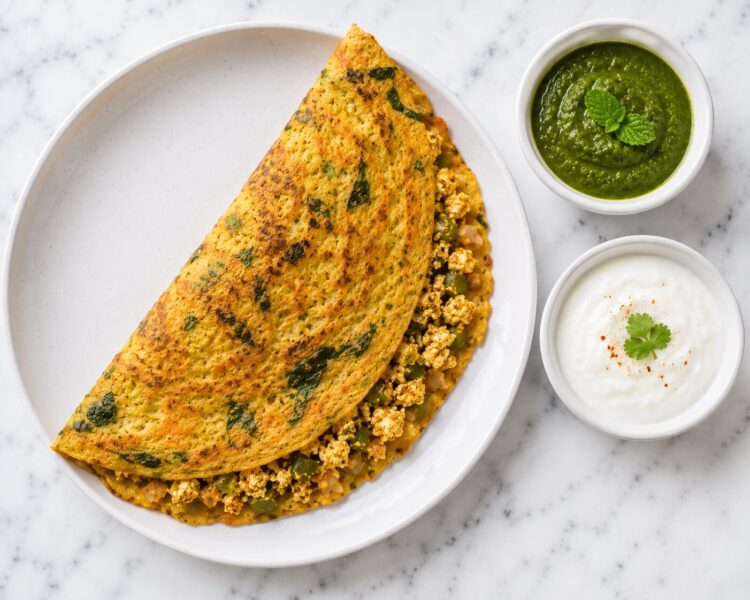
Place 2-3 tablespoons of the seasoned crumbled paneer on one half of the chilla. Using a spatula, fold the other half over the paneer filling — the chilla should hold together cleanly. Press lightly.
Cook the folded chilla for a further 60 seconds per side until both sides are golden and the paneer inside is warmed through.
Alternatively, scatter the spiced paneer over the top of the open chilla as a topping rather than folding. This open-face version gives you visible, attractive layers of colour and texture.
Why This Beats Regular Chilla or Plain Oats Breakfast
| Comparison | Paneer Oats Chilla | Plain Oats (with milk) | Regular Besan Chilla |
|---|---|---|---|
| Protein per serving | 15-18g | 8-10g | 10-12g |
| Beta-glucan fiber | Yes (from oats) | Yes (from oats) | No |
| Complete protein | Yes (paneer) | No | No |
| Satiety duration | 4-5 hours | 2.5-3 hours | 3-3.5 hours |
| Cooking time | 20 minutes | 5 minutes | 15 minutes |
| Calcium | High | High | Moderate |
| GI | Low | Low | Low-Medium |
The Paneer Oats Chilla wins on total protein, satiety duration, and complete amino acid profile compared to both alternatives, at the cost of slightly more cooking time.
5 Variations to Keep Breakfast Interesting
Variation 1 — Masala Aloo Paneer Oats Chilla
Add 2 tablespoons of spiced mashed potato alongside the crumbled paneer inside the chilla. The potato adds carbohydrates for high-energy mornings (pre-workout breakfasts) and makes the chilla more substantial.
Variation 2 — Green Moong + Oats Chilla with Paneer
Replace ¼ cup of oats with ¼ cup of soaked and blended green moong dal. This hybrid batter provides even more protein, adds a slight earthiness, and makes the chilla slightly more structured and crisp.
Variation 3 — Spinach Oats Paneer Chilla (High Iron)
Blend the oats with ½ cup of fresh baby spinach leaves and water together. The chilla batter turns vivid green and becomes exceptionally rich in iron, folate, and Vitamin C. The lemon juice in the paneer filling ensures maximum iron absorption.
Variation 4 — Cheese + Paneer Oats Chilla (Kids’ Favourite)
Replace some of the paneer with grated processed cheese (or mozzarella). The cheese melts inside the folded chilla, creating a gooey interior. Mildly spiced. Children who might refuse plain oats will eat this enthusiastically.
Variation 5 — Zero-Oil Air Fryer Version
Brush the chilla batter lightly onto greased air fryer inserts, top with paneer, and air fry at 180°C for 8-10 minutes. The result is slightly different in texture — crisper throughout — but entirely oil-free, reducing total calories by approximately 40-45 kcal per chilla.
Expert Tips for Perfect Paneer Oats Chilla
Use old-fashioned rolled oats, not instant. Instant oats are pre-cooked and absorb water too rapidly — they create a batter that is either too thick or too thin, and the chilla tends to be gummy. Old-fashioned rolled oats pulse into a course flour that creates a far better chilla structure.
The 5-minute batter rest is important. Do not skip it. The resting period allows the oat flour to hydrate fully — the batter will thicken slightly and become more cohesive, producing a chilla that holds together during spreading and flipping.
Spread confidently and quickly. Oats batter sets slightly faster than besan batter. Once the batter hits the hot pan, spread it within 3-4 seconds. Hesitation results in an uneven chilla with thicker and thinner patches.
Medium heat throughout. High heat causes the oat chilla to brown too quickly while the inside stays gummy. Medium heat for the entire cooking time ensures even cooking through.
Pre-season the paneer. Do not add plain crumbled paneer — season it with spices and lemon juice first. The pre-seasoned paneer adds a second layer of flavour inside the chilla that dramatically improves the eating experience.
Storage and Make-Ahead
Batter: Refrigerate covered for up to 12 hours. Stir before use — the batter thickens in the fridge and needs thinning with 1-2 tablespoons of water.
Cooked chillas: Best eaten fresh. Can be stored for up to 6-8 hours at room temperature wrapped in a cloth, or refrigerated for up to 1 day and reheated on a dry tawa.
Meal prep: Pulse and blend the oats dry (without liquids) and store in a sealed jar. On weekday mornings, measure, add liquids and vegetables, rest 5 minutes, cook — faster than making from scratch.
Frequently Asked Questions
Q1. Can I make oats chilla without a blender?
Yes — soak the rolled oats in the yogurt and water mixture for 20-30 minutes until they become soft enough to mix into a smooth batter manually. The texture will be slightly different (less uniform) but perfectly edible. Alternatively, use oat flour (available pre-ground) which requires no blending at all.
Q2. Can I use instant oats for this recipe?
Technically yes, but with adjustments. Instant oats absorb water much faster — reduce the water in the batter by 30% and skip the resting time. The resulting chilla will be slightly softer and less crispy than the rolled oats version. Old-fashioned rolled oats give a noticeably better result.
Q3. How much protein does one Paneer Oats Chilla have?
One Paneer Oats Chilla made with approximately 25g paneer filling per chilla and ¼ cup rolled oats in the batter provides approximately 8-9g of protein per chilla. Two chillas (a normal serving) provides 15-18g protein — enough to support satiety and muscle maintenance in a typical weight loss diet.
Q4. Is Paneer Oats Chilla suitable for diabetics?
Yes — it is one of the better breakfast choices for diabetic patients. The beta-glucan from oats has documented blood glucose-lowering effects and significantly reduces the glycemic impact of the meal. Paneer contributes only 3.5g carbohydrates per 100g with virtually no effect on blood sugar. Together, this combination supports stable post-breakfast glucose levels. Use minimal or no salt and avoid sugary chutneys alongside it.
Q5. Can I make this chilla vegan?
Yes. Replace the paneer with crumbled firm tofu seasoned the same way, and replace the yogurt in the batter with unsweetened plant-based yogurt (coconut or almond milk yogurt). The protein content will be slightly lower (tofu has approximately 8g protein per 100g vs. 19g for paneer) but the chilla will still be nutritious and perfectly delicious.
The 20-Minute Breakfast That Changes Your Mornings
Once you have a routine that produces a genuinely satisfying, high-protein breakfast in 20 minutes — one that keeps you full until lunch without snacking — everything else about your day becomes slightly easier.
Paneer Oats Chilla is that routine. Start with the standard recipe, then rotate through the variations as the weeks go on. Your breakfasts will be different enough to stay interesting while your nutritional baseline stays high.
Try this recipe tomorrow morning and share your results below. Tell us which variation you tried, whether the satiety lasted until lunch, and what chutney you served it with. Your experience helps others build better morning habits.
Pairs beautifully with: Mint-Coriander Chutney | Low-Fat Curd | Tomato Chutney | Fresh Lime Water
Also explore: Moong Dal Chilla | High Protein Poha | Paneer Bhurji | Besan Chilla