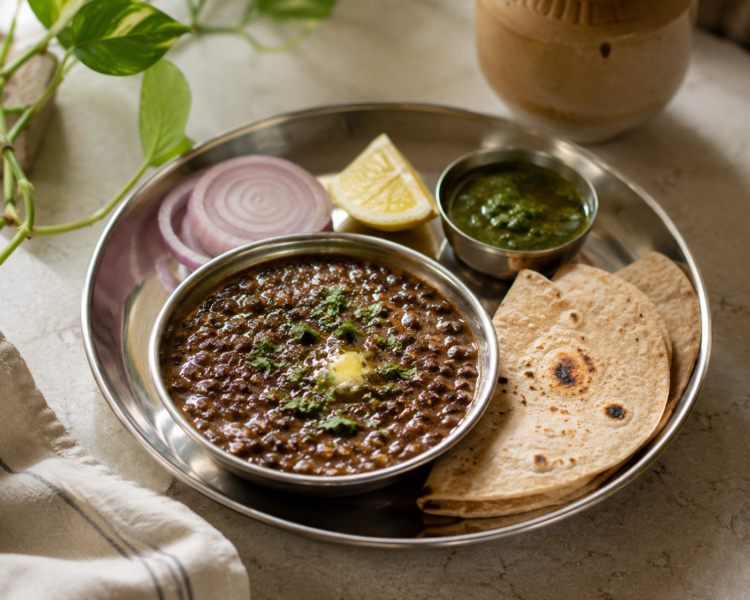
Ask any North Indian household what dal they grew up eating with hot phulkas on a weeknight, and nine out of ten will have a story about sukhi urad dal. It is not a showstopper dish. It doesn’t have a rich, buttery gravy or a restaurant-style tadka drizzle. But it has something even better — that deep, earthy, protein-packed comfort that fills you up and warms you from the inside.
Sukhi urad dal, also called dry urad dal or dhuli urad ki sabzi, is made with husked and split black gram — the same lentil that goes into the iconic Dal Makhani, except here it’s cooked dry with minimal water and bold, simple spices. No onion, no garlic, no tomato. Just whole spices, a pinch of hing, and the natural nuttiness of the lentil doing all the talking.
This recipe is especially popular in Punjab and UP homes, where it is served alongside roti or paratha, a squeeze of lemon, and fresh onion slices. It is also a brilliant tiffin recipe — it packs well, stays good for hours, and doesn’t get soggy or watery the way curried dals tend to.
If you’ve only ever eaten urad dal in its gravy form, this version will genuinely surprise you. It is quick, wholesome, and tastes like home.
What is Sukhi Urad Dal?
Sukhi urad dal (सूखी उरद दाल) translates directly to “dry urad lentils.” It is made from dhuli urad dal — white, husked, and split black gram — which is one of India’s most nutritious legumes.
Unlike dal makhani or dal tadka, which have a flowing consistency, sukhi urad dal is cooked with very little water so each grain remains separate, soft, and well-spiced. Think of it as a sabzi (dry vegetable preparation) made with lentils rather than a soup-like dal.
What makes it different from regular urad dal?
| Feature | Sukhi Urad Dal | Dal Makhani / Dal Tadka |
|---|---|---|
| Texture | Dry, grain-separate | Creamy, flowing gravy |
| Cooking time | 30 mins (after soaking) | 45–60 mins |
| Water used | Very little (¼ cup) | Large quantity |
| Onion/Garlic | No | Yes (mostly) |
| Best served with | Roti, phulka, paratha | Rice, naan |
| Lentil type | Dhuli (split & husked) | Whole urad (for makhani) |
Why You’ll Love This Recipe
- High in protein — Urad dal delivers around 25g of protein per 100g of dry lentil, making it one of the best plant-based protein sources in Indian cooking.
- Vegan and gluten-free — No dairy, no wheat. Naturally clean.
- No onion, no garlic — Perfect for Jain-friendly or satvik cooking days.
- Ready in 30 minutes — Minus the soaking time, active cooking is under 15 minutes.
- Tiffin-friendly — Packs well, doesn’t spill, and tastes just as good at lunch.
- Budget-friendly — One cup of urad dal easily feeds 3 people for under ₹30.
Ingredients You Need
This is a minimal-spice recipe — and that’s exactly why it works so well. Every ingredient has a purpose.
Main Ingredient
- 1 cup dhuli urad dal (husked and split white urad dal) — soaked for 4 hours
Spices & Seasonings
- 2 tbsp neutral oil — mustard oil gives a more authentic Punjabi flavour; refined oil works fine
- 1 pinch hing (asafoetida) — the flavour base; don’t skip this
- ½ tsp turmeric powder (haldi)
- ⅛ tsp red chilli powder (or up to ½ tsp if skipping green chilli)
- 1–2 green chillies, slit or finely chopped
- ¼ tsp garam masala powder
- Salt to taste
Water & Garnish
- ¼ cup water (just enough to prevent sticking and allow steam cooking)
- 1–2 tbsp fresh coriander leaves, chopped
- Lemon juice for serving
Pro Tip: Why Soaking Urad Dal is Non-Negotiable
Here’s the one step most people skip — and it ruins the dish.
Soak your urad dal for at least 4 hours (overnight is even better).
Here’s why this matters:
- Texture: Without soaking, urad dal becomes sticky and mushy when pressure cooked with minimal water. Soaked dal stays plump and separate — which is the whole point of a “sukhi” (dry) preparation.
- Cooking time: Soaked dal cooks in just 2 whistles. Unsoaked dal needs 5–6 whistles and still may not cook evenly.
- Digestibility: Soaking reduces phytic acid in the lentil, making it easier to digest and improving nutrient absorption. This is especially helpful for people who find legumes heavy on the stomach.
- Taste: Soaked lentils absorb spices more evenly during cooking.
Quick tip: If you forgot to soak, use hot water and soak for 1–1.5 hours as a shortcut. Results won’t be as good, but workable.
Step-by-Step: How to Make Sukhi Urad Dal
Step 1 — Soak the Lentils
Rinse 1 cup of dhuli urad dal 2–3 times under running water until the water runs mostly clear. Cover with fresh water and soak for 4 hours at room temperature.
After soaking, drain all the water completely. Rinse once more with fresh water and set aside.
📸 Image Prompt 1: Overhead flat-lay of dry white urad dal in a small steel bowl, surrounded by whole spices (hing, green chilli, turmeric) on a white marble surface. Natural daylight. Clean and minimal styling.
Step 2 — Bloom the Hing
Heat 2 tablespoons of oil in a 2-litre stovetop pressure cooker over low heat. Once the oil is warm, add a pinch of hing (asafoetida).
Let it sizzle for just 5–8 seconds. Don’t let it burn — hing turns bitter very quickly on high heat. Keep the flame on low throughout.
Why a 2-litre cooker specifically? A larger cooker distributes heat unevenly for small quantities, which can scorch the dal at the bottom. The 2-litre size builds pressure correctly for this recipe. This is a common reason the dish fails for home cooks using bigger cookers.
Step 3 — Add Dal and Spices
Add the soaked and drained urad dal to the cooker. Mix it well with the hing-infused oil.
Now add:
- ½ tsp turmeric powder
- 1–2 slit or chopped green chillies
- ⅛ tsp red chilli powder
- Salt to taste
Stir everything together thoroughly so the spices coat all the lentils evenly.
Step 4 — Add Water and Pressure Cook
Add exactly ¼ cup of water. Not more — the goal is a dry, separate-grain texture, not a gravy.
Stir once more, then close the pressure cooker lid. Cook on low to medium-low heat for 7 minutes or 2 whistles.
This gentle, slow cooking is what keeps the grains intact. High heat can cause the dal to bubble violently and turn mushy.
Step 5 — Check and Finish
Allow the pressure to release naturally — do not force open the lid. Once the pressure drops completely, open the lid and check the dal.
The lentils should be:
- Fully cooked through (soft when pressed between fingers)
- Separate — not clumped or mushy
- Dry, with no standing liquid
If the dal is slightly undercooked, add 2–3 tablespoons of water, close the lid, and give it one more whistle.
Once done, add ¼ tsp garam masala and gently mix. Finish with a generous handful of fresh chopped coriander leaves.
Step 6 — Serve
Serve hot or warm with:
- Whole wheat roti or phulka
- Laccha paratha
- Steamed rice (yes, it works!)
- As a sandwich filling or a warm grain bowl
Squeeze fresh lemon juice over the dal just before eating — the acidity brightens all the earthy spices beautifully.
Nutrition Snapshot (Per Serving, Approx.)
| Nutrient | Amount |
|---|---|
| Calories | ~300 kcal |
| Protein | 16g |
| Carbohydrates | 37g |
| Dietary Fibre | 15g |
| Fat | 10g |
| Iron | 5mg |
| Calcium | 44mg |
| Vitamin C | 8mg |
Urad dal is one of the richest plant-based sources of iron and folate, making this recipe especially valuable for vegetarians and vegans who need to meet their daily iron requirements through food.
Expert Tips for the Best Sukhi Urad Dal
These small tweaks make a big difference:
- Use mustard oil for a more authentic Punjabi flavour. Heat it to smoking point first, then reduce the flame before adding hing.
- Don’t rush the soaking. 4 hours minimum. If cooking for dinner, soak in the morning.
- Asafoetida is the soul of this dish. Even a small pinch completely transforms the flavour of the dal. Don’t substitute or skip it.
- Less water = better texture. Start with ¼ cup. You can always add more, but you can’t take away water once the dal turns mushy.
- Garam masala goes in last, after pressure cooking — this preserves its fragrance. Adding it before cooking dulls its aroma.
- Adjust chilli to your family. If cooking for kids, skip the green chilli entirely and reduce red chilli powder to a pinch.
Variations to Try
1. Jeera-Tadka Version
After pressure cooking, heat 1 tsp ghee separately, add 1 tsp cumin seeds, let them splutter, and pour over the cooked dal. Adds a lovely smoky dimension.
2. Amchur (Dry Mango Powder) Twist
Add ½ tsp amchur at the end instead of (or along with) lemon juice for a slightly different tangy note.
3. Dhaba-Style Dry Urad Dal
Add a small piece of dried kashmiri chilli along with the green chilli for a deeper red colour and mild fruity heat — just like roadside dhabas.
4. Make It with Moong Dal
The same recipe works with dhuli moong dal (split yellow moong). Use slightly less water and cook for just 1 whistle since moong dal cooks faster.
How to Use Leftover Sukhi Urad Dal
Don’t throw away any extra dal — it’s incredibly versatile:
- Open sandwich toast: Spread on bread, top with sliced tomato and cheese, and grill.
- Dal stuffed paratha: Use as a filling inside aloo paratha-style flatbreads.
- Warm grain bowl: Toss with boiled rice, drizzle of ghee, and a fried egg on top.
- Dal chaat: Mix with diced onion, tomato, green chilli, lemon juice, and chaat masala for a quick high-protein snack.
What to Serve with Sukhi Urad Dal
This dal is flexible enough to anchor a full meal:
- Classic: Roti + sukhi urad dal + pickle + sliced onion + lemon
- Festive: Paratha + sukhi urad dal + homemade white butter + lassi
- Lunch box: Roti rolls filled with dal + chutney
- Rice option: Steamed basmati + sukhi urad dal + a dollop of ghee
Pair it with a simple cucumber raita or a tangy green chutney to round out the meal.
Conclusion
Sukhi urad dal is proof that the best Indian recipes are often the simplest ones. A handful of pantry spices, one cup of soaked lentil, and a pressure cooker — that’s all it takes to make something genuinely nourishing and delicious.
Whether you’re making a quick weeknight dinner or packing a wholesome tiffin, this Punjabi dry urad dal recipe deserves a regular spot in your kitchen rotation. It’s high-protein, vegan, budget-friendly, and ready in 30 minutes.
Try it this week and let us know in the comments below — do you add any extra spice or a special twist to your sukhi urad dal?
And if you enjoyed this recipe, don’t miss our Lasooni Dal Tadka, Masala Khichdi, and Dal Makhani recipes — all tried, tested, and loved at Kitchen Whisper! 🍽️
FAQs
Q1. Can I make sukhi urad dal without a pressure cooker?
Yes! Use a heavy-bottomed pan with a tight lid. After adding the dal, spices, and water, cover and cook on very low heat for 20–25 minutes, checking and stirring every 5–7 minutes. Add small splashes of water if needed to prevent sticking. The result is slightly different in texture but equally delicious.
Q2. Why did my urad dal turn mushy and sticky?
Two common reasons: (a) the dal wasn’t soaked long enough, or (b) too much water was added before pressure cooking. Always soak for at least 4 hours and use just ¼ cup of water. Cooking on a high flame can also cause the dal to break down too fast — keep the heat on low to medium-low.
Q3. Is sukhi urad dal good for weight loss?
Absolutely. One serving has around 300 calories and 16g of protein with 15g of dietary fibre — a combination that keeps you full for hours and reduces overall calorie intake. It’s a far better lunch option than most processed snacks or restaurant food. The low-fat, no-onion-no-garlic version is also suitable for detox or satvik diets.
Q4. Can I use whole urad dal (sabut urad) instead of dhuli urad dal?
Whole urad dal (with skin) will not work for this recipe. The skin makes it cook very differently — it needs much more water and cooking time, and the result is more like a gravy dal (similar to dal makhani base). For sukhi urad dal, always use dhuli urad dal — white, husked, and split.
Q5. How long does sukhi urad dal stay fresh?
Store in an airtight container in the refrigerator for up to 2 days. Reheat in a pan with 1–2 tablespoons of water on low heat, or microwave for 90 seconds. It may dry out further on reheating — a tiny drizzle of ghee or oil while reheating brings it back to life.
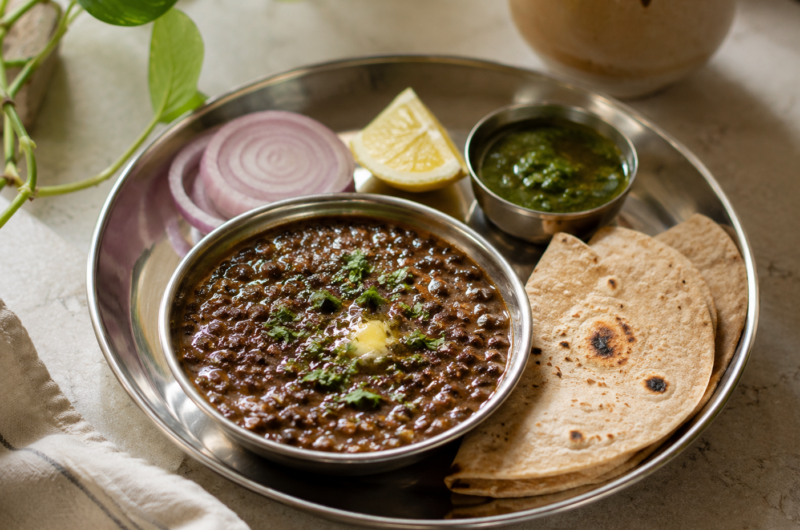
Sukhi Urad Dal (Punjabi Style Dry White Urad Dal)
Course: Side Dish / Main Course (Dal)Cuisine: Indian, North Indian, PunjabiDifficulty: Easy4
servings5
minutes15
minutes300
kcal4
HrsIngredients
1 cup dhuli urad dal (split and husked white urad dal)
2 tbsp neutral oil (mustard oil preferred for Punjabi flavour)
1 pinch hing (asafoetida)
½ tsp turmeric powder
1–2 green chillies, slit
⅛ tsp red chilli powder
¼ cup water
Salt to taste
¼ tsp garam masala powder
1–2 tbsp fresh coriander leaves, chopped
Lemon juice for serving
Directions
- Rinse urad dal and soak in water for 4 hours. Drain and rinse again.
- Heat oil in a 2-litre pressure cooker on low heat. Add hing and let it sizzle for 5 seconds.
- Add soaked urad dal and mix well.
- Add turmeric, green chillies, red chilli powder, and salt. Stir to coat.
- Add ¼ cup water and mix again.
- Pressure cook on low to medium heat for 7 minutes (2 whistles).
- Let pressure release naturally. Open and check — dal should be cooked through but separate.
- If undercooked, add 2 tbsp water and cook for 1 more whistle.
- Add garam masala and mix gently.
- Garnish with coriander leaves. Serve hot with roti, phulka, or paratha. Squeeze lemon juice on top before eating.
Notes
- Always soak urad dal for minimum 4 hours — this prevents it from turning mushy.
- Use only a 2-litre pressure cooker for best results. Larger cookers can burn the dal.
Garam masala should be added after cooking for maximum fragrance.- Leftovers can be used as a filling for parathas or a spread on toast.