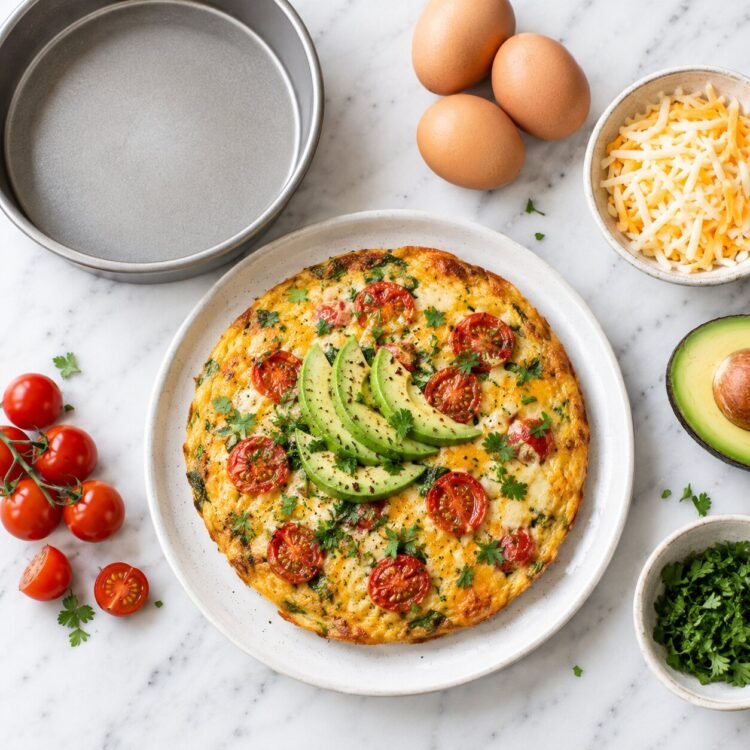
Every person who has ever attempted to flip an omelette on a stovetop has a story. Sometimes the flip goes perfectly — a confident wrist movement and the omelette lands exactly right. More often, there is a moment of hesitation, the omelette folds on itself wrong, the filling spills, and the whole thing becomes a scrambled egg situation with ambitions.
Air Fryer Omelette eliminates that entire drama.
No flipping. No watching the heat. No moment of commitment where the wrist has to do something decisive and irreversible. You whisk three eggs with milk and cheese, pour it into a greased pan, place it in the air fryer basket, and eight minutes later you have a soft, fluffy, perfectly set omelette that slides cleanly onto a plate and accepts whatever toppings you love.
It is genuinely hands-free in a way that stovetop cooking never is. You can make coffee, empty the dishwasher, get the children ready, or simply do nothing — and the air fryer produces a consistently good omelette without any monitoring or intervention.
This recipe is the foundation: a cheesy three-egg omelette at 310°F that comes out soft and custardy in the centre, with a lightly set top and golden edges where the cheese melts against the pan sides. From this foundation, the variations are essentially unlimited — eight specific ones are covered in detail below, from a Denver omelette to an Indian masala variation to a salmon-topped high-protein version.
Why 310°F Is the Most Important Number in This Recipe
Most air fryer recipes operate at 375-400°F. This omelette is cooked at 310°F — and that specific, lower temperature is the key to everything that makes it work.
The Protein Coagulation Science
Eggs are essentially a protein suspension in water. When heat is applied, the egg proteins (primarily ovalbumin in the white and livetin in the yolk) denature — their molecular structure unfolds and they coalesce into a solid matrix.
At high temperatures (375°F+): Proteins coagulate rapidly and completely, expelling moisture as they tighten. The result is an omelette that sets almost immediately on the outside while the centre may still be liquid — and as the centre catches up, the exterior overcooks and becomes rubbery, dry, and tough.
At 310°F (low and slow): Proteins coagulate slowly and evenly throughout the entire egg mass simultaneously. The result is a uniformly tender, soft, custardy texture that sets gently from exterior to centre with no rubbery edges.
This is the same principle behind the French practice of cooking scrambled eggs on very low heat — the slower the protein coagulation, the more tender the final texture. The air fryer at 310°F achieves this for an omelette in a way that is far more consistent than stovetop low-heat cooking, which still requires constant stirring and attention.
The Dairy-Fat Mechanism
The recipe adds 1½ tablespoons of milk or cream — and this addition is not just for richness. It serves a specific mechanical function.
The fat in dairy (particularly in cream, which has a higher fat content than milk) surrounds and coats the egg protein molecules. This fat coating slows down the rate at which the proteins can collide and bond with each other — in other words, it physically delays coagulation. The result is a softer, more tender, more custardy set that takes longer to achieve the same internal temperature, giving the slow 310°F air fryer more time to produce even, gentle cooking throughout.
The water in dairy (both milk and cream contain significant water) vaporises during cooking, creating steam pockets within the egg matrix — this steam is what produces the fluffiness. More water = more steam = fluffier texture.
Milk vs cream: Milk produces a slightly lighter, fluffier result (more water, less fat). Cream produces a richer, more custardy, more restaurant-style result (more fat, less water). For a weekday breakfast, milk is practical and excellent. For a weekend brunch you want to feel special, cream is worth using.
Why Cheese Is Non-Negotiable
The recipe notes specifically say “don’t skip cheese” — and the reason goes beyond flavour. Cheese does three distinct things in this recipe:
- It melts into the egg matrix, creating fat distribution throughout the set egg. This fat keeps the interior moist during the full 8 minutes at 310°F — without it, the egg can dry slightly in the circulating air fryer environment.
- It creates additional protein networks that support fluffiness. Melted cheese proteins interweave with egg proteins in a way that produces more structure — preventing the omelette from deflating as much after it comes out of the air fryer.
- It provides flavour intensity. A plain egg omelette from an air fryer, without cheese, can taste flat and slightly sulphury. Cheese’s amino acid complexity and salt content transforms the flavour into something that tastes genuinely made-with-care rather than basic.
The Pan Question: What Works and What Does Not
Because this recipe requires an oven-safe container inside the air fryer basket (you cannot pour liquid egg directly into the basket), the pan choice matters.
Best Options for Air Fryer Omelette
6-inch round cake pan (the optimal choice): This is the pan size the recipe was developed for. At 6 inches, three eggs fill the pan to a depth that produces the right balance of thickness and cooking time. The omelette is substantial enough to be satisfying but thin enough to cook through evenly at 310°F in 8 minutes. Most 5-6 quart basket-type air fryers accommodate a 6-inch pan comfortably.
4-inch mini cake pans: Excellent for individual servings or for smaller air fryers. Use 1-2 eggs per 4-inch pan; reduce cooking time to 5-6 minutes. These are particularly good for families where everyone wants different fillings — each person gets their own individually customised omelette.
Oven-safe ramekins (6 oz or 8 oz): Produce a thick, almost soufflé-like omelette rather than a flat one. Longer cooking time (10-12 minutes) because the depth of the egg is greater. The result is more like a baked egg custard — delicious in its own way.
8-inch cake pan: Works for larger quantities (4-5 eggs). Increase cooking time to 10-12 minutes. The larger surface area means the omelette is thinner — more crepe-like.
What NOT to Use
Silicone pans: While silicone is heat-resistant, it has poor heat conductivity — the omelette will not set as evenly as it does in a metal pan. Skip silicone for egg dishes.
Non-oven-safe containers: Always check that any pan you use in an air fryer is rated oven-safe. Any container not designed for oven temperatures should not be used.
Parchment or paper: Pouring liquid egg onto parchment in an air fryer basket results in the egg flowing to the lowest point and cooking unevenly.
Ingredients for Air Fryer Omelette (Serves 2)
- 3 large eggs — room temperature for the most even whisking and incorporation; cold eggs from the refrigerator can leave unwhisked streaks that cook into tough patches
- 1½ tablespoons whole milk or cream — whole milk for fluffiness; heavy cream for richness; see the dairy science section above for guidance on which to choose
- Salt and pepper to taste — season before cooking; under-seasoned egg is the most common cause of flat-tasting omelettes
- ¼ cup shredded cheese, plus more for topping — see the full cheese guide below
Cheese Options and What Each Produces
| Cheese | Melt Quality | Flavour | Best For |
|---|---|---|---|
| Sharp cheddar | Excellent | Bold, tangy | Classic everyday omelette |
| Mozzarella | Very good | Mild, creamy | Mild, clean-flavoured version |
| Monterey Jack | Excellent | Mild, creamy | Smooth, rich version |
| Goat cheese | Good | Tangy, distinctive | Sophisticated brunch version |
| Mexican blend | Excellent | Complex, mild-savoury | Southwest / Mexican variations |
| Gruyère | Very good | Nutty, complex | Elevated, French-inspired |
| Feta | Moderate | Salty, tangy | Mediterranean variation |
Step-by-Step: How to Make Air Fryer Omelette
Step 1 — Whisk the Egg Mixture Until Frothy
In a medium mixing bowl, crack all three eggs. Add the milk or cream, salt, and pepper.
Using a fork or metal whisk, beat the mixture vigorously for 60-90 seconds until it is frothy — small bubbles visible throughout, the mixture noticeably lighter in colour than unbeaten eggs, and a slightly increased volume.
This frothing step is important: the vigorous beating incorporates air bubbles into the egg mixture. These air bubbles expand during cooking, contributing directly to the fluffy, lifted texture of the finished omelette. An under-whisked egg mixture produces a flat, dense omelette; a thoroughly frothy mixture produces the soft, cloud-like result you are aiming for.
Add approximately half the cheese (2 tablespoons) to the whisked egg mixture and stir to combine.
Step 2 — Prepare the Pan
Lightly grease the 6-inch cake pan with cooking spray or a very thin layer of butter. Every surface that will contact the egg should have a thin, even film of fat — this is what allows the omelette to release cleanly from the pan after cooking.
Pour the whisked egg and cheese mixture into the greased pan. If you want an extra cheesy top, sprinkle the remaining cheese (or additional shredded cheese) evenly over the surface.
Step 3 — Preheat the Air Fryer
Preheat the air fryer to 310°F (155°C) for 8 minutes. This specific temperature, confirmed by the America’s Test Kitchen principle of low-and-slow egg cooking, is what produces the soft, custardy result rather than the rubbery, browned texture of higher-temperature cooking.
A properly preheated air fryer at 310°F will begin cooking the egg gently and evenly from the moment the pan enters. A cold air fryer heats gradually — the egg sits in a warming environment rather than cooking environment for the first 2-3 minutes, which can cause uneven setting.
Step 4 — Cook Without Interruption
Place the pan into the preheated air fryer basket. Close the basket and do not open it for the first 6 minutes.
Total cooking time for 3 eggs in a 6-inch pan: approximately 8 minutes at 310°F. This produces an omelette that is fully set at the edges and sides, lightly golden from the cheese on top, and just set in the very centre — it should no longer look wet or liquid, but should have a slight give when the pan is gently tilted.
Timing adjustments by egg quantity:
- 2 eggs in a 6-inch pan: Approximately 7 minutes
- 3 eggs in a 6-inch pan: 8 minutes (base recipe)
- 4 eggs in a 6-inch pan: Approximately 9 minutes
For extra cheesy topping: In the last 1-2 minutes of cooking, open the air fryer briefly and scatter additional shredded cheese over the surface. Close and finish cooking. The cheese will melt completely in the final 1-2 minutes.
Step 5 — Rest, Release, and Serve
When done, remove the pan from the air fryer and place on a wire rack for 1 minute. This brief rest allows the omelette to firm slightly — a very fresh-from-the-heat omelette is fragile and more likely to break during release.
Run a rubber spatula or butter knife around the entire edge of the pan, loosening the omelette from the sides. Gently slide the omelette onto a serving plate — it should release cleanly without tearing.
Add toppings immediately and serve. The omelette is at its best in the first 3-4 minutes after plating.
8 Variations That Transform the Base Recipe
1. Denver Omelette
Add to the egg mixture before pouring: ¼ cup finely diced green bell pepper, 2 tablespoons finely diced white onion, 2 tablespoons diced cooked ham or crumbled cooked bacon. Use cheddar cheese. Serve with salsa or pico de gallo alongside.
2. Indian Masala Omelette
Add to the egg mixture: 1 tablespoon very finely chopped onion, 1 tablespoon finely chopped tomato (seeds removed), 1 teaspoon finely chopped fresh coriander, ¼ teaspoon turmeric, a pinch of cayenne, ¼ teaspoon ground coriander. Skip the dairy cheese and use crumbled paneer instead for an Indian-style version.
3. Mexican Omelette
Season the egg mixture with ¼ teaspoon chili powder, ¼ teaspoon cumin, a pinch of garlic powder, and a pinch of smoked paprika. Add finely chopped jalapeño and green bell pepper. Use Mexican blend cheese. Serve topped with sliced avocado and a spoon of pico de gallo.
4. Garden Vegetable Omelette
Add finely chopped low-moisture vegetables to the egg mixture: ¼ cup diced red bell pepper, 2 tablespoons very finely chopped onion, 2 tablespoons finely chopped spinach (squeezed very dry — see moisture note below). Use mozzarella.
The moisture warning: High-moisture vegetables — whole mushrooms, zucchini, fresh tomatoes, and spinach that has not been squeezed dry — release water during cooking. That water creates steam inside the omelette that prevents proper setting, producing a wet, undercooked centre. Either use low-moisture vegetables, or pre-cook and dry high-moisture vegetables before adding.
5. Thai-Inspired Omelette
Replace the salt in the egg mixture with ½ teaspoon of fish sauce. Use minimal cheese (or skip entirely). Top the finished omelette with a drizzle of sriracha and a handful of fresh chopped coriander and thinly sliced spring onion.
6. Smoked Salmon Omelette
Make the basic cheese omelette. After sliding onto the serving plate, top with 2 thin slices of smoked salmon, a tablespoon of cream cheese dolloped in small amounts, a few capers, and a squeeze of fresh lemon juice. This high-protein variation contains approximately 200+ calories with an extraordinary protein content.
7. Sautéed Cherry Tomato Omelette
While the omelette cooks, quickly sauté 6-8 halved cherry tomatoes in a small pan with a little butter, a pinch of salt, and dried oregano for 2-3 minutes until they blister and release their juices. Spoon over the finished omelette immediately before serving.
8. Egg Omelette Sandwich
Cook the base omelette. Cut to fit two slices of whole-grain or sourdough bread. Spread both bread slices with a thin layer of good mayonnaise. Layer the omelette on one slice, add thinly sliced avocado, fresh tomato slices, and a drizzle of hot sauce or sriracha. Close the sandwich and serve. This is a complete, high-protein, genuinely satisfying meal.
Troubleshooting: Why Your Omelette Might Not Be Fluffy
Problem: Flat or Dense Texture
Most likely causes: the eggs were not whisked until frothy (insufficient air incorporation), the dairy was skipped, the cheese was omitted or insufficient, or the temperature was too high (which drives out moisture rapidly). Whisk vigorously until visibly bubbly before cooking, use full-fat dairy, and never skip the cheese.
Problem: Rubbery or Tough Texture
Most likely cause: overcooked at too high a temperature. At 310°F for 8 minutes, the omelette should be just set — it should not have brown, rubbery edges. If it is overcooking, reduce to 300°F and check 1-2 minutes earlier. All air fryers run slightly differently.
Problem: Wet or Undercooked Centre
Most likely cause: high-moisture fillings added without pre-cooking, too many eggs for the pan size (which increases depth beyond what 8 minutes can penetrate), or cooking time too short. Pre-cook and dry wet vegetables. For thicker omelettes (4 eggs in a 6-inch pan), add 1-2 minutes.
Problem: Sticks to the Pan
Most likely cause: insufficient greasing. Make sure every inch of the pan’s interior surface (sides included) is coated with cooking spray or fat before adding the egg mixture.
What to Serve With Air Fryer Omelette
Light breakfast pairings:
- Whole grain toast with butter
- Fresh fruit salad
- Air-fried hash browns or home fries
- Fresh-squeezed orange juice
For brunch:
- Mixed green salad with lemon vinaigrette — the fresh, acidic salad contrasts beautifully with the rich egg
- Sautéed cherry tomatoes alongside (not on top, to control moisture)
- Avocado toast — serve as a side rather than a topping to avoid excess moisture from the avocado softening the omelette
Complete protein-forward breakfast:
- Greek yogurt with berries alongside for additional protein and probiotics
- Sliced smoked salmon served separately for Omega-3 enrichment
Nutrition Information (Per Serving — 1 of 2)
| Nutrient | Amount |
|---|---|
| Calories | 159 kcal |
| Protein | 12g |
| Fat | 11g |
| Saturated Fat | 5g |
| Carbohydrates | 1g |
| Sugar | 1g |
| Cholesterol | 261mg |
| Sodium | 190mg |
| Calcium | 151mg |
| Potassium | 119mg |
| Vitamin A | 516 IU |
| Iron | 1mg |
At 159 calories per serving with 12 grams of protein and just 1 gram of carbohydrates, this is an exceptional high-protein, zero-carb breakfast. For diabetic-friendly eating, keto diets, or any eating approach that prioritises protein over carbohydrates at breakfast, this omelette delivers exactly the right macronutrient profile.
Expert Tips Summary
Always preheat to exactly 310°F. Higher temperatures produce rubbery, uneven omelettes. Lower temperatures may not produce sufficient heat for the omelette to set within a reasonable time. 310°F is the sweet spot.
Whisk until genuinely frothy. You should see small bubbles throughout the egg mixture and the volume should have increased visibly. This takes 60-90 seconds of vigorous whisking — not a casual stir.
Use whole milk or cream — not water. Water produces steam that is beneficial for fluffiness but does not provide the fat coating that slows coagulation and keeps the omelette moist. Dairy does both.
Never skip the cheese. The cheese’s fat distribution through the egg matrix is one of the primary factors preventing dryness in a circulating-air cooking environment.
Only use low-moisture add-ins. Diced bell pepper, ham, onion, pre-cooked bacon — these are all excellent. Raw mushrooms, whole tomatoes, and fresh spinach release too much water.
Give it a full minute to rest. The 1-minute rest after the air fryer is what allows the omelette to firm sufficiently to release cleanly.
Frequently Asked Questions
Q1. Can I make this omelette in any air fryer model?
Yes, provided you have an oven-safe pan that fits inside your basket. The key is fitting a 4-6 inch round pan into the basket without forcing it. Basket-type air fryers (Cosori, Instant Vortex, Ninja, Philips) accommodate a 6-inch pan most easily. Oven-style air fryers (Ninja Foodi oven mode, Instant Pot Duo Crisp oven mode) have more space but may run at a slightly different actual temperature than their display suggests — check at the 7-minute mark rather than waiting the full 8 minutes.
Q2. Can I add vegetables directly to the egg mixture?
Only low-moisture vegetables should be added directly — finely diced bell pepper, white onion, chives, jalapeño, and cooked meats (ham, bacon, cooked sausage). High-moisture vegetables like mushrooms, zucchini, spinach, and tomatoes release significant water during cooking that prevents the omelette from setting properly, producing a wet, undercooked centre. If you want to use these vegetables, sauté them first and squeeze or drain out the moisture before adding.
Q3. Do I need a special pan for this recipe?
Any oven-safe pan that fits inside your air fryer basket works. The source recipe developer uses a 6-inch round metal cake pan, which is available at any kitchenware store or online. You can also use a 4-inch cake pan (for a smaller, individual omelette with 2 eggs), oven-safe ramekins, or small oven-safe skillets. The critical requirement is oven-safety — never use glass or silicone containers that are not specifically rated for oven temperatures.
Q4. Can I make this omelette without cheese?
Yes, though the texture will be noticeably less fluffy and less rich. Without cheese, the omelette may also be more prone to drying in the circulating air fryer environment. If you want a dairy-free or lower-fat version, try adding 1 tablespoon of hummus or 2 tablespoons of avocado directly to the egg mixture — both provide fat and creaminess without dairy. Nutritional yeast (1 teaspoon) is an excellent cheese-flavour substitute for completely dairy-free cooking.
Q5. What is the best temperature for air fryer omelette?
310°F (155°C) is the optimal temperature for this recipe, specifically for 3 large eggs in a 6-inch pan. This lower-than-typical air fryer temperature allows the egg proteins to coagulate slowly and evenly, producing a soft, custardy, tender texture throughout. Higher temperatures (375°F or above) cause rapid, uneven coagulation — the edges set and overcook before the centre is done, producing rubbery exterior and raw interior. The 310°F / 8-minute combination is calibrated specifically to avoid both problems.
The Hands-Free Omelette Worth Making Every Morning
Eight minutes. No flipping. No watching. No stovetop drama. A soft, cheesy, protein-rich omelette that accepts whatever fillings you have available and produces a genuinely restaurant-quality result from a domestic air fryer.
The science is straightforward: low temperature, dairy fat, frothy whisking, and cheese work together to produce fluffy, moist results without any active intervention from you. The technique is straightforward. The variations are limitless.
Master the base recipe and the eight variations are simply a matter of what is available on a given morning — bell peppers, leftover ham, a jalapeño, some smoked salmon, a handful of coriander. Every version works. Every version produces something genuinely satisfying.
Make this omelette tomorrow morning and tell us how it went in the comments below! Which variation did you try, what pan size you used, and whether the no-flip experience was as genuinely relieving as it sounds. We read every comment — and if you discovered a filling combination that works particularly well, share it.
Pairs perfectly with: Whole Grain Toast | Fresh Fruit Salad | Air-Fried Hash Browns | Greek Yogurt | Fresh Juice
Also explore: Air Fryer Eggs in a Basket | Air Fryer Boiled Eggs | Air Fryer Banana Muffins | Air Fryer French Toast Sticks