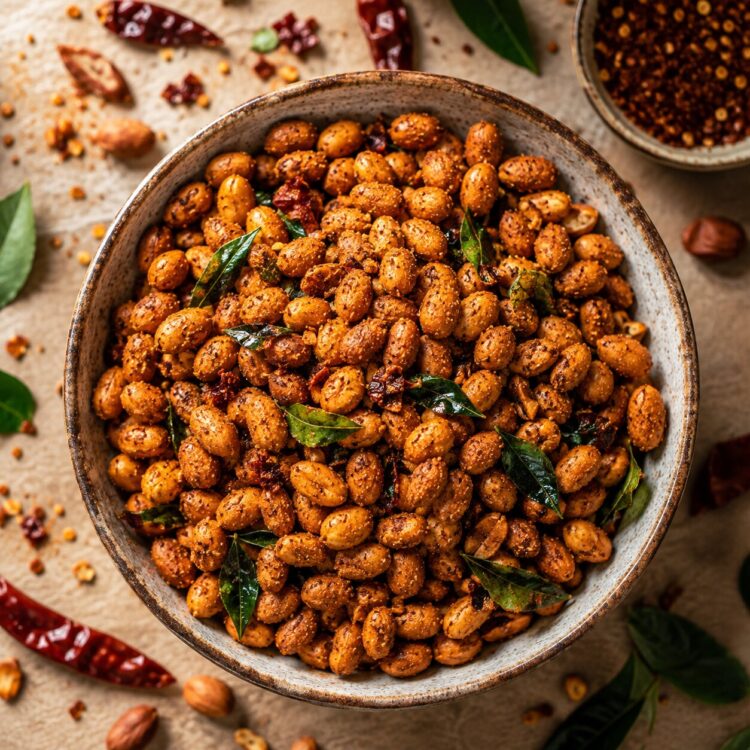
If you’ve ever wandered through a bustling Indian bazaar in the evening, you’ve probably caught the smell before you saw the stall — hot oil, roasted spices, and that unmistakable nutty aroma of peanuts hitting the fryer. That’s masala peanuts, and once you learn how simple they are to make at home, you’ll wonder why you ever bought them in a packet.
This isn’t just another peanut snack. Masala peanuts (also called masala moongfali in Hindi) are raw peanuts wrapped in a crackly, spiced gram flour shell, cooked until deeply golden, then tossed in a punchy tangy-spicy finishing dust. The result is something between a chip and a nut — crunchy on the outside, satisfying and savory all the way through.
In this guide, you’ll get three complete cooking methods (deep-fried, oven-baked, and air-fried), a full breakdown of the ingredients and why each one matters, troubleshooting tips from years of kitchen trial and error, storage advice, smart variations, and answers to the questions people ask most. By the end, you’ll have everything you need to make a batch that disappears faster than you can refill the bowl.
Why Masala Peanuts Deserve a Spot in Your Snack Rotation
Peanuts are cheap, shelf-stable, and endlessly versatile — but plain roasted peanuts can get boring fast. Coating them in a seasoned besan batter transforms an everyday pantry staple into something that feels genuinely special, without requiring any exotic ingredients or advanced technique.
Here’s what makes this snack worth the 20 minutes it takes to pull together:
- It’s naturally gluten-free and vegan — besan (chickpea flour) and rice flour replace wheat entirely, so this is one of the rare fried snacks that fits multiple dietary needs without substitutions.
- It keeps for weeks, not days. Stored properly, a batch stays crunchy for up to a month, making it ideal for meal-prepping snacks or stocking up before guests arrive.
- It’s endlessly flexible. You can fry it, bake it, or air-fry it depending on how much oil you want in your life that day.
- It pairs with almost any drink. Chai, filter coffee, a cold beer, a mocktail — masala peanuts don’t discriminate.
- Kids tend to love it too. Because the heat is adjustable and the crunch factor is high, this is one of the few “spicy” snacks that often wins over picky eaters.
In India, tea is rarely served alone — there’s almost always something crunchy or savory alongside it, whether that’s a namkeen mix, a fried mathri, or a handful of these peanuts. Masala peanuts have earned their permanent seat at that table because they’re fast to make and even faster to finish.
What Exactly Are Masala Peanuts?
At its core, this is a two-part recipe: a spiced batter that clings to raw peanuts and cooks into a crisp shell, and a finishing spice blend that gets tossed on right after cooking for an extra hit of flavor.
The word “masala” simply means a spice blend, and “peanut” translates to moongfali in Hindi — so masala peanuts is a fairly literal name. What sets this apart from something like a corn fritter or pakora is the texture of the coating: instead of a wet batter, the peanuts are tossed in a dry-ish spiced flour mixture with just enough water to help it stick. That distinction matters — get it wrong, and you end up with soggy, clumpy peanuts instead of individually coated, crackly ones.
Ingredients You’ll Need (and Why Each One Matters)
You don’t need a specialty grocery run for this — most of these ingredients are already sitting in an Indian pantry, and substitutes exist for nearly everything.
The Coating
- Raw peanuts (about 1.5 cups / 190g): Use raw, skin-on or skinless peanuts — not already-roasted ones, since they need to cook through during frying, baking, or air-frying.
- Besan (chickpea flour), ½ cup: This is the backbone of the crunchy shell. It has a slightly nutty flavor that complements the peanuts rather than masking them.
- Rice flour, 2 tablespoons: This is the ingredient most home cooks skip — and shouldn’t. Rice flour is what gives the coating its shatter-crisp texture, similar to what it does in South Indian murukku or Korean fried chicken batters. Without it, the coating turns out denser and chewier rather than crunchy.
- Ginger-garlic paste, 2 teaspoons: Adds a savory depth that plain spice powders can’t replicate on their own.
- Cooking oil: Used both in the batter and for frying/brushing.
- A pinch of asafoetida (hing): A small amount goes a long way in rounding out the flavor — check the label if you need a certified gluten-free version.
The Spices (Coating Mix)
- Kashmiri red chili powder (for color and mild heat — swap for cayenne or regular chili powder if you want it spicier)
- Turmeric powder
- Salt
- Garam masala powder
The Finishing Spice Mix
- Black salt (kala namak) — gives that distinctive tangy, slightly sulfurous “chaat” flavor
- Dried mango powder (amchur) — for tang
- Chaat masala powder — for that signature Indian street-food punch
- Extra red chili powder
- Dried mint powder (optional, but it adds a cooling contrast against the heat)
Smart swaps: No rice flour? Pulse raw rice in a spice grinder, or use cornstarch in equal quantity. No black salt? Regular salt or pink Himalayan salt works fine, though you’ll lose a bit of that distinctive tang. No amchur or chaat masala on hand? A squeeze of lemon juice after cooking gets you most of the way there.
How to Make Masala Peanuts: Step-by-Step
The process breaks down into three simple stages: prep the peanuts, coat them, then cook them using whichever method you prefer.
Step 1: Soak and Marinate the Peanuts
Rinse the raw peanuts and let them soak in water for about 2 minutes — this helps the coating adhere better later. Drain thoroughly, then massage in the ginger-garlic paste and a tablespoon of oil. Let this sit for 5 minutes; this short marinade is what gives the final snack its underlying savory depth rather than tasting like plain seasoned flour.
Step 2: Build the Coating
In a separate bowl, whisk together the besan, rice flour, salt, turmeric, garam masala, chili powder, and asafoetida. Tip this dry mix over the marinated peanuts and use your hands to coat every piece evenly. Then — and this is the step people most often get wrong — sprinkle in only 1 to 2 tablespoons of water, just enough to dampen the flour so it clings to the peanuts. You are not making a batter. If the mixture turns pasty or wet, you’ve added too much water, and your peanuts will clump together and fry unevenly.
Step 3: Cook Them (Choose Your Method)
Once coated, separate any peanuts that have stuck together, then cook using one of the three methods below.
Three Ways to Cook Masala Peanuts
Method 1: Deep-Fried (The Classic)
- Heat oil in a kadai or deep pan over high heat, then drop the flame to low once it’s hot.
- Add a handful of coated peanuts at a time. Resist the urge to stir immediately — let them set for a few seconds so the coating doesn’t slip off.
- Once the peanuts float to the surface, increase to medium-low heat and fry until golden and crisp, stirring occasionally.
- Remove with a slotted spoon onto a paper-towel-lined plate to drain excess oil.
- While still hot, toss with the finishing spice mix so it sticks to the warm coating.
Total time: roughly 8–10 minutes of active frying, in batches.
Method 2: Oven-Baked (The Lighter Option)
- Preheat your oven to 200°C (400°F). Line a baking tray with parchment or lightly oil it.
- Spread the coated peanuts in a single layer — don’t crowd them, or they’ll steam instead of crisping.
- Drizzle lightly with oil for extra crunch, then bake for 18–20 minutes, checking after 15 minutes since oven temperatures vary.
- Toss with the finishing spice mix while still warm, then let cool completely before storing.
Method 3: Air-Fried (The Fast, Low-Oil Option)
- Preheat the air fryer to 170°C (340°F) for about 3 minutes.
- Lightly oil the basket, then arrange the peanuts in a single layer — work in batches if needed.
- Air fry for 4 minutes, then pause to shake or stir the basket so they cook evenly.
- Continue air-frying for another 4 minutes at 175°C (350°F), until deeply golden and crisp.
- Toss immediately with the spice mix (a teaspoon of hot oil mixed in here helps the spices stick even better).
Why air-frying works so well for this recipe: because the coating is thin and the peanuts are small, they crisp up fast with minimal oil — usually using 70–80% less oil than deep-frying, while still delivering a satisfying crunch.
Comparing the Three Cooking Methods
| Method | Time | Oil Used | Texture | Best For |
|---|---|---|---|---|
| Deep-Fried | ~10 min | High | Classic, deeply crisp | Authentic flavor, special occasions |
| Baked | ~20 min | Low | Slightly firmer, less greasy | Meal prep, healthier snacking |
| Air-Fried | ~8 min | Very low | Crisp, closest to fried texture | Everyday convenience |
If you’re torn between methods, air-frying tends to offer the best balance of speed, ease of cleanup, and texture that’s genuinely close to deep-frying — which is why so many home cooks have shifted to it as their default.
Pro Tips for Perfectly Crunchy Masala Peanuts
- Don’t skip the rice flour. It’s the single biggest factor separating a shatteringly crisp coating from a dense, doughy one.
- Keep the coating dry, not wet. A common mistake is treating this like a pakora batter. It should look like slightly damp sand clinging to the peanuts, not a smooth paste.
- Don’t overcrowd the pan, tray, or air fryer basket. Overcrowding traps steam, and steam is the enemy of crunch.
- Season immediately after cooking. The spice mix sticks best to hot, slightly oily peanuts — wait too long and it won’t adhere as well.
- Fry low and slow at first. Starting on low heat lets the coating set before you increase the temperature, which prevents it from separating from the peanut.
- Separate clumped peanuts before cooking so each piece gets an even coating and crisps uniformly.
Serving Suggestions
Masala peanuts are endlessly snackable on their own, but a few serving ideas can turn them into something more:
- With chai or coffee: The classic pairing — the nutty, spicy crunch balances beautifully against a milky, sweet cup of tea.
- As a cocktail snack: Serve alongside drinks the way you would bar nuts, but with far more personality.
- Turned into a chaat: Toss the peanuts with finely chopped onion, tomato, green chili, coriander leaves, a squeeze of lemon, and a dash of chaat masala for an instant, no-cook chaat that’s ready in minutes. Serve this version immediately, since the peanuts soften once mixed with the wet ingredients.
- As a salad topper: Crushed lightly, they add crunch and spice to grain bowls or simple cucumber-tomato salads.
How to Store Masala Peanuts
Let the peanuts cool completely on a wire rack or plate before storing — packing them away while warm traps steam inside the container, which softens the coating.
Once fully cooled, transfer them to an airtight container and store at room temperature, away from direct sunlight and humidity. Properly stored, masala peanuts stay crisp for up to a month. For longer storage or in humid climates, keep the container in a cool, dry cabinet rather than near the stove, and consider adding a food-safe silica packet to absorb excess moisture.
Realistically, though, most batches don’t last anywhere near that long once people know they’re in the house.
Common Mistakes to Avoid
- Using roasted peanuts instead of raw ones. Roasted peanuts are already cooked and will burn or turn bitter before the coating crisps up.
- Adding too much water to the coating. This is the number one reason home cooks end up with clumpy, unevenly cooked peanuts.
- Frying at too high a temperature from the start. This browns the coating before the inside cooks through, leaving you with raw-tasting peanuts under a dark shell.
- Skipping the post-cook seasoning step. Mixing the finishing spices into the raw coating instead of dusting them on after cooking dulls their punch, since some of the flavor cooks off.
- Storing them while still warm. This is the fastest way to lose that crunch within a day.
Nutritional Snapshot
Peanuts are naturally rich in protein, healthy fats, and fiber, which is part of why this snack feels more satisfying than something like potato chips. A single serving (roughly a small handful) typically lands in the 40–60 calorie range depending on the cooking method, with baked and air-fried versions coming in lighter than deep-fried ones due to significantly reduced oil absorption. Because portions are naturally small and flavorful, it’s easy to snack mindfully rather than mindlessly working through a whole bowl — though we won’t judge if you do.
Creative Variations to Try
- Garlic-lover’s version: Double the ginger-garlic paste and add a teaspoon of garlic powder to the coating.
- Extra tangy: Increase the amchur and finish with a squeeze of fresh lime instead of (or alongside) the dry spice mix.
- Herb-forward: Swap the dried mint for finely chopped fresh curry leaves, fried briefly in the last minute of cooking.
- Sweet-and-spicy: Add a light dusting of jaggery powder to the finishing mix for a sweet-heat combination popular in some regional variations.
- Extra crunchy: Add a tablespoon of semolina (sooji) to the coating along with the rice flour for an even craggier texture.
Conclusion: Your New Go-To Snack Is Just 20 Minutes Away
Masala peanuts prove that you don’t need a long ingredient list or advanced technique to make something genuinely craveable. Whether you deep-fry them for that classic street-snack flavor, bake them for a lighter option, or air-fry them for weekday convenience, the payoff is the same: a crunchy, spicy, endlessly snackable bowl of peanuts that beats anything you’ll find in a packet.
Give this recipe a try this week — start with the air fryer method if you want the easiest entry point — and let the smell of toasting spices fill your kitchen. Once you’ve made a batch, you’ll likely want to keep besan and raw peanuts stocked permanently, because this is the kind of snack that gets requested again and again.
Try it this weekend, and don’t forget to double the batch — it disappears fast.
Frequently Asked Questions
1. Can I make masala peanuts without deep-frying? Yes. Both baking and air-frying produce excellent results with significantly less oil. Air-frying, in particular, gets you a texture very close to deep-frying in under 10 minutes, making it the best option for a quick, lower-oil version.
2. Why did my peanuts turn out clumpy instead of individually coated? This almost always comes down to too much water in the coating mixture. The besan and rice flour blend should stay dry and slightly sandy in texture, using just 1–2 tablespoons of water to help it cling — not a smooth, wet batter.
3. Can I use roasted peanuts instead of raw ones? It’s not recommended. Roasted peanuts are already cooked, so by the time the coating crisps up during frying, baking, or air-frying, the peanuts inside can turn bitter or burnt. Always start with raw peanuts.
4. How long do homemade masala peanuts stay fresh? Stored in an airtight container at room temperature, away from heat and moisture, they typically stay crisp for up to a month. Just make sure they’re completely cooled before sealing the container.
5. Are masala peanuts gluten-free? Yes, as long as you use a gluten-free asafoetida (some brands mix hing with wheat flour as a filler). Besan and rice flour are both naturally gluten-free, making this one of the few crunchy fried snacks that’s safe for gluten-sensitive eaters without any recipe changes.