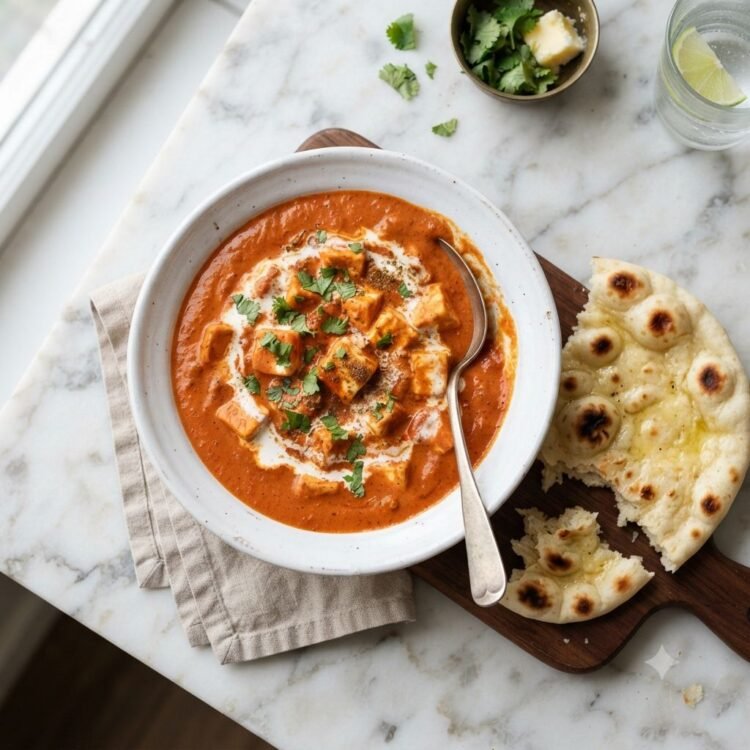
There is a version of a great paneer curry that does not need onion. No caramelising, no golden-brown base, no 10 minutes of standing over a hot pan stirring. Just ripe tomatoes and cashews blended smooth, cooked down in butter with a few whole spices, and finished with cream and kasuri methi. The result is silkier, cleaner, and in some ways purer than any onion-based paneer curry — because without the onion to soften and absorb everything, every other flavour has nowhere to hide.
This is paneer makhani. The name means exactly what it says — makhan is Hindi for butter, so paneer makhani is simply paneer cooked in butter. But the name undersells it. The cashews that blend into the tomato puree give the gravy a natural, nut-based creaminess that sets the texture apart. The whole spices — cardamom, cloves, cinnamon — bloom in butter before anything else goes in. And the pinch of sugar that balances the tomato’s acidity is a small but unmistakable touch that tells you the recipe has been calibrated rather than assembled.
This guide gives you the complete recipe, the science behind it, the differences between paneer makhani and paneer butter masala (they are not the same dish), the full troubleshooting table, all the useful variations, and a complete recipe card for your reference.
Paneer Makhani vs Paneer Butter Masala: Not the Same Dish
This is the most common confusion in North Indian paneer curries, and it is worth clarifying before the recipe.
| Feature | Paneer Makhani | Paneer Butter Masala |
|---|---|---|
| Onion | None | Yes — forms the base |
| Gravy base | Blended tomato + cashew puree | Sautéed onion + tomato base |
| Cashews / nuts | Yes — blended into the puree | Sometimes, but not always |
| Butter quantity | Light — 1 to 2 tbsp | Often more — with cream as well |
| Cream | Yes — added at the end | Yes — added at the end |
| Colour | Deep red-orange | Orange-red |
| Flavour profile | Cleaner, slightly tangy, nut-creaminess | Richer, more savoury from onion base |
| Cook time | ~30 minutes | ~40 minutes |
| Complexity | Simpler — fewer steps | More steps — onion must be cooked properly |
| Best for | Quick weeknight cooking | Weekend or special occasion |
The key distinction is structural: paneer makhani is a tomato-forward, no-onion curry where the richness comes from cashews and cream. Paneer butter masala builds its base on cooked onion, which provides sweetness, body, and depth that the makhani version replaces with nuts and a longer tomato-reduction time.
Both are excellent dishes. They are not interchangeable.
Why This Paneer Makhani Works
The No-Onion Advantage
Skipping the onion is not a shortcut — it is a deliberate technique. Without onion in the base, the tomato flavour is the dominant note in the gravy, unfiltered and direct. The cashews provide the creamy body that onion would otherwise contribute. The result is a gravy that is simultaneously lighter and more intensely tomato-forward than any onion-based version.
This also makes paneer makhani one of the few popular North Indian curries that is naturally Jain-friendly (no onion, no garlic can be used for the garlic-free Jain version) and suitable for anyone who finds onion-heavy curries difficult to digest.
Cashews as the Natural Cream Base
Blending cashews directly with the tomatoes rather than adding them separately is the technique that produces the smooth, velvety texture of restaurant-style paneer makhani. As the tomato-cashew puree cooks down, the cashew fats emulsify with the tomato liquid and the butter, creating a gravy that holds its consistency without flour, cornstarch, or excessive cream.
The cashew-to-tomato ratio matters: Too few cashews and the gravy is thin and watery. Too many and it tastes nutty rather than tomato-forward. The 16–18 cashews to 400g tomato ratio in this recipe is calibrated for the right balance.
Ripe Tomatoes Are Non-Negotiable
Ripe, red, fully mature tomatoes are the foundation of this dish. Underripe or green tomatoes contain more malic acid and less natural sugar — they produce a sharper, more acidic gravy that requires significantly more sugar to balance and never quite achieves the rounded sweetness of properly ripe tomatoes. If your tomatoes are not fully ripe, you can ripen them quickly by leaving them at room temperature for 2–3 days. Never use refrigerated tomatoes for this recipe — cold storage halts the ripening process and dulls the flavour compounds.
Ingredients (Serves 4)
For the Tomato-Cashew Puree
| Ingredient | Amount | Notes |
|---|---|---|
| Ripe tomatoes | 2¼ cups / 400g | Fully red and ripe; not underripe or green |
| Cashews | 16–18 whole | Or same quantity blanched, peeled almonds |
For the Gravy
| Ingredient | Amount | Notes |
|---|---|---|
| Butter | 1–2 tbsp | Unsalted; or ghee |
| Green cardamom pods | 2 | Lightly crushed |
| Cinnamon stick | 1 inch | Optional but recommended |
| Whole cloves | 2 | Optional but recommended |
| Green chilli, slit and deseeded | 1 | Optional; adjust to heat preference |
| Ginger-garlic paste | 1 tsp | Or ¾ tsp ginger paste alone |
| Red chilli powder | ¾ to 1¼ tsp | Kashmiri or Byadagi for colour without excess heat |
| Turmeric powder | ⅛ tsp | Optional |
| Garam masala | 1¼ tsp | Reduce to ¾ tsp + ½ tsp coriander powder if your garam masala is very strong |
| Kasuri methi (dried fenugreek leaves) | ½ tsp | Crushed between palms before adding |
| Sugar | ½ to 1 tsp | Balances tomato acidity |
| Salt | To taste | |
| Water | ~1 cup | Adjust for consistency |
| Fresh cream | ¼ cup | Cooking, whipping, or heavy cream; adjust to taste |
For the Paneer
| Ingredient | Amount | Notes |
|---|---|---|
| Paneer, cubed | 2 cups / 200–250g | Store-bought or homemade |
How to Make Paneer Makhani: Complete Method
Prep time: 5 minutes
Cook time: 25 minutes
Total time: 30 minutes
Stage 1 — Prepare the Paneer
If using store-bought paneer, soak the cubes in hot water for 15–20 minutes before using. Drain and pat dry. This step rehydrates paneer that has been pressed and packaged — it softens the texture significantly and prevents the rubbery bite that often characterises packaged paneer in cooked curries.
Homemade paneer does not need soaking — use it directly.
Stage 2 — Make the Tomato-Cashew Puree
Blend the ripe tomatoes and cashews together into a completely smooth puree. For the smoothest result:
- If using a standard blender (under 800 watts), soak the cashews in hot water for 10–15 minutes first to soften them before blending
- Grind the cashews separately to a fine paste first, then add the tomatoes and blend together — this produces a more uniform texture
- After blending, strain the puree through a fine mesh strainer if the texture is at all grainy — the finished gravy should be completely smooth
Set the puree aside.
Stage 3 — Build the Spiced Butter Base
Heat 1–2 tbsp butter in a heavy-bottomed pan or kadai on medium heat. When the butter melts and begins to foam, add the whole cloves, cinnamon stick, and lightly crushed green cardamom pods. Sauté for 30–45 seconds until the spices are aromatic and sizzling.
Add the slit green chilli (if using). Sauté 15 seconds.
Add the ginger-garlic paste. Sauté for 2 minutes, stirring constantly, until the raw smell disappears completely.
Stage 4 — Cook Down the Tomato-Cashew Puree
Pour in the tomato-cashew puree carefully — it will splatter when it hits the hot butter. Partially cover the pan to contain the splatter.
Cook on medium heat, stirring occasionally, until the puree thickens and reduces — approximately 8–10 minutes. The puree is ready when it has darkened slightly in colour and visibly pulled away from the sides of the pan.
Add the red chilli powder, turmeric, and salt. Stir and cook for 2–3 minutes more until the spices are fully incorporated and the oil/butter begins to separate from the edges of the masala.
Add the garam masala. Sauté for 1–2 minutes.
Stage 5 — Add Water and Simmer
Pour in approximately 1 cup of water and the sugar. Stir to combine with the reduced masala. Adjust the quantity of water for your preferred consistency — less water for a thick, restaurant-style gravy, more for a looser curry.
Simmer on medium-low heat until the gravy thickens to the right consistency and you can see small traces of butter rising to the surface. This surface butter sheen is the visual cue that the gravy is properly cooked and emulsified.
Stage 6 — Add Paneer, Kasuri Methi, and Cream
Add the paneer cubes to the gravy. Crush the kasuri methi between your palms and add it to the pan — crushing releases the aromatic oils from the dried leaves and makes the flavour contribution significantly more pronounced.
Cover and cook on low heat for 2 minutes only. Do not cook the paneer longer — it will begin to tighten and become rubbery. Two minutes in a hot gravy is all the paneer needs to warm through and absorb the sauce’s flavour.
Stir in the cream. Let the gravy come to one gentle bubble, then remove from heat immediately.
Transfer to a serving bowl. Garnish with a swirl of cream and fresh coriander leaves. Serve hot.
Paneer Makhani Troubleshooting
| Problem | Cause | Fix |
|---|---|---|
| Grainy, rough gravy | Cashews not blended finely; puree not strained | Soak cashews longer; grind separately first; strain puree through fine mesh |
| Gravy too sour / acidic | Underripe tomatoes; too little sugar | Use only fully ripe tomatoes; increase sugar by ¼ tsp at a time |
| Paneer rubbery / hard | Overcooked in the gravy | Add paneer last, cook 2 min only; soak store-bought paneer in hot water first |
| Cream splitting / curdling | Heat too high when cream added; cream too cold | Reduce heat to low before adding cream; use room-temperature cream |
| Gravy too thin | Puree not reduced enough; too much water | Cook puree longer before adding water; reduce water quantity |
| Weak, flat flavour | Tomatoes not ripe; spices not bloomed in butter; kasuri methi skipped | Use ripe tomatoes only; sauté whole spices properly; always crush and add kasuri methi |
| Too dark or too pale colour | Wrong chilli used | Use Kashmiri or Byadagi chilli powder specifically for the deep red-orange colour |
Paneer Makhani Variations
Vegan Paneer Makhani
Replace butter with refined coconut oil or vegan butter. Replace paneer with firm tofu (pressed, cubed, pan-fried until golden). Replace cream with full-fat coconut cream (the solid part from a chilled can) or cashew cream (blend ¼ cup cashews with ¼ cup water until completely smooth). The tomato-cashew base itself is already vegan — only the butter, paneer, and cream need changing.
No-Cream Version (Lighter)
Skip the cream entirely and double the cashews in the puree (use 30–32 cashews instead of 16–18). The additional cashews provide enough natural fat and creaminess that the dish remains smooth and rich without any cream at all. This is a useful adaptation for calorie-conscious cooking without compromising the texture significantly.
Jain Paneer Makhani
Omit the ginger-garlic paste and green chilli. Use ½ tsp ginger powder and a pinch of asafoetida (hing) instead. All other steps remain unchanged. This version is suitable for Jain dietary requirements that restrict root vegetables and alliums.
Paneer Makhani with Roasted Tomatoes
Instead of raw blended tomatoes, roast the tomatoes whole in an oven at 200°C / 400°F for 20–25 minutes until they are soft, slightly charred, and caramelised. Blend with the cashews as usual. Roasting adds a smoky sweetness and depth to the gravy that raw tomatoes cannot produce — a technique worth trying for a weekend variation.
Make-Ahead and Storage
The key to making paneer makhani ahead is to store the gravy and paneer separately.
| Component | Storage | Duration |
|---|---|---|
| Gravy (without paneer and cream) | Refrigerator, airtight container | 3–4 days |
| Gravy (without paneer and cream) | Freezer | Up to 1 month |
| Paneer in gravy (fully assembled) | Refrigerator | 1–2 days max |
| Reheating | Stovetop on low | Add 2–3 tbsp water; heat until bubbling; then add fresh paneer + cream |
The best make-ahead strategy: Cook the gravy through Stage 5 (before adding paneer and cream). Refrigerate or freeze. At serving time, reheat the gravy until it bubbles, then add fresh paneer and cream as in Stage 6. The result is indistinguishable from freshly made.
Nutrition Profile (Per Serving — Serves 4)
| Nutrient | Amount |
|---|---|
| Calories | 503 kcal |
| Carbohydrates | 15g |
| Protein | 19g |
| Total Fat | 41g |
| Saturated Fat | 24g |
| Cholesterol | 109mg |
| Dietary Fibre | 3g |
| Sugar | 7g |
| Sodium | 300mg |
| Potassium | 437mg |
| Calcium | 599mg |
| Iron | 2.1mg |
| Vitamin C | 13.8mg |
Paneer makhani is a calorie-dense dish owing to the combination of paneer fat, cashew fat, butter, and cream. It is, however, an excellent source of calcium (599mg per serving — more than half the adult daily requirement) and protein (19g). The tomato base contributes vitamin C and antioxidant lycopene, which is enhanced rather than reduced by cooking.
Serving Suggestions
Paneer makhani’s silky, medium-thick gravy pairs well with both bread and rice:
- Butter naan or garlic naan — the richest, most satisfying pairing; the bread absorbs the creamy sauce cleanly
- Tandoori roti or phulka — a lighter pairing for everyday serving
- Plain paratha — simple and reliable
- Steamed basmati rice — the gravy’s creaminess works beautifully over rice
- Jeera rice — the cumin note complements the tomato-spice base
- Pulao or ghee rice — a richer rice pairing for a festive meal
Serve alongside sliced onions, cucumber, carrot, and a lemon wedge for a complete plate. A simple raita on the side balances the richness.
Frequently Asked Questions
Q1. What is the difference between paneer makhani and paneer butter masala?
They are closely related but distinct dishes. Paneer makhani uses no onion — the gravy is built entirely from a blended tomato-cashew puree cooked in butter with whole spices. Paneer butter masala begins with a sautéed onion base and typically uses a tomato-onion masala enriched with cream. The makhani version is cleaner, more tomato-forward, and simpler to make. The butter masala is richer and more savoury from the cooked onion base. If you have 30 minutes, make paneer makhani. If you want maximum depth, make paneer butter masala.
Q2. Can I make paneer makhani without cashews?
Yes. The cashews serve as the natural thickener and the source of creamy texture in the puree. If you need a nut-free version, replace the cashews with 2 tbsp of melon seeds (magaz) or 3 tbsp of thick yogurt (curd) stirred in after the puree has cooked down. Neither replacement produces exactly the same smooth richness as cashews, but melon seeds are the closest substitute — they blend smoothly and add a neutral creaminess. Increase the cream quantity slightly to compensate for the missing nut fat.
Q3. Why does my paneer makhani look orange instead of deep red?
The deep red-orange colour of restaurant-style paneer makhani comes specifically from Kashmiri chilli powder or Byadagi chilli powder — both are mild varieties of dried red chilli that are prized for their intense colour rather than their heat. Regular red chilli powder does not produce the same deep colour. Paprika is a weaker substitute that gives an orange rather than red result. For the authentic restaurant colour without artificial food colouring, Kashmiri chilli powder is the only reliable option. It is widely available in Indian grocery stores and online.
Q4. My paneer turns rubbery in the gravy. How do I fix this?
Rubbery paneer is caused by overcooking. Paneer is essentially pressed curd — it does not need cooking, only warming. Two minutes in a hot gravy on low heat is sufficient to warm the paneer through and allow it to absorb some of the sauce’s flavour. Beyond two minutes, the paneer proteins tighten progressively with heat. The other fix: soak store-bought paneer in hot (not boiling) water for 15–20 minutes before adding it to the curry. This rehydrates the paneer and significantly improves its final texture, even if it accidentally cooks a little longer than intended.
Q5. Can I use store-bought tomato puree instead of fresh tomatoes?
Yes, with adjustments. Store-bought tomato puree is significantly more concentrated than fresh-blended raw tomatoes — use about ⅔ cup in place of the 400g fresh tomatoes. Choose a puree with no added citric acid (check the ingredients list) — citric acid makes the gravy sharply sour and requires a lot of extra sugar and cream to balance. When using canned puree, you may need to add more water to reach the right consistency and slightly more cream to compensate for the missing freshness of raw tomatoes.
The Simplest Great Paneer Curry
Paneer makhani proves something worth remembering about Indian cooking: the most impressive results do not always come from the longest ingredient lists. No onion. No complex multi-stage base. Just ripe tomatoes, cashews, butter, good spices, and paneer added at the very end.
Thirty minutes. One pan. The kind of curry that makes people ask which restaurant you ordered it from.
Made this recipe? Drop a comment below — tell us whether you served it with naan or rice, and whether you used the cream or the no-cream cashew version. Every comment helps the next cook know exactly what to expect.
More paneer and North Indian curry recipes on KitchenWhisper.in:
- Rara Chicken Curry Recipe: The Double-Protein Dhaba Curry Worth Knowing
- Paneer Do Pyaza Recipe: Dhaba-Style Richness with Double Onion
- Paneer Lababdar Recipe: The Restaurant Paneer Dish You’ve Been Missing
- Low Calorie Paneer Tikka Recipe: The Healthy Indian Snack That Satisfies Without the Guilt
- Paneer Khurchan Recipe: The Quick, Smoky Tawa Paneer Dish You’ll Make on Repeat