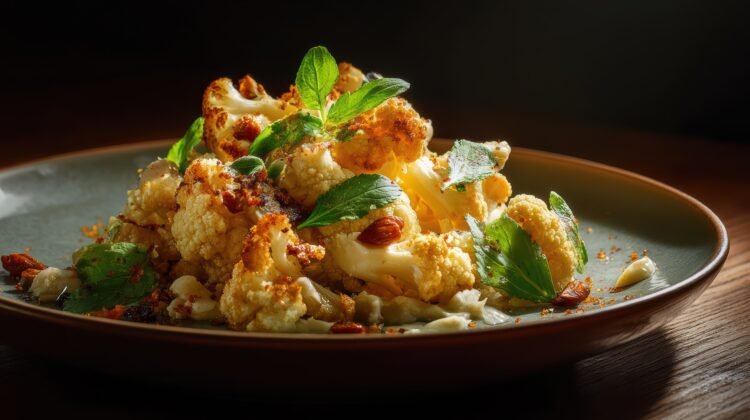
Cauliflower has a reputation problem. For a lot of people, it’s the vegetable they were forced to eat as kids — boiled into blandness, or worse, turned into a mushy, forgettable curry that made the whole dining table go quiet for the wrong reasons. If that’s your relationship with cauliflower, Achari Gobhi is about to change your mind.
This dish takes its name from achaar, the Hindi word for pickle, and it earns that name honestly. Instead of the usual turmeric-and-cumin treatment most Indian cauliflower dishes get, achari gobhi leans into the bold, tangy, slightly sour flavor profile associated with Indian pickles — thanks to a five-spice tempering blend called panch phoron and a hit of amchoor (dried mango powder) that gives the dish its signature zing.
What makes this recipe worth your attention isn’t just the flavor, though that alone is reason enough. It’s also one of the fastest vegetable dishes you can put on the table — from chopping board to dinner plate in about 25 minutes, using a spice blend you likely already keep in your pantry if you cook Indian food regularly. No deep frying, no complicated technique, no need to babysit a simmering pot for an hour.
By the end of this guide, you’ll understand exactly what panch phoron is and why it matters so much to this recipe’s flavor, how to build the achari flavor profile correctly, what makes this dish different from the aloo gobi you might already know, and how to adapt it for different spice tolerances, dietary needs, and meal contexts — from a Diwali spread to a simple weeknight side.
What Is Achari Gobhi, Exactly?
Before diving into technique, it helps to understand where this dish sits in the broader landscape of Indian cauliflower cooking.
“Achari” refers to a specific style of cooking that mimics the tangy, spiced, slightly sour flavor of Indian pickles (achaar) without actually pickling the ingredient. Instead of fermenting or preserving the vegetable in oil and spices over weeks, achari-style cooking achieves a similar flavor profile quickly, using a specific combination of whole spices and souring agents cooked fresh.
“Gobhi” (also spelled gobi) simply means cauliflower in Hindi.
Put together, achari gobhi is cauliflower cooked in the pickle-inspired style — tangy, aromatic, and noticeably more complex in flavor than a standard turmeric-cumin preparation.
How Achari Gobhi Differs from Aloo Gobi
If you’ve spent any time with Indian food, you’ve almost certainly encountered aloo gobi — the ubiquitous potato-and-cauliflower dish found on nearly every Indian restaurant menu. Achari gobhi is a different animal entirely, and the differences matter:
| Feature | Achari Gobhi | Aloo Gobi |
|---|---|---|
| Spice base | Panch phoron (5-spice tempering blend) | Cumin seeds, turmeric, standard masala |
| Flavor profile | Tangy, pickle-like, slightly sour | Earthy, mild, turmeric-forward |
| Key souring agent | Amchoor (dried mango powder) + tomato paste | Minimal to none |
| Potatoes included | No | Yes |
| Cook time | ~25 minutes | ~30-35 minutes |
| Texture | Firm-tender florets | Softer, more broken-down |
Neither dish is “better” — they simply hit different notes. If aloo gobi is the comfortable, familiar classic, achari gobhi is its bolder, tangier cousin that tends to surprise people who think they already know what Indian cauliflower tastes like.
Why Panch Phoron Is the Heart of This Recipe
The single ingredient that defines achari gobhi — and separates it from nearly every other Indian cauliflower dish — is panch phoron, a five-spice whole-spice blend traditionally used in Bengali and Eastern Indian cooking.
What’s in Panch Phoron
Panch phoron is made of equal parts:
- Cumin seeds — earthy, warm base note
- Fennel seeds — subtle sweetness and a mild anise flavor
- Black mustard seeds — sharp, pungent, slightly bitter when toasted
- Fenugreek seeds — intensely aromatic, slightly bitter, a defining pickle-spice flavor
- Nigella seeds (kalonji) — oniony, peppery, with a distinctive crunch
Why It Works So Well Here
Unlike a ground spice blend, panch phoron is used whole and tempered in hot oil — a technique called tadka or baghar in Indian cooking. When whole spices hit hot oil, their essential oils release rapidly, infusing the oil itself with flavor before any other ingredient goes into the pan. This front-loads the dish with a complex, layered aromatic base that a ground spice blend simply can’t replicate.
Pro tip: If you can’t find pre-mixed panch phoron at an Indian grocery store, you can make your own by combining equal parts of the five whole seeds listed above. Store it in an airtight jar, and it will keep for months — making it worth the one-time effort for anyone who cooks Indian food regularly.
Can You Substitute Panch Phoron?
If panch phoron genuinely isn’t available, a reasonable (though not identical) substitute is a mix of cumin seeds and black mustard seeds alone, with a small pinch of fenugreek seeds if you have it. You’ll lose some complexity, but the dish will still carry a recognizably achari character, especially once the amchoor and tomato paste go in.
Ingredients for Achari Gobhi (Serves 4)
- 3 tablespoons light cooking oil — a neutral oil that won’t compete with the spice blend
- 2 teaspoons panch phoron mix
- 1 large onion, finely chopped
- 1 tablespoon ginger, finely chopped
- 1 tablespoon garlic, finely chopped
- ½ teaspoon turmeric powder
- ½ teaspoon red chili powder (adjust to taste)
- 1 tablespoon coriander powder
- 1 teaspoon amchoor powder (dried mango powder) — the key souring agent
- 2 tablespoons tomato paste
- 1 large head of cauliflower, cut into small florets
- Water, as needed
- Salt, to taste
- Fresh cilantro, finely chopped, for garnish
A Note on Amchoor
Amchoor (also spelled aamchur) is made from unripe green mangoes, dried and ground into a fine, tart powder. It’s one of the defining souring agents in North Indian cooking and is what gives achari dishes their distinctive tang without needing any dairy, vinegar, or citrus. If you can’t find it, a squeeze of fresh lemon juice added at the very end is a reasonable substitute, though the flavor will be slightly brighter and less earthy than true amchoor.
Step-by-Step: How to Make Achari Gobhi
Step 1: Temper the Panch Phoron (2 minutes)
Heat the oil in a large non-stick pan over medium-high heat. Once hot, add the panch phoron mix directly to the oil.
Watch closely — within 30 to 60 seconds, the seeds will begin to sizzle and pop. This is the tempering (tadka) stage, and it’s releasing the essential oils that give the dish its aromatic foundation.
Step 2: Build the Aromatic Base (4-5 minutes)
Add the finely chopped onion, ginger, and garlic to the pan. Fry for a few minutes until the onions soften and turn lightly golden brown.
Step 3: Add the Spices and Tomato Paste (2 minutes)
Stir in the turmeric, red chili powder, coriander powder, amchoor, and tomato paste. Mix thoroughly so the spices coat the onion mixture evenly and cook for about 1-2 minutes, letting the raw tomato paste taste mellow slightly.
Step 4: Add the Cauliflower and Cook (5-6 minutes)
Add the cauliflower florets to the pan and toss well, making sure every floret is coated in the spice mixture.
Cover the pan and cook for 5 to 6 minutes, stirring occasionally, until the cauliflower is cooked through but still holds its shape — you’re looking for tender-firm, not mushy.
Troubleshooting tip: If the spice mixture looks dry and starts sticking to the bottom of the pan, add a small splash of water and stir to loosen it. This also helps steam the cauliflower slightly, speeding up the cooking process.
Step 5: Season and Finish
Season with salt and give the dish a final stir. Taste and adjust the chili powder or amchoor if you want more heat or tang.
Garnish generously with fresh chopped cilantro and serve warm.
Total time: About 25 minutes — 10 minutes prep, 15 minutes cook.
Expert Tips for the Best Achari Gobhi
- Cut florets to a uniform, small size. Larger florets take longer to cook through and can end up raw in the center while the outside overcooks.
- Don’t skip the tempering step. Adding panch phoron to cold or barely warm oil won’t release the spices’ essential oils properly — wait until the oil is visibly shimmering before adding the seeds.
- Watch the mustard seeds closely. They pop quickly once they hit hot oil; if you see them starting to jump out of the pan, it’s time to add the next ingredient immediately to avoid burning.
- Balance tang and heat to your taste. Achari dishes are meant to be tangy first, spicy second. If you prefer more heat, increase the red chili powder rather than the amchoor.
- Don’t overcook the cauliflower. The best achari gobhi has florets that are tender but still hold their shape — mushy cauliflower loses the textural contrast that makes this dish satisfying.
Variations Worth Trying
Achari Mushroom
Swap the cauliflower for quartered button mushrooms, reducing the cook time to about 4-5 minutes since mushrooms cook faster than cauliflower florets. The same achari spice base works beautifully with mushroom’s naturally savory flavor.
Achari Gobhi with Potatoes
Add 1-2 medium potatoes, peeled and cubed, along with the cauliflower in Step 4. Increase the covered cooking time by 5-7 minutes and add a bit more water, since potatoes take longer to cook through than cauliflower alone.
Achari Gobhi Matar (with Peas)
Stir in ½ cup of fresh or frozen green peas during the last 3-4 minutes of cooking. The sweetness of the peas offers a nice contrast to the tangy, slightly sharp achari flavor profile.
Dry-Roasted Achari Gobhi (No Tomato Paste)
For an even drier, more intensely spiced version closer to a true pickle-style preparation, skip the tomato paste entirely and increase the amchoor slightly to compensate for the lost tang. This produces a drier dish, excellent as a side for breads like roti or paratha.
What to Serve with Achari Gobhi
This dish is versatile enough to work as a side at a formal Indian meal or as part of a casual weeknight dinner.
Classic Indian pairings:
- Puri or paratha — the traditional pairing, especially for festive meals
- Steamed basmati rice or jeera rice
- Dal of your choice, for a complete, protein-balanced plate
- Cooling raita — the tang of the gobhi pairs especially well with a yogurt-based side
For a non-traditional pairing:
- As a side dish alongside roasted turkey or chicken — the tangy, spiced flavor cuts through rich roasted meats surprisingly well
- Tucked into a wrap or flatbread with some yogurt sauce for a quick lunch
- Served alongside grilled vegetables for a vegan dinner spread
Why This Recipe Works for Diwali, Weeknights, and Everything in Between
Achari gobhi has quietly become a go-to dish for several reasons that matter beyond just flavor:
- It’s naturally vegan and gluten-free, making it an easy dish to serve at mixed gatherings without needing a separate “special diet” version.
- It comes together in under 30 minutes, which makes it realistic for weeknight cooking even on busy days.
- It travels and reheats well, making it a smart make-ahead option for potlucks, festive spreads, or meal prep.
- It’s naturally dairy-free, unlike many creamy Indian vegetable curries, which makes it suitable for a wider range of dietary restrictions without any recipe adjustments.
- The tangy flavor profile pairs well outside traditional Indian meals too — it works as a side for roasted meats, grain bowls, or even alongside a simple sandwich.
Nutritional Snapshot (Per Serving, Approximate)
- Calories: ~120-140 kcal
- Fat: ~9g (mostly from cooking oil)
- Carbohydrates: ~9g
- Fiber: ~3g
- Vitamin C: High, thanks to both cauliflower and amchoor
- Sodium: Varies based on salt added
Cauliflower itself is a genuinely excellent vegetable from a nutritional standpoint — low in calories, high in fiber, and loaded with Vitamin C and antioxidant compounds. This recipe keeps that nutritional profile largely intact since there’s no deep frying and no cream involved.
Common Mistakes to Avoid
- Adding panch phoron to oil that isn’t hot enough — the seeds need sizzling oil to release their aromatic oils properly; a lukewarm pan produces a flat, underdeveloped flavor.
- Cutting cauliflower florets too large — leads to uneven cooking, with some pieces mushy and others still raw.
- Skipping the amchoor — this is the ingredient responsible for the “achari” character of the dish; without it, you’re left with a fairly standard spiced cauliflower rather than the tangy version this recipe is known for.
- Overcrowding the pan — cauliflower needs room to cook evenly; a pan that’s too small will steam rather than properly cook the florets, leading to a soggier texture.
- Walking away during the tempering step — whole mustard seeds can go from perfectly toasted to burnt in a matter of seconds once they start popping.
Conclusion: Your New Favorite Way to Cook Cauliflower
Achari Gobhi proves that cauliflower doesn’t have to be the vegetable everyone quietly leaves on their plate. With its tangy, pickle-inspired flavor profile and a cook time under 30 minutes, this dish turns a frequently maligned vegetable into something people genuinely ask for seconds of — and occasionally, the recipe itself.
Whether you’re building a festive Diwali spread, looking for a quick vegan side dish, or simply trying to give cauliflower a fair second chance, achari gobhi delivers bold flavor without demanding much of your time or effort.
Ready to cook? Grab your panch phoron, get that cauliflower chopped into even florets, and give this tangy, spiced classic a try tonight. Once you taste how different achari-style cooking is from the cauliflower you grew up with, it may just become a permanent fixture at your table too.
Frequently Asked Questions (FAQs)
1. What does “achari” mean, and why is it used to describe this dish? “Achari” comes from the Hindi word achaar, meaning pickle. It describes a style of cooking that mimics the tangy, spiced flavor of Indian pickles using whole spices and souring agents like amchoor, without any actual pickling or fermentation process. The result is a dish with the bold, tangy character of a pickle but cooked fresh and ready to eat immediately.
2. Can I make achari gobhi without panch phoron? Yes, though the flavor will be slightly less complex. A reasonable substitute is equal parts cumin seeds and black mustard seeds, with a small pinch of fenugreek seeds if available. The amchoor and tomato paste still carry much of the achari flavor profile even without the full five-spice blend, so the dish will still taste distinctly tangy and spiced.
3. Is achari gobhi very spicy? Not inherently — the heat level is fully adjustable via the red chili powder. As written, the recipe produces a moderately spiced dish where the dominant flavor is tangy rather than fiery. For a milder version, reduce or omit the chili powder; for more heat, increase it or add a finely chopped green chili during the cooking process.
4. Can I use frozen cauliflower instead of fresh? Yes, though you’ll need to adjust the cooking time. Frozen cauliflower florets release more water as they cook, so reduce the covered cooking time slightly and watch for excess liquid in the pan — you may need to cook uncovered for the last couple of minutes to let any extra moisture evaporate before serving.
5. How long does achari gobhi keep, and does it reheat well? Stored in an airtight container in the refrigerator, achari gobhi keeps well for up to 3-4 days. It reheats nicely on the stovetop or in the microwave, and many people find the flavor actually deepens slightly after a day as the spices continue to meld into the cauliflower.
Also Try – Palak Tofu: The Creamy Vegan Spinach Curry That Rivals Any Restaurant Version