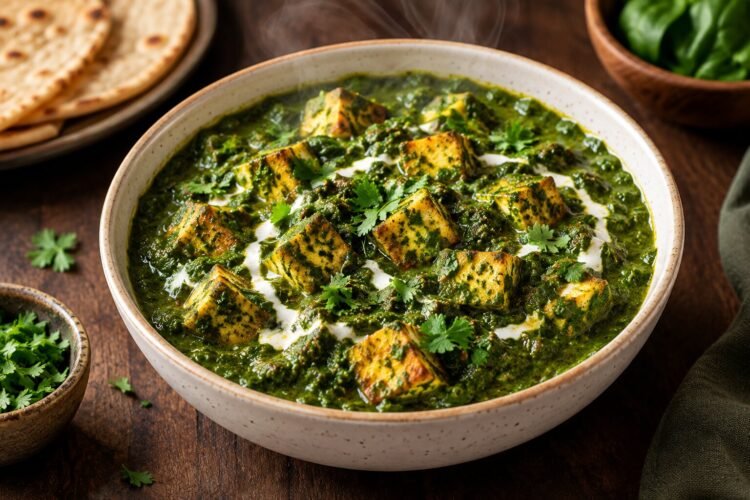
Walk into almost any Indian restaurant and you’ll find palak paneer sitting proudly on the menu — that glossy, deep-green spinach curry studded with soft cubes of cottage cheese. It’s a classic for good reason. But if you’re vegan, dairy-free, or simply trying to eat a little lighter without giving up the comfort of a good curry, there’s an equally satisfying version waiting for you: Palak Tofu.
This dish takes everything people love about palak paneer — the silky spinach gravy, the warm garam masala, the slight tang of tomato — and swaps the paneer for golden, pan-seared tofu. The tofu soaks up the curry’s flavor while holding its shape, and the gravy itself gets its richness not from heavy cream but from coconut milk, making the whole dish naturally dairy-free and plant-based from start to finish.
What makes this recipe worth bookmarking isn’t just that it’s a clever substitution — it’s that it genuinely tastes good on its own terms. The tofu, seared with paprika, pepper, and a touch of chili flakes before it ever meets the gravy, develops a flavor and texture that holds up beautifully against the rich spinach puree. Even people who claim they “don’t like tofu” often come around after trying it this way.
By the end of this guide, you’ll understand exactly how to build the gravy from scratch, why pressing your tofu matters more than you’d think, how to adjust the spice level for kids or spice-lovers alike, and how to turn this into a meal-prep staple you’ll actually look forward to eating.
Why You’ll Love This Vegan Spinach Tofu Curry
Before diving into the method, here’s a quick look at what sets this recipe apart from a typical palak paneer swap:
- Naturally vegan and dairy-free. Coconut milk stands in for cream, so the dish is 100% plant-based without feeling like a compromise.
- High in plant protein. Tofu delivers a solid protein boost, making this a satisfying main course rather than a light side dish.
- Gluten-free by default. No flour, no thickeners — just vegetables, spices, and tofu.
- Restaurant flavor, home kitchen effort. The gravy comes together with basic pantry spices and a blender — no complicated technique required.
- Freezer and meal-prep friendly. This curry reheats beautifully, making it a smart choice for batch cooking.
- Kid-adaptable. Skip the chili powder and chili flakes, and you’ve got a mild, nutrient-dense curry that even picky eaters tend to enjoy.
Quick stat: A single serving comes in at roughly 170 calories with about 7 grams of protein and nearly 50% of your daily Vitamin C — not bad for a dish that tastes this indulgent.
Ingredient Notes: What Goes Into Palak Tofu
For the Tofu
- Extra-firm tofu, cubed — This is non-negotiable. Softer tofu varieties fall apart during searing and won’t hold their shape in the curry.
- Oil — For pan-searing; a neutral oil works best so it doesn’t compete with the spice blend.
- Smoked paprika, black pepper, red chili flakes, salt — A simple seasoning blend that gives the tofu its own flavor identity before it even touches the gravy.
For the Spinach Curry
- Fresh baby spinach — The star of the dish. Fresh spinach wilts quickly and blends into a smooth, vibrant green puree. Frozen spinach (thawed and drained) works as a reliable substitute when fresh isn’t available.
- Tomatoes — Add tang and body to the gravy base.
- Garlic and ginger — The aromatic foundation of nearly every Indian curry.
- Cumin powder, red chili powder, garam masala — The core spice trio that gives this curry its warmth and depth.
- Coconut milk — Replaces dairy cream for a naturally vegan richness. Regular milk or heavy cream can be substituted if a vegan result isn’t required.
- Sugar or honey (optional) — A small amount balances the slight bitterness that spinach can bring, especially if using mature spinach leaves.
- Lemon juice (optional) — Added at the end for brightness.
How to Make Palak Tofu: Step-by-Step Instructions
Step 1: Prep and Press the Tofu
Before anything else, press your tofu. This step is often skipped by beginners, but it makes a real difference.
- Wrap the block of extra-firm tofu in a clean kitchen towel or paper towels.
- Place it between two plates or cutting boards and weigh it down with something heavy — a couple of cans work well.
- Let it sit for 15–20 minutes to release excess water.
- Cut into evenly sized cubes once pressed.
Why this matters: Pressing removes the water trapped inside the tofu, which means it sears instead of steams in the pan. The result is a firmer, more flavorful cube that actually absorbs the seasoning rather than diluting it.
Step 2: Sear the Tofu
- Heat oil in a pan over medium-high heat.
- Add the cubed tofu along with paprika, pepper, chili flakes, and salt.
- Sauté for 5–6 minutes, turning occasionally, until the tofu is light golden brown on most sides.
- Set aside.
Step 3: Wilt the Spinach
- Heat a small amount of oil in a non-stick pan over medium heat.
- Add the spinach leaves in batches, cooking each batch until wilted — about 1 minute per batch.
- Repeat until all the spinach is cooked down. Set aside.
Step 4: Build the Tomato-Spice Base
- In another pan, heat oil over medium heat.
- Add roughly chopped ginger and garlic, sautéing until the raw smell fades.
- Add chopped tomatoes and cook until soft and mushy, about 3–4 minutes.
- Stir in the wilted spinach along with cumin powder, red chili powder, salt, and garam masala.
- Cook everything together for 2 minutes to let the spices bloom.
Step 5: Blend Into a Smooth Curry Base
- Remove the mixture from heat and let it cool slightly.
- Transfer to a blender along with a portion of the coconut milk.
- Blend until smooth. Set the puree aside.
Step 6: Combine and Simmer
- Return the spinach puree to the pan over medium heat.
- Stir in the remaining coconut milk.
- Add the seared tofu and mix gently so the cubes don’t break apart.
- Add water if needed to reach your preferred consistency, along with sugar or honey if using.
- Cover and simmer on medium-low heat for 10 minutes, allowing the flavors to meld.
- Finish with a squeeze of fresh lemon juice before serving.
Total time: About 35 minutes (15 minutes prep, 20 minutes cook) — realistic for a weeknight, impressive enough for guests.
Expert Tips for the Best Palak Tofu
- Always press your tofu. It’s the single biggest factor separating a mushy curry from one with real texture contrast.
- Don’t over-blend the spinach. A smooth puree is the goal, but over-processing can make the texture thin and watery rather than lusciously thick.
- Taste before adding sugar. Not all spinach needs the sweetness boost — taste the gravy first and adjust only if it needs balancing.
- Sear tofu in a single layer. Overcrowding the pan traps steam and prevents the golden crust from forming.
- Adjust coconut milk to taste. Full-fat coconut milk gives the richest result; light coconut milk works if you’re watching calories, though the curry will be slightly less creamy.
Palak Tofu vs. Palak Paneer: A Quick Comparison
| Feature | Palak Tofu | Palak Paneer |
|---|---|---|
| Protein source | Tofu (soy-based) | Paneer (dairy cheese) |
| Dairy content | None (with coconut milk) | Typically contains cream and/or paneer |
| Vegan-friendly | Yes | No |
| Protein per serving | ~7g | ~10-12g |
| Texture | Firmer, slightly chewy | Soft, melt-in-mouth |
| Calorie range | Lighter (~170 kcal/serving) | Higher, especially with added cream |
Neither version is objectively “better” — paneer lovers will always have a soft spot for that pillowy texture. But if you’re avoiding dairy, cooking for a vegan guest, or just want a lighter take on a beloved classic, palak tofu delivers nearly all the same comfort with none of the dairy.
What to Serve with Palak Tofu
This curry pairs well with a wide range of sides, making it flexible for different meals:
- Steamed basmati rice — the simplest, most classic pairing.
- Brown rice or quinoa — for extra fiber and a heartier meal.
- Indian breads like roti, naan, or paratha — great for scooping up the gravy.
- Simple cucumber salad (kachumber) — adds a cool, crunchy contrast.
- A side of dal — for a fuller, more traditional thali-style dinner.
Common Variations and Substitutions
- No coconut milk on hand? Use cashew milk, oat milk, or regular dairy milk. Dairy milk will result in a less rich curry unless you add a splash of cream.
- Prefer a richer curry? Swap part of the coconut milk for heavy cream.
- Don’t have a blender? You can skip blending entirely and simply chop the spinach finely for a more rustic, textured curry instead of a smooth puree.
- No fresh spinach? Frozen spinach works well — just thaw and drain excess water before cooking.
- Want to boost the veggie content? Stir in chopped broccoli or cauliflower florets during the simmering step for a heartier, more nutrient-dense version.
- Using kale instead of spinach? It works, though the flavor will be slightly more robust and earthy than classic palak.
Nutritional Snapshot (Per Serving, Approximate)
- Calories: ~170 kcal
- Protein: ~7g
- Fat: ~12g (mostly from coconut milk and cooking oil)
- Fiber: ~3g
- Vitamin A: Over 100% of daily value, thanks to the spinach
- Vitamin C: Roughly 45% of daily value
- Iron: Close to 30% of daily value
Spinach is one of the most nutrient-dense leafy greens available, and this curry is a genuinely efficient way to get a serious dose of vitamins and minerals into a meal that still feels indulgent.
Common Mistakes to Avoid
- Skipping the tofu press — leads to soggy, flavorless cubes that break apart in the curry.
- Overcrowding the tofu in the pan — prevents proper browning and results in steamed, rather than seared, tofu.
- Blending the spinach while it’s piping hot — can cause pressure buildup in some blenders; let it cool slightly first.
- Adding all the coconut milk at once — splitting it between the blending step and the final simmer gives better control over consistency.
- Under-seasoning the gravy — spinach can mute spices more than you’d expect, so taste and adjust before serving.
Conclusion: Your New Favorite Weeknight Curry
Palak Tofu proves that plant-based cooking doesn’t mean sacrificing flavor, richness, or satisfaction. With crispy, well-seasoned tofu cubes swimming in a vibrant, nutrient-packed spinach gravy, this dish holds its own against any paneer-based version — and it does so while staying fully vegan, gluten-free, and genuinely nourishing.
Whether you’re cooking for a vegan household, trying to eat more plants, or simply craving a comforting curry without the dairy, this recipe deserves a permanent spot in your rotation.
Ready to cook? Press that tofu, get your spices measured out, and give this curry a try tonight. Once you taste how well tofu soaks up that spiced spinach gravy, you may never miss the paneer at all.
Frequently Asked Questions (FAQs)
1. Do I really need to press the tofu before cooking? Yes — pressing is one of the most important steps in this recipe. Extra-firm tofu holds a surprising amount of water inside, and if you skip pressing, that water steams out in the pan instead of allowing the tofu to sear and brown properly. A well-pressed cube of tofu develops a light golden crust and absorbs the curry’s flavor far better than an unpressed one.
2. Can I make palak tofu without coconut milk? Yes. Regular dairy milk, cashew milk, or oat milk can all be used in its place. Keep in mind that coconut milk’s natural fat content is what gives the curry its signature richness, so a lower-fat substitute will produce a slightly thinner, less creamy gravy. If you want extra richness without coconut, a splash of heavy cream works well too.
3. Is palak tofu spicy? As written, the curry has a mild to medium heat level from the red chili powder and chili flakes on the tofu. For a milder, kid-friendly version, simply omit both. For more heat, add an extra pinch of chili powder or a chopped green chili while cooking the tomato base.
4. Can I use frozen spinach instead of fresh? Absolutely. Frozen spinach works well in this recipe and is often more convenient. Thaw it completely and squeeze out excess water before cooking to avoid a watery gravy. Many home cooks find frozen spinach gives a deeper, more concentrated flavor since it’s typically blanched before freezing.
5. How long does palak tofu keep, and can it be frozen? Stored in an airtight container, palak tofu keeps well in the refrigerator for up to 4 days. It also freezes nicely for up to a month — just note that the tofu’s texture may soften slightly after thawing. Reheat gently on the stovetop, adding a splash of water or coconut milk if the gravy has thickened too much in storage.
Try Also – Palak Paneer Recipe – Easy and Flavorful Indian Spinach Curry