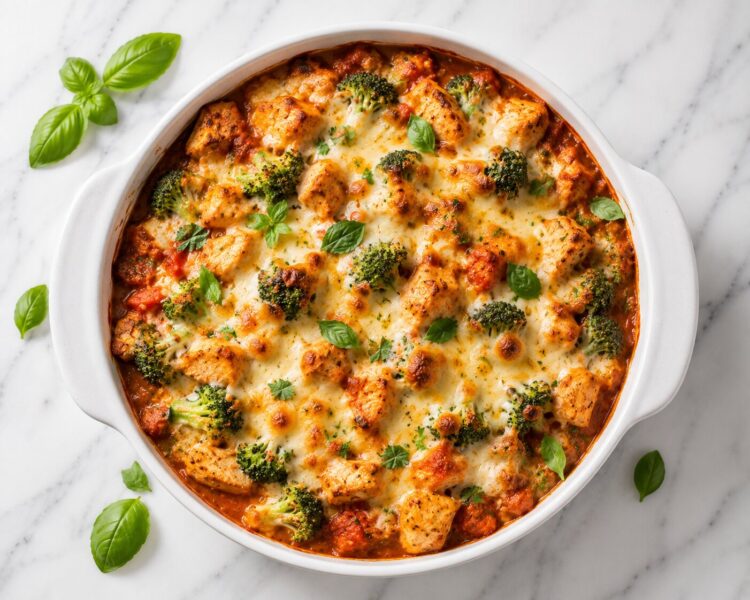
There are weeknights when inspiration runs out completely — when the freezer is full of things you cannot be bothered to defrost and the takeaway menu has been memorised through sheer repetition.
This casserole is for those evenings.
Cheesy Chicken Tomato Broccoli Casserole sits in that perfect, under-populated culinary sweet spot: it is legitimately good enough to serve to guests, nutritious enough to feel good about feeding your family, simple enough to pull together on a Tuesday after work, and adaptable enough that you could make it slightly differently every week for a month.
It is also genuinely satisfying in the way that only properly cheesy, saucy, protein-packed baked dishes can be. The kind of satisfying where people go quiet for a moment when they take their first bite, and where the baking dish gets scraped clean rather than leaving the usual polite scraping on the sides.
One pan. One oven. Real food. No condensed soup required.
Why This Casserole Works Better Than the Classic Version
Most chicken and broccoli casserole recipes rely on a tin of condensed cream-of-mushroom or cream-of-chicken soup as the sauce base. It works — in the sense that it produces a saucy, binding liquid that holds everything together. But it also means your dinner tastes like condensed soup, because that is essentially what it is flavoured with.
This recipe builds its own tomato-based sauce from scratch, which takes less than 10 minutes and produces a result that is noticeably more flavourful, more vibrant, and more interesting than the condensed soup version. The tomatoes add acidity that cuts through the richness of the cheese; the garlic and herbs add layers that canned soup simply cannot replicate.
This Version vs Classic Condensed Soup Casserole
| Feature | This Recipe | Classic Condensed Soup Version |
|---|---|---|
| Sauce base | Scratch-built tomato sauce | Condensed cream soup (canned) |
| Sodium per serving | ~480mg | 800-1,000mg+ |
| Flavour complexity | Multi-layered: herb, garlic, tomato | One-note: cream soup dominant |
| Protein per serving | 38-42g | 22-28g |
| Time difference | 5 extra minutes | — |
| Customisable | Fully | Limited by the soup flavour |
The time investment difference is genuinely minor — roughly 5 extra minutes to sauté the tomato sauce base vs. opening a tin. The result difference is substantial.
The Nutritional Case for This Dish
Chicken breast is one of the leanest, most protein-dense foods readily available. Broccoli is exceptional nutritionally — high in fibre, loaded with Vitamin C (more per gram than an orange), rich in Vitamin K, folate, and potassium, and genuinely useful as a source of plant-based calcium. Tomatoes contribute lycopene (a powerful antioxidant associated with cardiovascular health) and natural sweetness that balances the acid.
The cheese adds calories and saturated fat — but it also adds calcium, flavour, and the binding quality that makes casseroles genuinely satisfying rather than just nutritious.
Nutrition Per Serving (Approximate, Serves 6)
| Nutrient | Amount | Context |
|---|---|---|
| Calories | 350-390 kcal | Satisfying main course |
| Protein | 38-42g | Exceptional for a casserole |
| Carbohydrates | 12-15g | Low-moderate |
| Fat | 14-18g | Primarily from cheese |
| Saturated Fat | 6-8g | From dairy |
| Fibre | 4-5g | Broccoli contribution |
| Vitamin C | ~90mg | ~100% daily value |
| Calcium | ~280mg | ~28% daily value |
| Potassium | ~750mg | ~22% daily value |
For a genuinely cheesy, comforting dinner, this nutritional profile is excellent — particularly the protein content, which is higher than most casserole recipes because this version does not dilute the chicken-to-carb ratio with rice, pasta, or heavy cream fillers.
Ingredients (Serves 6)
For the Chicken and Vegetables
- 700g / 1.5 lb boneless skinless chicken breast, cut into 1-inch cubes
- 1 large head broccoli (approximately 400g), cut into medium florets — not too small or they will overcook during baking
- 1 medium onion, finely diced
- 4 garlic cloves, minced
- 1 tablespoon olive oil — for searing and sautéing
- ½ teaspoon garlic powder
- ½ teaspoon onion powder
- ½ teaspoon dried Italian herbs (or a mix of dried oregano and basil)
- Salt and black pepper to taste
For the Tomato Sauce
- 1 × 400g (14 oz) tin crushed tomatoes — or passata for a smoother sauce
- 2 tablespoons tomato paste — deepens the tomato flavour significantly
- 1 teaspoon dried oregano
- ½ teaspoon dried basil
- ½ teaspoon sugar or honey — balances the acidity of the tomatoes
- ¼ teaspoon red chili flakes — optional, adds a gentle background warmth
- Salt and black pepper to taste
For the Cheesy Topping
- 150g / 1½ cups mozzarella, shredded — melts beautifully and creates the stretchy, golden topping
- 50g / ½ cup parmesan, freshly grated — adds saltiness, depth, and browning
- Optional: 50g mature cheddar or gruyère mixed in for extra complexity
For Garnish and Serving
- Fresh basil or flat-leaf parsley, chopped
- Red chili flakes, pinch for the table
- Crusty bread, for scooping up the sauce
Ingredient Substitutions and Swaps
Chicken thighs instead of breast: Boneless, skinless chicken thighs work beautifully and produce a slightly juicier, more forgiving result. They are less prone to drying out if the casserole runs slightly longer than intended. Use the same quantity and cut to the same size.
Frozen broccoli: Works entirely adequately and is actually more convenient for weeknight cooking. Thaw fully and pat dry before adding to the casserole — excess moisture from frozen broccoli can thin the sauce. Do not blanch or pre-cook; it will cook through during the baking time.
Cherry tomatoes instead of canned: Halved cherry tomatoes (approximately 300g) roasted briefly at the start of the recipe develop a concentrated sweetness that makes the sauce noticeably more complex. Roast at 200°C for 15 minutes before using in place of crushed tomatoes.
Different cheeses: Any combination of melting cheeses works. Smoked mozzarella adds an interesting depth. A sharp cheddar produces a more deeply flavoured, American-style cheese pull. Fontina melts beautifully and adds a buttery richness. Avoid pre-shredded cheese where possible — the anti-caking agents prevent it from melting as smoothly as freshly grated.
Rotisserie chicken: Using pre-cooked shredded rotisserie chicken dramatically reduces the hands-on time. Skip the searing step and simply layer the shredded chicken over the broccoli before adding the tomato sauce. Particularly useful for meal prep.
Added vegetables: Capsicum (bell pepper), sliced zucchini, mushrooms, or cherry tomatoes can all be added to the vegetable layer without significantly changing the bake time. Cut to similar sizes to the broccoli florets and layer alongside them.
Step-by-Step: How to Make Cheesy Chicken Tomato Broccoli Casserole
Step 1 — Preheat and Prepare
Preheat the oven to 200°C (400°F). Lightly grease a 9×13-inch (23×33 cm) baking dish or similar sized ovenproof casserole with olive oil or cooking spray. Set aside.
While the oven preheats, cut the chicken into 1-inch cubes. Season generously with garlic powder, onion powder, Italian herbs, salt, and black pepper. Toss to coat evenly.
Pat the chicken dry before seasoning. Surface moisture on the chicken prevents the proper sear in the next step — it causes the chicken to steam rather than brown. A brief pat with kitchen paper makes a real difference to the colour and flavour you develop on the chicken surface.
Step 2 — Sear the Chicken
Heat the olive oil in a large oven-safe skillet or wide sauté pan over medium-high heat. Once the oil is shimmering and hot, add the seasoned chicken pieces in a single layer. Do not overcrowd — cook in two batches if necessary.
Sear for 2-3 minutes on the first side without moving, until a golden-brown crust forms. Flip and sear for another 1-2 minutes. The chicken does not need to be cooked through at this stage — it will finish in the oven. You are developing colour and flavour, not cooking it to completion.
Remove the seared chicken to a plate and set aside.
Why sear at all? The Maillard reaction — the browning that occurs when protein hits high heat — creates dozens of complex flavour compounds that simply do not exist in un-seared meat. A briefly seared chicken piece contributes significantly more flavour to the finished casserole than one that goes in raw. It adds 5 minutes but meaningfully improves the result.
Step 3 — Build the Tomato Sauce
In the same pan (do not clean it — the browned bits on the bottom are flavour), reduce heat to medium. Add a small drizzle of oil if the pan looks dry, then add the diced onion. Cook, stirring frequently, for 4-5 minutes until softened and translucent.
Add the minced garlic and cook for 60 seconds until fragrant. Add the tomato paste and stir it into the onion-garlic mixture, cooking for 1-2 minutes — this brief cooking of the paste deepens its colour and reduces its raw, sharp edge.
Pour in the crushed tomatoes. Add the dried oregano, basil, sugar, red chili flakes (if using), salt, and pepper. Stir to combine. Simmer for 3-4 minutes until the sauce thickens slightly and the flavours begin to meld.
Taste and adjust seasoning. The sauce should taste well-seasoned and balanced — slightly acidic from the tomatoes, with herbal depth, and with the sharpness taken off by the small amount of sugar.
Step 4 — Assemble the Casserole
Arrange the broccoli florets in an even layer in the prepared baking dish. Scatter the seared chicken pieces over and around the broccoli.
Pour the tomato sauce evenly over the entire surface of the chicken and broccoli, making sure every piece is covered. Use the back of a spoon or a spatula to spread and distribute if needed.
Layer with intention. Broccoli on the bottom means it gets direct heat from the dish and cooks through consistently. Chicken on top means it gets the most sauce coverage. Do not mix everything together before pouring into the dish — the layers produce more even cooking results.
Step 5 — First Bake (Covered)
Cover the baking dish tightly with aluminium foil. The covered bake traps steam inside the dish, which does two things: it cooks the broccoli through without drying it out, and it allows the chicken to cook through in the steam of the sauce rather than exposing it directly to dry oven heat.
Bake covered at 200°C (400°F) for 20 minutes.
Step 6 — Add Cheese and Finish (Uncovered)
Remove the foil carefully — steam will escape and it is hot. Check that the chicken is cooked through (165°F / 74°C internal temperature at the thickest piece) and the broccoli is tender when pierced with a fork.
Scatter the shredded mozzarella evenly over the entire surface. Follow with the grated parmesan distributed across the top.
Return the dish to the oven, uncovered, for 10-15 minutes until the cheese is completely melted, bubbling actively around the edges, and the top is spotted with golden-brown patches.
For an extra golden, slightly caramelised top: switch the oven to the broiler/grill setting for the final 2-3 minutes. Watch carefully — the cheese goes from perfect to burned within about 90 seconds under a high broiler.
Step 7 — Rest and Serve
Allow the casserole to rest for 5 minutes out of the oven before serving. This brief rest allows the sauce to settle slightly and the cheese to firm just enough to produce clean scoops rather than a liquid pool.
Scatter fresh basil or parsley over the top immediately before serving. Add a pinch of red chili flakes at the table for anyone who wants more heat.
What to Serve With This Casserole
The dish is a complete protein-and-vegetable meal on its own, so the accompaniments are entirely about satisfaction and preference rather than nutritional completeness:
For a lighter meal:
- A simple green salad with lemon vinaigrette
- Steamed rice or cauliflower rice to absorb the sauce
- A side of roasted cherry tomatoes
For a more substantial dinner:
- Crusty sourdough bread — essential for scraping up every last bit of tomato sauce from the dish
- Garlic bread or focaccia
- Pasta or orzo served alongside for those who want a carbohydrate component
For meal prep serving:
- Cooked quinoa or farro as a base
- Roasted vegetables on the side
- A container of the casserole over each portion with a grain
4 Variations Worth Making
Variation 1 — White Sauce Version (Classic American Style)
Replace the tomato sauce with a from-scratch béchamel: melt 2 tablespoons butter, whisk in 2 tablespoons flour, then gradually add 1½ cups chicken stock and ½ cup whole milk, stirring until thickened. Season with mustard powder, garlic powder, salt, and pepper. Use in place of the tomato sauce. This is the closest version to the classic American cream-based chicken broccoli casserole — richer and more traditional in character.
Variation 2 — Mediterranean Style
Add 50g sliced black olives, 2 tablespoons capers, and a handful of sun-dried tomatoes to the tomato sauce. Use feta cheese alongside or instead of mozzarella. Finish with fresh oregano rather than basil. The result is bolder, saltier, and more intensely flavoured — excellent for adults who want more complexity.
Variation 3 — Spicy Arrabbiata Version
Increase the red chili flakes to 1 full teaspoon and add 1 deseeded, finely chopped red chili to the sauce along with the garlic. This transforms the sauce into something close to an arrabbiata — sharp, spicy, deeply tomato-forward. Particularly good with the parmesan-heavy cheese topping.
Variation 4 — Meal Prep Rice Casserole
Add 1 cup of dry, rinsed white rice directly to the casserole dish before assembling. Increase the crushed tomatoes to 2 tins and add ½ cup of chicken stock. The rice absorbs liquid during baking and produces a complete one-dish meal. Increase the covered bake time to 35 minutes. This is the most filling, budget-friendly version of the recipe.
Make-Ahead, Storage, and Reheating
Make Ahead (the Prep-Ahead Strategy)
The casserole can be fully assembled — through Step 4, before any baking — covered with foil, and refrigerated for up to 24 hours. When ready to cook, remove from the refrigerator 20 minutes before baking and add 5 minutes to the covered bake time to account for the cold start.
The tomato sauce alone can be made 3-4 days in advance and refrigerated. The seared chicken can be made ahead and refrigerated for up to 24 hours. Having both components ready makes the day-of assembly very fast.
Refrigerator Storage
Cool the casserole completely before storing. Transfer to an airtight container or cover the baking dish tightly with foil or cling film. Refrigerate for up to 4 days. The flavours deepen overnight and the reheated version is genuinely very good.
Reheating
Oven: Cover with foil and reheat at 180°C (350°F) for 15-20 minutes until piping hot throughout. Remove the foil for the last 5 minutes to re-crisp the cheese.
Microwave: Works well for individual portions. Cover loosely and heat in 60-second intervals, stirring between each, until evenly hot.
Tip: Add a tablespoon of water or stock to the portion before microwaving if the sauce has thickened significantly during refrigeration.
Freezing
Freeze baked portions in individual airtight containers for up to 3 months. Thaw overnight in the refrigerator and reheat as above. The broccoli will be slightly softer after freezing and thawing, but the overall result remains very good.
For best results when freezing: slightly undercook the broccoli during the initial bake (it should still have some firmness) to compensate for the texture softening that happens during freezing.
Expert Tips for the Best Results
Cut chicken to uniform size. 1-inch cubes is the recommendation — not larger, not a wild mix of sizes. Uniform pieces cook through at the same rate. A large chunk will still be slightly underdone when smaller pieces are overcooked and dry.
Do not skip the sear. It takes 5 minutes and makes a significant difference. The golden crust on the chicken adds flavour that cannot be added any other way.
Cook the tomato paste briefly before adding liquid. Stirring tomato paste in oil for 1-2 minutes before adding the tinned tomatoes deepens its flavour dramatically — it removes the raw, slightly bitter edge and creates a caramelised, concentrated tomato base.
Grate your own cheese. Pre-shredded cheese contains potato starch and anti-caking agents that prevent it from melting smoothly. Freshly grated cheese from a block produces a better melt and a more visually appealing result.
Rest before serving. Five minutes of resting after the oven is enough to allow the sauce to settle and the cheese to firm slightly. Serving immediately produces a very liquid casserole; after resting it holds together in proper scoopable portions.
Frequently Asked Questions
Q1. Can I make this casserole without pre-cooking (searing) the chicken?
Yes — if you prefer a completely hands-off approach, you can layer the raw (seasoned but unseared) chicken directly into the baking dish with the broccoli and sauce. Increase the covered bake time to 30-35 minutes to ensure the chicken is cooked through, and always check with a meat thermometer (165°F / 74°C). The result will be well-cooked and saucy but will lack the depth of flavour that searing contributes.
Q2. Can I use frozen broccoli instead of fresh?
Yes, absolutely. Frozen broccoli is a practical and nutritious alternative — nutritionally, flash-frozen broccoli retains its vitamins just as well as fresh. Thaw it completely and pat dry with kitchen paper before using to remove excess moisture; this prevents the sauce from becoming too thin during baking. Do not use frozen broccoli straight from the freezer — the moisture as it thaws in the oven will waterlog the sauce.
Q3. How do I prevent the broccoli from getting too soft?
Two approaches work well. First, use medium-sized florets rather than very small ones — small pieces overcook to mush during the bake time, while medium-sized ones stay slightly firm. Second, cut the covered bake time to 15 minutes (rather than 20) if you strongly prefer your broccoli with some bite. The cheese topping will still melt and bubble in the uncovered phase regardless of the shorter covered time.
Q4. Can this be made dairy-free?
Yes. Replace the mozzarella and parmesan with your preferred dairy-free cheese alternatives. The best dairy-free melting cheeses currently available are Violife Mozzarella and Miyoko’s Mozzarella — both melt adequately and produce an acceptable golden top. For the sauce, no dairy is required as written, so no changes are needed there.
Q5. What is the best way to add pasta or rice to this casserole?
For rice: stir 1 cup of dry, rinsed rice into the sauce before pouring over the vegetables, and increase the liquid by adding ½ cup chicken stock alongside the crushed tomatoes. Increase the covered bake time to 35 minutes. For pasta: cook the pasta to just under al dente (it will cook further in the oven), stir it into the sauce, and proceed as normal — no extra liquid needed. The result with either addition is a more filling, single-dish complete meal.
The Casserole That Earns a Permanent Spot in the Rotation
There is a reason certain recipes get made over and over in the same households for years without anyone suggesting something different. They hit every note simultaneously: easy enough for a weeknight, satisfying enough to actually feel like dinner, nutritious enough to feel genuinely good about, and adaptable enough that they never feel repetitive.
This casserole does all of those things. The from-scratch tomato sauce takes 10 minutes and produces something infinitely better than the canned soup alternative. The cheese melts into something golden and bubbling that makes the whole dish look as good as it tastes. The broccoli softens into the sauce just enough to absorb it fully.
Make it once and see if it earns its permanent spot in your weekly rotation.
Try this recipe and share your results in the comments below! Tell us which cheese combination you used, whether you added pasta or rice, and whether your family polished off the whole dish in one sitting. Your variations and adaptations help other cooks make this their own.
Pairs perfectly with: Crusty Sourdough Bread | Garlic Bread | Simple Green Salad | Steamed Rice | Cauliflower Rice
Also explore: Chicken Tikka Masala | One-Pan Baked Chicken Thighs | Chicken and Vegetable Stir Fry | Broccoli and Cheese Soup