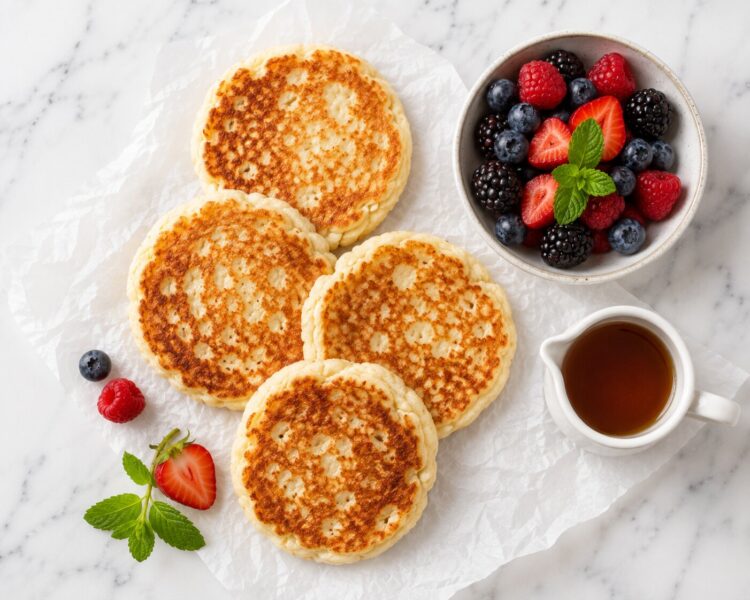
There is a specific kind of breakfast magic that happens the first time you make these pancakes — and it is not what you expect.
You pour the batter. You watch it hit the pan. And then something happens that regular pancake batter simply does not do: the pancake puffs. Not just rises slightly. It soufflés — visibly inflating into a thick, pillowy cloud with golden edges, almost custardy in the centre, with a texture that sits somewhere perfectly between a classic fluffy pancake and a slice of French toast.
The secret is cottage cheese. And before your expression changes, hear this out completely, because the case for cottage cheese in pancakes is genuinely compelling.
You cannot taste it. You cannot see it. It disappears completely into the batter, leaving behind only its benefits: extraordinary moisture, a remarkable lift, and a protein boost that turns breakfast from fuel to genuinely high-performance fuel. One serving of three pancakes delivers 23 grams of protein with no protein powder, no supplements, no ingredients that require a separate shopping trip.
These are just eggs, cottage cheese, flour, baking powder, and salt. Five ingredients. Twenty minutes. The most requested high-protein breakfast recipe in a growing number of home kitchens — and once you make them, you will understand exactly why.
Why Cottage Cheese Makes Better Pancakes Than Buttermilk
This is the question worth answering properly, because if you understand why cottage cheese transforms pancake batter, you will never skip it.
The Moisture Mechanism
Traditional pancake recipes use buttermilk as the liquid base. Buttermilk contributes two things: acidity (which activates baking soda and creates rise) and moisture (which keeps the pancake tender). Cottage cheese does the same job for moisture — and does it more effectively.
The water content in cottage cheese releases slowly into the batter as it cooks, creating a continuously moist interior even as the exterior turns golden and sets. The result is a pancake that is simultaneously crisp at the edges and almost custardy in the centre — a texture combination that is genuinely difficult to achieve with traditional liquid-based batters.
The Soufflé Effect
Something about the specific combination of cottage cheese, eggs, and baking powder in this proportion produces an extraordinary rise. These pancakes puff noticeably more than regular pancakes and hold that height, giving you a thick, fluffy stack that looks as impressive as it tastes.
Here is the science: cottage cheese contains whey proteins that, when heated, begin to coagulate and trap the carbon dioxide produced by the baking powder. This creates a more stable network of air pockets than a purely liquid batter can achieve — which is why the pancakes puff higher and hold their shape better after flipping than a standard recipe.
Protein Without Any Compromise
Between the cottage cheese and the eggs, three pancakes deliver 23 grams of protein at 345 calories. Compare that to a standard American buttermilk pancake (three pancakes) which provides approximately 7-9 grams of protein at similar calories. The cottage cheese triples the protein content without changing the eating experience — you still get fluffy, sweet, delicious pancakes. The protein just comes with them.
This matters practically. A high-protein breakfast suppresses the hunger hormone ghrelin more effectively than a carbohydrate-dominant breakfast, reducing mid-morning hunger and the calorie intake that follows. Making breakfast genuinely higher in protein — without resorting to protein powders or eating things that do not taste like breakfast — is one of the most effective and sustainable changes most people can make to their daily eating.
Nutritional Profile: Cottage Cheese vs Regular Pancakes
| Nutrient | Cottage Cheese Pancakes (3) | Regular Buttermilk Pancakes (3) |
|---|---|---|
| Calories | 345 kcal | 330 kcal |
| Protein | 23g | 8g |
| Carbohydrates | 47g | 52g |
| Fat | 6g | 9g |
| Saturated Fat | 2g | 3g |
| Calcium | 183mg | 120mg |
| Iron | 4mg | 2mg |
| Sodium | 450mg | 580mg |
Same calorie range. Nearly three times the protein. More calcium and iron. Less fat and sodium. The cottage cheese version is a straightforwardly superior nutritional choice — and it tastes better. That combination is genuinely rare.
Ingredients: What You Need and Why
The Essential Five
4 large eggs — the structural backbone of the recipe. Eggs provide the protein network that sets during cooking, giving the pancakes their structure and enabling the rise. Large eggs at room temperature incorporate more evenly into the batter than cold eggs straight from the refrigerator; take them out 15-20 minutes before starting.
1 cup fat-free cottage cheese (smooth / whipped) — the signature ingredient. Use smooth cottage cheese, not the chunky kind with visible curds. Smooth cottage cheese blends seamlessly into the batter and disappears completely. If you can only find regular cottage cheese with visible curds, blend it in a food processor or blender until completely smooth before using — approximately 30-45 seconds. Full-fat cottage cheese gives a richer result but adds calories. Low-fat or fat-free keeps the calorie count lower while still delivering the full protein boost.
What if you can’t find smooth cottage cheese? Ricotta is the closest substitute — it has a similar moisture content and bland, slightly milky flavour. Use it in a 1:1 swap. The pancakes will be slightly denser but still excellent. Greek yogurt works too; use ¾ cup Greek yogurt in place of 1 cup cottage cheese, as yogurt is thicker and more concentrated.
1¼ cups all-purpose flour — regular all-purpose flour gives the best texture: light, tender, and fluffy with enough structure to hold the pancake together through flipping. Do not use self-rising flour — the recipe already includes baking powder, and self-rising flour would over-leaven the batter, causing it to rise too quickly and then collapse before cooking through.
1 teaspoon baking powder — the leavening agent that creates the rise, working in concert with the egg proteins to produce the soufflé effect. Check that your baking powder is fresh. Old baking powder loses its potency and the pancakes won’t rise properly. Test it by dropping a teaspoon into hot water: if it bubbles vigorously, it is still active. If nothing happens, replace it.
A pinch of salt — salt enhances every other flavour in the batter and keeps the pancakes from tasting flat and one-dimensional. Even in sweet recipes, a pinch of salt is not optional — it is the difference between pancakes that taste of nothing and pancakes that taste of themselves.
Optional Additions That Genuinely Improve the Recipe
These are not filler suggestions. Each one adds something specific:
- 1 teaspoon vanilla extract — adds warmth and makes the pancakes smell extraordinary as they cook. Particularly good if you are serving with fruit.
- ½ teaspoon cinnamon — leans into the French toast quality of the texture. Makes the whole kitchen smell like a weekend morning.
- Zest of 1 lemon — finely grated lemon zest adds a bright, fresh note that makes the pancakes feel lighter. Especially good in spring and summer, particularly paired with blueberries.
- 1 tablespoon honey or maple syrup stirred into the batter — adds subtle sweetness that means the pancakes are delicious even without toppings.
- 1 teaspoon almond extract — an unusual addition that gives the pancakes an almost marzipan-like warmth when paired with stone fruits or cherries.
Step-by-Step: How to Make Cottage Cheese Pancakes
Step 1 — Mix the Batter
Whisk the eggs and cottage cheese together in a large mixing bowl until smooth and uniform — approximately 60 seconds of vigorous whisking. The mixture should look creamy and consistent with no visible lumps of cottage cheese remaining.
Add the flour, baking powder, and salt. Whisk until just combined. Do not overmix. A few small lumps of flour are perfectly fine — they will cook out during frying. Overmixing develops the gluten in the flour and produces tough, rubbery pancakes rather than tender, fluffy ones. Stop whisking the moment the dry ingredients are incorporated.
Step 2 — Rest the Batter
This step is optional but makes a noticeable difference in the finished pancakes. Let the batter sit undisturbed for 5 to 10 minutes before cooking. During this time:
- The flour fully hydrates, creating a more cohesive, cohesive batter
- The baking powder begins activating in the presence of moisture
- Any trapped air from whisking settles out, reducing excessive bubbling in the pan
The pancakes will be fluffier, more evenly risen, and more cohesive when cooked from rested batter than from batter used immediately.
Step 3 — Heat the Pan Correctly
Heat a non-stick frying pan or griddle over medium-low heat. This temperature specification is important and specific.
These pancakes are significantly thicker than regular pancakes due to the cottage cheese moisture and the soufflé rise. They need time for the centre to cook through completely before the outside gets too dark. On high or even medium heat, the exterior will brown and set before the interior has had time to cook — you will have golden, beautiful-looking pancakes that are raw in the middle when you bite in.
Medium-low is the correct temperature. It requires more patience (each pancake takes slightly longer than a standard recipe) but produces perfectly cooked results: golden throughout, custardy in the centre, never raw.
Add a small knob of butter or a light spray of cooking oil to the pan. Let the butter melt and foam slightly before adding batter.
Step 4 — Cook in Spoonfuls
Pour approximately 3 tablespoons of batter per pancake onto the pan. A large cookie scoop (3-tablespoon size) is ideal for consistent portions that cook evenly.
Do not spread the batter. Let each portion sit exactly where it lands. It will spread naturally and, more importantly, it will puff upward rather than outward — which is precisely what you want. Spreading it flat defeats the soufflé effect that makes these distinctive.
Cook for 2 to 3 minutes until:
- Bubbles form across the surface and begin to pop
- The edges look set and slightly matte (no longer wet and shiny)
- The underside is a deep, even golden brown when you peek with a spatula
Step 5 — Flip Gently (This Is the Delicate Part)
These pancakes are more tender than standard pancakes due to the moisture from the cottage cheese. They require a gentle flip and a confident spatula.
Slide a wide, flat spatula fully under each pancake before flipping — do not attempt to flip from the edge. Flip in one smooth, decisive motion and lay it back down flat in the pan. A hesitant flip causes the pancake to fold rather than turn cleanly.
Cook the second side for 1 to 2 minutes until golden on the underside and cooked through. The second side cooks faster than the first.
Step 6 — Serve Immediately
Stack the pancakes and add toppings immediately. These are at their absolute best fresh from the pan — still puffed, warm all the way through, and at peak texture. They deflate slightly as they cool, which is normal, but the flavour remains excellent.
Keeping pancakes warm while cooking in batches: Place cooked pancakes on a wire rack set inside a baking tray in an oven preheated to 200°F / 93°C. This keeps them warm without steaming them (which is what happens if you stack them on a plate), preserving their texture until the full batch is ready.
Toppings: The Best Combinations for Sweet and Savoury
Sweet Toppings (Ranked by Popularity)
1. Fresh berries and maple syrup — the definitive classic. Blueberries, strawberries, and raspberries together with a drizzle of pure maple syrup. The tartness of the berries against the subtle richness of the cottage cheese pancakes is perfectly balanced.
2. Nut butter and honey — peanut butter or almond butter spread on a warm pancake melts slightly and becomes silky. Drizzle honey over the top and add a few banana slices. Adds protein and healthy fats on top of an already high-protein stack.
3. Greek yogurt and fruit — a thick dollop of plain Greek yogurt with a handful of seasonal fruit adds creaminess, additional protein, and makes the whole stack feel lighter and more refreshing.
4. Lemon and sugar — a squeeze of fresh lemon juice and a very light dusting of powdered sugar. Simple, elegant, and lets the French toast quality of the pancake texture shine without competition.
5. Warm cinnamon apples — dice an apple and cook in a pan with a teaspoon of butter, a sprinkle of cinnamon, and a teaspoon of brown sugar until softened. Spoon over the stack. This is the autumn and winter version of this recipe.
6. Whipped cream and berries — for weekend mornings that deserve to feel properly indulgent.
Savoury Toppings (Underrated and Worth Trying)
The subtle, slightly milky flavour of cottage cheese pancakes actually pairs beautifully with savoury ingredients in a way that regular sweet pancakes do not:
Smoked salmon and cream cheese — lay thin slices of smoked salmon across the stack, add a spread of cream cheese, fresh dill, a squeeze of lemon, and cracked black pepper. This turns the pancakes into a proper brunch centrepiece.
Crispy bacon and maple syrup — the sweet-salty combination. Classic for a reason.
Avocado and chili flakes — sliced or smashed avocado, a pinch of chili flakes, lemon squeeze, and a flaky salt finish. Turns the stack into something closer to a savoury brunch item than a sweet breakfast.
Poached egg and hot sauce — for those who want the protein on top to match the protein inside. A poached egg on cottage cheese pancakes with a few drops of hot sauce is genuinely excellent.
How to Store and Reheat (Correctly)
Refrigerator
Store leftover cooked pancakes in an airtight container with a piece of parchment paper between each one to prevent sticking. They keep refrigerated for up to 3 days.
Best reheating method: The toaster. Two cycles on medium heat produces a result remarkably close to fresh — the exterior firms up and crisps slightly while the interior reheats evenly. A dry pan over medium heat for about 60 seconds per side also works well. The microwave reheats them but makes the texture slightly gummy — use it only if nothing else is available.
Freezer
These freeze excellently for up to 3 months. Cool the pancakes completely on a wire rack before stacking with baking paper between each one. Place in a freezer bag and press out as much air as possible.
Portion them in stacks of 3 (one serving) before freezing — this means you can grab exactly what you need without defrosting the whole batch.
Reheating from frozen: The toaster, directly from frozen. Two cycles on medium, and they come out tasting almost as good as fresh. No microwave defrosting needed.
What Not to Do: The Batter
Do not make the batter ahead and refrigerate it. The baking powder begins activating the moment it contacts the wet ingredients — a batter that has been sitting in the refrigerator overnight will have exhausted much of its leavening power and the pancakes will not rise or puff properly. Always mix the batter fresh. Freeze the cooked pancakes instead.
Troubleshooting: Why Your Pancakes Might Not Be Perfect (Yet)
Pancakes raw in the middle: Heat too high. Reduce to medium-low and be patient. These are thicker than standard pancakes and need longer to cook through at lower heat.
Pancakes flat and dense: Overmixed batter, or baking powder has lost its potency. Mix just until combined, stop immediately, and test your baking powder before using.
Coating sticks to the pan: Pan not well greased or the pancakes flipped too early. Wait until the edges look fully set and bubbles across the surface begin to pop before flipping.
Pancakes fall apart when flipped: Flipped too soon, or too thin (not enough batter per pancake). Use the full 3 tablespoons per pancake and wait until edges are fully set.
No soufflé effect: Cottage cheese was chunky rather than smooth, or was not blended before adding. The smooth texture is essential — blend until completely lump-free.
Frequently Asked Questions
Q1. Can I taste the cottage cheese in these pancakes?
No. The cottage cheese disappears completely into the batter during mixing and cooking. There is no visible curd, no cottage cheese flavour, and no unusual texture. It contributes only its functional benefits — moisture, protein, and rise. Even confirmed cottage cheese sceptics, including picky-eating children, consistently cannot detect it.
Q2. What is the best cottage cheese to use for pancakes?
Smooth or whipped cottage cheese — sometimes labelled “blended cottage cheese” — is the ideal choice because it incorporates into the batter without leaving visible lumps or uneven texture. If only regular curd-style cottage cheese is available, blend it in a food processor or blender until completely smooth before using. For the best balance of protein and calories, fat-free or low-fat smooth cottage cheese is the recommended choice.
Q3. Can I make cottage cheese pancakes gluten-free?
Yes. A 1:1 gluten-free flour blend (such as Bob’s Red Mill or King Arthur’s equivalent) substitutes directly for the all-purpose flour in this recipe. The texture will be very slightly denser than the wheat flour version, and the pancakes may not puff quite as dramatically, but the result is still excellent and the protein content remains the same.
Q4. How do I get the soufflé puff effect — mine stayed flat?
Four things produce the puff: smooth cottage cheese (not chunky), fresh baking powder, not overmixing the batter, and cooking on medium-low heat rather than high. If your pancakes are staying flat, the most common culprits are old baking powder and overmixed batter. Test the baking powder by dropping a teaspoon into hot water — it should bubble vigorously. Mix the batter only until the flour is incorporated, then stop immediately.
Q5. Can I make the batter the night before?
No — making the batter ahead and refrigerating it overnight is not recommended. The baking powder activates as soon as it contacts the wet ingredients, and a batter that has sat overnight will have depleted most of its leavening power. The pancakes will be flat, dense, and will not puff. Instead, make the batter fresh and freeze the cooked pancakes. They reheat in the toaster from frozen in about 4 minutes and taste almost as good as fresh.
Start Your Morning Differently
The version of breakfast that is quick, high in protein, genuinely delicious, and made from five ingredients that are already in your kitchen is the version that actually becomes a habit.
Cottage cheese pancakes are that version. Five ingredients. Twenty minutes. A stack that puffs like a soufflé, tastes like a cross between pancakes and French toast, and delivers 23 grams of protein before your morning coffee is finished.
Make them once. Make them on a Tuesday when you need a fast, good breakfast. Make them on a Sunday when you have time to enjoy the process. Make them for someone who insists they do not like cottage cheese and watch their expression when you tell them what is in the batter.
Try this recipe and share your results in the comments below! Tell us which topping combination you loved most, whether you tried the savoury salmon version, and what your household said when they found out the secret ingredient. First-time makers who were surprised by how good they are — we especially want to hear from you.
Pairs perfectly with: Fresh Berries | Maple Syrup | Greek Yogurt | Nut Butter | Smoked Salmon | Crispy Bacon
Also explore: High Protein Paneer Oats Chilla | Protein Smoothie Bowls | Egg White Omelette | Protein French Toast | Greek Yogurt Parfait