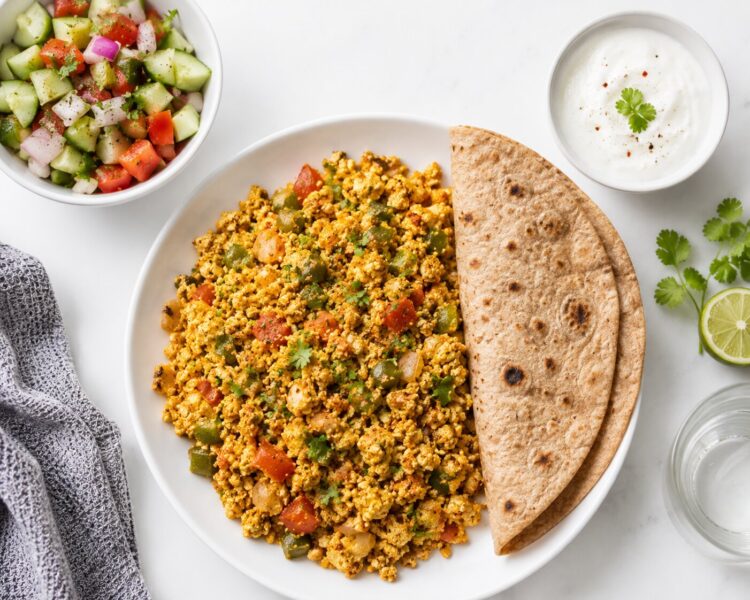
Here is an honest question most people on a weight loss journey eventually ask themselves: Why does healthy food have to be boring?
Grilled chicken with steamed broccoli is fine. Boiled eggs are nutritious. Plain oats get the job done. But none of them make you look forward to the next meal — and that lack of anticipation is precisely what makes most diets fail long before they succeed.
Paneer Bhurji solves this problem completely.
It is bold, spiced, deeply satisfying, and done in 20 minutes. It smells like a proper Indian meal because it is a proper Indian meal. And it happens to be one of the most protein-dense, fat-loss-friendly dishes in the entire North Indian culinary tradition.
Paneer bhurji provides 18g of complete protein per 100g with all essential amino acids, making it an excellent vegetarian protein source. The calorie count — approximately 265 kcal per 100g — is moderate, but when you factor in the protein’s extraordinary satiety effect and its impact on metabolism, this becomes one of the smartest foods you can eat on a calorie deficit.
This guide gives you the complete weight-loss-optimised recipe, the science behind why paneer specifically supports fat loss, practical tips for cutting calories without cutting flavour, and everything you need to make Paneer Bhurji a sustainable staple in your weekly routine.
Why Paneer Bhurji Works for Weight Loss: The Science
Complete Protein That Keeps You Full for Hours
Paneer contains slow-digesting casein protein that supports muscle retention and metabolic activity. Its high protein content helps regulate hunger and keeps calorie intake in check.
This matters enormously for weight loss. Casein is a structural protein that forms a gel in the stomach — unlike whey or plant proteins that digest quickly, casein releases amino acids steadily over 4-7 hours. The practical result: you are genuinely not hungry for 3-4 hours after eating Paneer Bhurji, which means fewer between-meal snacks, less total calorie intake, and a more sustainable calorie deficit.
The Protein-Thermogenesis Effect
Your body burns calories just digesting and processing food — this is called the Thermic Effect of Food (TEF). Protein has the highest TEF of any macronutrient: 20-35% of its calories are burned in processing, compared to just 5-10% for carbohydrates. For every 100 calories of protein in your Paneer Bhurji, your body burns approximately 25-30 calories just digesting it. This metabolic advantage compounds over time.
Very Low Carbohydrate Profile
Paneer bhurji is actually excellent for diabetics with only 3.5g carbs. This near-zero carbohydrate content means:
- No blood sugar spike after eating
- Insulin remains stable — supporting fat mobilisation
- Suitable for keto, low-carb, and diabetic-friendly diets
- No post-meal energy crash that triggers hunger and cravings
Calcium and Fat Loss
Research published in the American Journal of Clinical Nutrition shows that calcium — abundant in paneer — plays a direct role in fat metabolism. Calcium binds to dietary fat in the digestive tract, inhibiting fat absorption, and also regulates the hormones that control fat storage. The high calcium content (480mg per 100g) supports both bone health and muscle function, with the bone health benefit being particularly important during calorie restriction when bone density can sometimes decline.
Nutrition Facts: Weight Loss Version vs. Regular Version
The way you make Paneer Bhurji determines whether it helps or hinders your weight loss goals.
| Nutrient | Restaurant/Heavy Version | Weight Loss Version (this recipe) |
|---|---|---|
| Calories (per 100g) | 320-370 kcal | 210-265 kcal |
| Protein | 12-15g | 15-18g |
| Fat | 25-32g | 14-18g |
| Carbohydrates | 8-12g | 3-5g |
| Sodium | High | Controlled |
| Oil used | 3-4 tbsp butter/oil | 1 tsp oil (non-stick) |
| Paneer type | Full-fat | Low-fat (25-30% fat reduced) |
The difference between the two versions comes down to three choices: the type of paneer, the amount of oil, and the vegetable ratio. This recipe makes all three choices deliberately in favour of maximum nutrition and minimum unnecessary calories.
Ingredients for Weight-Loss Paneer Bhurji (Serves 2)
Main Ingredients
- 200g low-fat paneer — crumbled by hand into rough, uneven pieces (not finely grated — texture is important)
- 1 medium onion, finely chopped
- 2 medium tomatoes, finely chopped, seeds removed (removing seeds reduces excess liquid)
- 1 medium capsicum / bell pepper (green or red), finely diced
- ½ cup baby spinach, roughly chopped (optional but adds iron, folate, and fiber)
- 1-inch fresh ginger, grated or finely minced
- 3-4 garlic cloves, minced
- 2 green chilies, finely chopped (adjust to preference)
Spices
- ¼ teaspoon turmeric powder
- ½ teaspoon red chili powder (or Kashmiri red chili for milder, more colourful result)
- ½ teaspoon coriander powder
- ½ teaspoon cumin seeds
- ¼ teaspoon garam masala
- A pinch of asafoetida (hing) — supports digestion
- Salt to taste (black salt preferred — adds chaat-like depth)
For Cooking
- 1 teaspoon neutral oil — use oil spray for minimum calories; skip oil entirely with a high-quality non-stick pan
Finishing
- 2 tablespoons fresh coriander leaves, chopped
- ½ teaspoon lemon juice (adds brightness and aids iron absorption)
How to Make Weight-Loss Paneer Bhurji: Step-by-Step
Step 1 — Crumble the Paneer
Remove the paneer from the refrigerator 15 minutes before cooking. Cold paneer straight from the fridge can be dense — allowing it to come to room temperature makes it easier to crumble and gives it a slightly softer, more tender texture in the finished dish.
Crumble the paneer by hand into irregular pieces — some small, some slightly larger. Do not grate or mince finely. The textural variation in the crumble is what makes Paneer Bhurji look and feel like scrambled eggs rather than a smooth paste.
Low-fat paneer tip: Low-fat paneer is slightly drier and firmer than full-fat. If it feels too dry when crumbling, add 1-2 teaspoons of water when you crumble it to restore some moisture. This prevents it from drying out further during cooking.
Step 2 — Build the Masala Base
Heat 1 teaspoon of oil in a non-stick pan or iron tawa over medium heat. Add the cumin seeds and asafoetida — let the cumin sizzle for 20-30 seconds until darkened and fragrant.
Add the minced ginger and garlic. Stir continuously for 45-60 seconds until the raw smell disappears and the mixture turns golden. Do not let it brown — golden is correct.
Add the finely chopped onion. Cook, stirring regularly, for 5-6 minutes until fully translucent and just beginning to catch a light golden colour at the edges. Properly cooked onions add a natural sweetness that balances the spiced paneer — undercooked onions taste sharp and raw.
Step 3 — Add Tomatoes and Cook Down
Add the chopped tomatoes and green chilies. Stir and cook over medium heat for 3-4 minutes until the tomatoes completely soften and break down into the masala. The mixture should look glossy and cohesive — not like separate pieces of tomato.
Add the turmeric, red chili powder, and coriander powder. Stir immediately and cook for 60 seconds until the spice powders are absorbed and fragrant.
Add the diced capsicum and chopped spinach (if using). Stir through and cook for 2-3 minutes until the capsicum is just tender — still with a slight crunch.
Step 4 — Add Paneer and Finish
Add the crumbled paneer to the masala. Stir gently to coat every piece of paneer with the spiced tomato-onion base. Cook for 2-3 minutes on medium heat, stirring occasionally.
Add salt and garam masala. Stir through. Cook for a final 60 seconds.
Turn off the heat. Add lemon juice and fresh coriander. Stir once more.
The critical don’t: Do not overcook the paneer. Paneer becomes rubbery and unpleasant when exposed to high heat for too long. 2-3 minutes after adding to the masala is the maximum. The paneer should look and feel soft, slightly golden at the edges, and well-coated — not dry, shrunken, or rubbery.
5 Expert Tips for Maximum Weight Loss Benefit
1. Use low-fat paneer strategically. Low-fat paneer reduces the fat content by approximately 25-30% compared to full-fat. It still provides the same protein level but at fewer calories. For most people targeting weight loss, the calorie saving is worthwhile. If low-fat paneer tastes too dry, crumble it into room-temperature water for 5 minutes before cooking — this rehydrates it without adding calories.
2. Maximise the vegetable ratio. The 2024 ICMR-NIN guidelines recommend 400g of vegetables daily. Loading your bhurji with capsicum or spinach adds volume and fiber without heavy calories. Try doubling the capsicum and adding mushrooms — both are extremely low-calorie foods that bulk out the dish and increase satiety significantly.
3. Control the oil with precision. One teaspoon of oil adds roughly 45 calories. Using non-stick pans allows you to sauté with minimal fat. An oil spray (approximately 5-10 calories per use) is the most calorie-efficient option. Many experienced weight-loss cooks replace oil entirely with a splash of water — add 1 tablespoon of water to the pan first, then the cumin seeds, and proceed as normal.
4. Choose low-fat paneer but not zero-fat. Zero-fat paneer exists but the texture and flavour are significantly inferior — it tends to become very dry and rubbery during cooking. The small amount of fat in low-fat paneer (approximately 14-15g per 100g vs 21g in full-fat) is important for mouth-feel, flavour, and actually helps absorb the fat-soluble vitamins in the vegetables.
5. Eat it with the right accompaniments. Paneer Bhurji is typically served with roti or paratha — both of which significantly increase the carbohydrate and calorie load of the meal. For weight loss, serve with 1 whole wheat roti (approximately 70 calories) rather than 2-3, or with cucumber slices, lettuce wraps, or a large bowl of salad as a lower-carb vehicle.
The Weight-Loss Meal Plate
The ideal weight-loss Paneer Bhurji plate:
| Component | Portion | Calories | Protein |
|---|---|---|---|
| Paneer Bhurji (weight loss version) | 150g | ~310 kcal | 22-25g |
| 1 whole wheat roti | 1 medium | ~70 kcal | 3g |
| Cucumber raita (low-fat) | ½ cup | ~45 kcal | 3g |
| Salad (cucumber, tomato, onion) | 1 cup | ~25 kcal | 1g |
| Total | — | ~450 kcal | ~29-32g protein |
This complete meal provides nearly 30g of protein — a level that keeps most adults satiated for 4-5 hours, making it ideal as a breakfast, lunch, or dinner option on a weight loss plan.
4 High-Protein Variations Worth Trying
Egg + Paneer Bhurji (Highest Protein): Scramble 2 eggs along with the paneer — add them to the masala at the same time, fold everything together, and cook until set. Total protein per serving jumps to 28-32g. Particularly good for post-workout meals.
Mushroom Paneer Bhurji (Lower Calorie, High Volume): Replace 50g paneer with 100g finely diced mushrooms. Mushrooms are 95% water — they add virtually no calories while significantly increasing the volume of the dish. Total calories drop by approximately 80 kcal per serving.
Tofu + Paneer Combination (Lactose-Sensitive Option): Use 100g paneer + 100g firm tofu. The tofu adds protein without lactose and slightly reduces the fat content. The texture combination works beautifully — paneer is slightly chewy, tofu is softer — creating more textural interest.
Spinach Paneer Bhurji (Iron + Protein for Anaemic dieters): Add 1 cup of finely chopped fresh spinach to the masala before adding the paneer. The spinach wilts and integrates completely. The lemon juice in the recipe dramatically improves iron absorption from the spinach.
Storage and Meal Prep
Refrigerator: Paneer Bhurji stores in an airtight container for up to 2 days. The flavours deepen overnight — this is a dish that genuinely tastes better the next day.
Reheating: Add 1 tablespoon of water and heat in a covered pan over low heat for 2-3 minutes. This prevents the paneer from becoming rubbery during reheating.
Meal prep: Make a double batch on Sunday evening. Refrigerate in 2-3 individual portions. On weekday mornings, reheat one portion while making a fresh roti — a complete, high-protein breakfast in 10 minutes.
Freezer: Not recommended. Paneer changes texture irreversibly after freezing and thawing — it becomes crumbly and dry in a way that cannot be remedied.
Frequently Asked Questions
Q1. How many calories does weight-loss Paneer Bhurji have?
The weight-loss version in this recipe — made with low-fat paneer, 1 teaspoon of oil, and plenty of vegetables — contains approximately 210-265 calories per 100g serving, compared to 320-370 calories in restaurant or butter-heavy versions. A standard 150g serving provides approximately 310-320 calories with 22-25g of protein — an excellent calorie-to-protein ratio for any fat-loss diet.
Q2. Is full-fat paneer or low-fat paneer better for weight loss?
Low-fat paneer is the better choice when your primary goal is calorie reduction. It contains approximately the same protein (18-19g per 100g) but 25-30% less fat, translating to 50-70 fewer calories per 100g serving. The taste and texture are slightly different — low-fat paneer is firmer and drier — but with a good spice base and the rehydration tip above, the difference is minimal in a finished dish.
Q3. Can I eat Paneer Bhurji every day for weight loss?
Yes, 4-5 times per week is perfectly sustainable and nutritionally sound. Paneer provides complete protein, calcium, and B vitamins. Rotating with other protein sources (moong dal, eggs, chicken if non-vegetarian) ensures you get a broader range of micronutrients. The 2024 ICMR guidelines suggest varied protein sources within a balanced diet — Paneer Bhurji is excellent as a regular rotation rather than a daily single-source protein.
Q4. What should I eat with Paneer Bhurji for weight loss?
For maximum weight loss benefit: 1 whole wheat roti (not paratha — no butter), a large mixed vegetable salad, and a small bowl of low-fat yogurt. Avoid white bread, butter-laden parathas, or rice in large quantities with Paneer Bhurji. The dish itself is very low-carb — it does not need more carbohydrates added alongside it.
Q5. Is Paneer Bhurji keto-friendly?
Yes — Paneer Bhurji is one of the best keto-compatible Indian dishes. With only 3.5g carbohydrates per 100g, it fits easily within the standard keto threshold of 20-50g net carbs per day. Eat it with a low-carb vegetable like cucumber, lettuce, or sautéed zucchini instead of roti for a fully keto-compliant meal.
Ready to Make Your Most Satisfying Diet Meal Yet?
Weight loss does not have to mean eating food you do not love. Paneer Bhurji — the real, spiced, aromatic, 20-minute version — is living proof that the right ingredients prepared the right way can be both extraordinary to eat and genuinely powerful for fat loss.
Make it tonight. Make it tomorrow morning. Make a batch on Sunday that feeds you through Monday and Tuesday. Every version of that decision is a good one.
Tried this recipe? Share your results in the comments below! Tell us which protein variation you tried, what you served it with, and whether the casein satiety effect held you until the next meal. We read every comment.
Pairs perfectly with: Whole Wheat Roti | Mixed Salad | Cucumber Raita | Mint Chutney | Masala Chai (no sugar)
Also explore: Paneer Oats Chilla | High Protein Poha | Moong Dal Chilla | Egg Bhurji