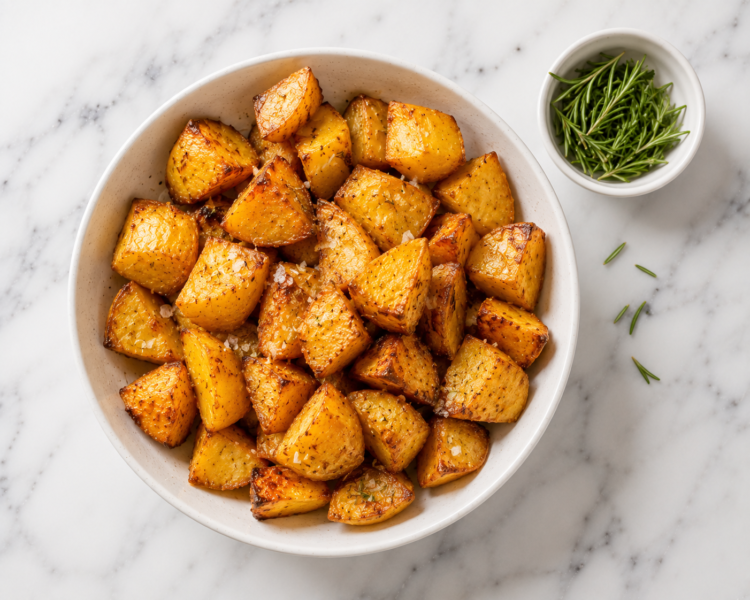
Every British cook has a moment of reckoning with roast potatoes.
You know the traditional method: parboil for 10 minutes, drain and steam dry, shake the pot to roughen the edges, heat the fat in the oven until it smokes, lower the potatoes in carefully (avoiding the spit), roast for 45-50 minutes, turn halfway through. Factor in the oven being needed for the actual roast, juggling timing with everything else on the hob, and the whole thing becomes a minor logistical operation.
The result is extraordinary. The method is, let’s be honest, a lot.
Air Fryer Roast Potatoes give you genuinely crispy, golden, fluffy-centred roasties in under 30 minutes, with five ingredients, no parboiling, no pre-heating a tray of smoking fat, and no stress about oven space. Are they exactly the same as the traditional parboiled, lard-roasted version? Not 100%. But they are golden, delicious, and ready in a fraction of the time — and once you have made them this way, they become your automatic choice for everything except the most special occasions.
One reviewer’s husband declared them the best roasties he had ever eaten. Another reader made them as a last-minute Sunday evening addition and reported the same result. When a method that saves over an hour of cooking time also produces superlatives like that, it is worth paying attention.
This guide gives you the complete recipe, the science behind why the flour trick creates such excellent crispness, a comparison of potato varieties, every expert tip that makes the difference, and answers to every question that comes up when making roast potatoes in an air fryer for the first time.
Why Air Fryer Roast Potatoes Are a Genuine Revelation
This is not marketing enthusiasm. The time difference between the two methods is staggering:
| Method | Prep Time | Cook Time | Total Active Time | Parboiling Required |
|---|---|---|---|---|
| Traditional oven | 10 min prep + 10 min parboil | 45-60 min | 65-80 minutes | Yes |
| Air fryer (this recipe) | 5 minutes | 25 minutes | 30 minutes | No |
That is a saving of 35-50 minutes on a side dish. During a full roast dinner where the main is in the oven and three other sides are on the hob, those 35-50 minutes represent a genuinely significant stress reduction.
Beyond time, the air fryer’s rapid, circulating hot air produces consistently excellent results that are difficult to replicate in a conventional oven unless you are using high-quality fat and a properly preheated tray. The circulating heat reaches all surfaces of each potato chunk simultaneously — meaning the bottoms crisp up just as well as the tops without turning, and the edges develop that golden, slightly caramelised crust on every side.
The Secret Weapon: Why Plain Flour Makes Them Crispier
This is the ingredient in this recipe that surprises most first-time makers, and the one that makes the biggest difference to the final result.
A tablespoon of plain flour tossed with the potatoes and oil before air frying does something specific: it forms an extremely thin coating on the surface of each potato chunk that, when it hits the hot circulating air, dries and crisps almost instantly. The starch in the flour gelatinises rapidly under high heat, creating a thin shell around the potato that becomes golden and crunchy while the interior stays soft and fluffy.
It is the same principle behind the technique of roughening parboiled potatoes before roasting — both methods are increasing the surface area and creating a textured, starchy coating that crisps. The flour achieves this without the parboiling step, making it the key enabler of the no-parboil method.
One reader who tried using gluten-free plain flour reported equally excellent results — good news for anyone who cooks for someone avoiding gluten.
Which Potatoes Work Best? The Definitive Guide
Potato variety is the most important ingredient decision in this recipe. The wrong potato produces dense, waxy interiors that never achieve the contrast between crispy exterior and fluffy inside that makes roasties so distinctive.
The rule: You want a floury potato — high in starch, low in moisture. Floury potatoes cook to a soft, almost crumbly interior that steams through properly during the air fryer cook time.
Best Choices for Air Fryer Roast Potatoes
Maris Piper — the gold standard for British roasties. High starch content, dry floury texture when cooked, produces reliably crispy outsides with fluffy interiors. The most consistently recommended variety.
King Edward — a close second. Slightly waxier than Maris Piper but still delivers excellent results. Often available where Maris Piper is not.
Rooster — popular in Ireland and increasingly available in the UK. Red-skinned with a yellow, floury interior. Produces excellent roasties with a slightly more pronounced flavour than either of the above.
Russet (for USA cooks) — the American equivalent of a floury potato. High starch, ideal for roasting. Works very well in this recipe.
Yukon Gold — a slightly waxier American variety that still produces good results, with a naturally buttery flavour.
Potatoes to Avoid
Waxy varieties (Charlotte, Jersey Royals, Anya, new potatoes) — low starch, high moisture. They will not crisp properly and will produce a dense, slightly chewy interior rather than the fluffy texture that makes roasties satisfying. Save these for salads and steaming.
Ingredients for Air Fryer Roast Potatoes (Serves 4)
The simplicity of this ingredient list is part of the appeal. Five ingredients, all pantry staples:
1 kg (2.2 lb) floury potatoes — Maris Piper, King Edward, or Rooster; peeled and cut into large chunks
1 tablespoon sunflower oil — neutral-flavoured oil that allows the natural potato flavour and the onion granules to come through cleanly. However, do not consider sunflower oil the only option — see the fat guide below.
1 tablespoon plain flour (all-purpose flour) — the crispness secret; do not skip this
½ teaspoon onion granules (also called onion powder) — adds a subtle, savoury depth that complements the potato without overpowering it. It is a quiet ingredient that makes a noticeable difference in the finished flavour.
Sea salt — a generous pinch, added after coating and again at serving
Choosing Your Fat: Beyond Sunflower Oil
The choice of fat significantly affects both flavour and crispness:
| Fat | Flavour | Crispness | Smoke Point | Best For |
|---|---|---|---|---|
| Sunflower oil | Neutral | Very good | High (230°C) | Everyday roasties |
| Olive oil | Fruity, light | Good | Medium-high | Mediterranean flavour |
| Duck fat | Rich, savoury | Excellent | High | Special occasion roasties |
| Goose fat | Deep, traditional | Excellent | High | Classic Christmas roasties |
| Beef dripping | Intensely savoury | Excellent | Very high | Very traditional British flavour |
Sunflower oil is the practical weeknight choice. Duck fat or beef dripping turns these into something that genuinely rivals the most indulgent traditional oven version — though both add calories and are best saved for special occasions.
Step-by-Step: How to Make Air Fryer Roast Potatoes
Step 1 — Peel and Cut the Potatoes
Peel the potatoes and cut into large chunks — aim for 4-6cm pieces. This size is critical and worth measuring if you are unsure. Larger chunks will not cook through to a fluffy centre in the given cook time; smaller pieces risk cooking too quickly on the outside before the flour coating can properly crisp.
Try to cut pieces to roughly uniform size — this ensures all the chunks reach the perfect crisp-outside, fluffy-inside point at the same time.
Skin-on option: Several readers have asked whether the potatoes can be left unpeeled — and the answer is yes. Skin-on roasties have a different, more rustic texture and the skins crisp up nicely in the air fryer. Simply scrub the potatoes well rather than peeling. This is also faster and avoids the peeling step entirely.
Step 2 — Coat Thoroughly in a Large Bowl
This step is more important than it sounds. Transfer the potato chunks to a large bowl — larger than you think you need. Add the sunflower oil, plain flour, and onion granules.
Using clean hands, toss and coat until every surface of every potato chunk is covered with the oil-flour mixture. Hands genuinely work better than spoons or tongs here because you can feel which surfaces are still dry and need more coating. A properly coated potato will feel slightly tacky and look uniformly covered with a thin, floury film.
Season with sea salt and toss once more.
The coating test: Hold a chunk up to the light. You should not see any shiny, uncoated spots — every surface should look matte and flour-dusted. If you can see bare, glistening potato, give those pieces more attention before they go into the fryer.
Step 3 — Prepare the Air Fryer
Remove the rack from your air fryer if it has one. For this recipe, the potatoes cook directly in the basket without a rack — this allows them to rest against the basket surface, which creates better contact and crisping on the undersides and edges. Using a rack elevates the food, which is useful for some recipes but actively counterproductive here.
There is no need to preheat, though if your air fryer model specifically recommends preheating, a 3-minute preheat at 190°C will not cause any problems.
Add the coated potato chunks to the basket in a single layer with a little space between each piece. If you have more potatoes than space, cook in batches — overcrowding prevents the circulating air from reaching all surfaces and produces steamed, soft potatoes instead of crispy ones.
Step 4 — First Cook Phase: 10 Minutes at 190°C
Set the air fryer to 190°C (375°F) using the ‘Air Fryer’ setting if your model has one, or the standard setting if not. Cook for 10 minutes.
At the 10-minute mark, open the basket and shake vigorously. Not a gentle tilt — a proper, confident shake that moves all the pieces and turns them so different surfaces are now making contact with the basket. Pieces that were on top are now on the bottom and vice versa.
Why shake rather than turn individually? Shaking at 10-minute intervals is more efficient and more effective than using tongs to individually turn each piece. The vigorous movement also helps any loose flour coating redistribute across surfaces that may have dried out during cooking.
Step 5 — Second Cook Phase: 5 Minutes
Continue cooking for another 5 minutes. Open the basket and shake vigorously again — this is the second shake, and at this point you should see the potato chunks beginning to look golden on the surfaces that have been against the basket.
Step 6 — Final Cook Phase: 10-15 Minutes
Continue cooking for a final 10 to 15 minutes, until the roast potatoes are golden brown all over with crispy edges and surfaces.
The total cook time will be between 25 and 30 minutes depending on your specific air fryer model, the exact size of your potato chunks, and how golden you prefer them. All air fryers run slightly differently — use the visual cues (deep golden colour, crispy-looking edges when you shake them) rather than the timer alone.
Step 7 — Optional Crispness Boost
If the potatoes reach the end of the cooking time looking golden but not quite as crispy as you want, there is a simple fix: increase the temperature to 200°C (400°F) and cook for a further 5 minutes. This higher-heat finish drives off any remaining surface moisture and produces an extra-crisp exterior. Watch carefully during this stage — the extra heat can take potatoes from perfectly golden to overdone within a couple of minutes.
Step 8 — Season and Serve
Remove from the basket and season generously with sea salt immediately — salt adheres better to hot potatoes than cold ones, and seasoning right out of the fryer produces a more evenly-seasoned result than seasoning at the table. Serve immediately.
How to Get the Crispiest Results: Expert Tips from Real Cooks
These tips emerge from reader comments and testing — the specific details that make the difference between good and outstanding:
Cut evenly and to the right size. This is the tip mentioned most often by experienced makers. 4-6cm chunks are the sweet spot — large enough to stay fluffy inside but small enough to cook through completely. A cutting board and a brief mental check of chunk sizes before coating will save you from the frustration of soft centres.
Use your hands for coating. Multiple readers specifically mention this: hands are more effective than any utensil for ensuring the oil-flour mix reaches every surface. Do not skip this step or rush it.
Shake vigorously, not gently. A timid shake barely moves the potatoes. You want the basket to see a genuine shift in all positions — bottom pieces to the top, corner pieces to the centre. The vigorous shake is what ensures even crispness on all surfaces.
Do not crowd the basket. If your air fryer is small, cook in two batches and keep the first batch warm in a low oven (100°C) while the second cooks. Overcrowded potatoes steam against each other rather than crisping.
The optional parboil (for the truly dedicated). One reader mentions parboiling for 6 minutes before coating and air frying, noting results “as good if not better” than standard roasties. This takes the total time to approximately 40 minutes and adds the step back in — but if you want the absolute closest to traditional roasties in an air fryer, this hybrid approach is worth knowing about.
Season after cooking, not only before. A light seasoning before going in is fine; a generous seasoning immediately after coming out is what gives you properly salty, satisfying roasties.
What to Serve With Air Fryer Roast Potatoes
These potatoes work as a side dish for far more meals than just Sunday roast:
Classic British:
- Sunday roast chicken, beef, lamb, or pork
- Sausages and gravy
- Roast dinner plate with Yorkshire puddings, roasted vegetables, and gravy
Everyday Weeknight:
- Alongside any grilled or roasted chicken dish
- With sausages and baked beans (a surprisingly excellent combination)
- As a side to pork chops, steaks, or lamb cutlets
- With a simple green salad for a lighter complete meal
Special Occasion:
- Christmas dinner — free up the oven for the turkey and other roasted vegetables
- Easter lamb
- Any large family gathering where oven space is at a premium
Leftover Roast Potatoes: What to Do With Them
The honest answer is that air fryer roast potatoes are best eaten immediately — they lose crispness as they cool, like any roasted potato. But leftovers are absolutely worth keeping rather than discarding.
Refrigerator: Store in an airtight container for up to 3 days.
Reheating: The air fryer is by far the best method. 5 minutes at 200°C (400°F) restores most of the crispness. The oven at the same temperature for 10-12 minutes also works well. Avoid the microwave — it produces soft, slightly soggy potatoes.
Freezing: The potatoes can be frozen and reheated from frozen (covered) on another day. They will be slightly drier than freshly made but still perfectly enjoyable. Several readers specifically recommend this for batch cooking.
Bubble and Squeak: If the potatoes are truly past their best as a standalone side, roughly mash them and pan-fry in a little oil until crispy patties form — Britain’s great leftover breakfast dish and one of the best things you can do with cold roast potatoes.
Nutritional Information (Per Serving)
| Nutrient | Amount |
|---|---|
| Calories | 231 kcal |
| Carbohydrates | 45g |
| Protein | 5g |
| Fat | 4g |
| Saturated Fat | 0.4g |
| Fibre | 6g |
| Vitamin C | 49mg (54% DV) |
| Potassium | 1,057mg (30% DV) |
| Iron | 2mg (11% DV) |
At 231 calories per serving with 4g of fat (compared to 350-450 calories for deep-fried or heavily oiled traditional roasties), air fryer roast potatoes represent a genuinely lighter option without sacrificing the character of the dish.
Frequently Asked Questions
Q1. Do I need to parboil potatoes before air frying?
No — and this is the fundamental advantage of this recipe. Cutting the potatoes to the correct size (4-6cm chunks) and coating them in flour before air frying eliminates the need for parboiling entirely. The high-heat air circulation cooks the interior through completely while crisping the surface. If you prefer the slightly fluffier interior that parboiling produces, a 6-minute parboil before coating and air frying is an optional upgrade — but it is genuinely not necessary for excellent results.
Q2. Why are my air fryer roast potatoes not getting crispy?
Four possible causes, each with a specific fix. First, chunks cut too large — anything over 6cm will struggle to produce a crispy exterior before the interior is cooked. Second, not enough flour coating — every surface must be covered. Third, overcrowded basket — leave space between pieces and cook in batches if necessary. Fourth, not shaking vigorously at the specified intervals — the shake is not optional. If all else fails, increase the temperature to 200°C (400°F) for a final 5-minute blast.
Q3. Can I make air fryer roast potatoes with the skin on?
Yes, absolutely. Multiple readers prefer skin-on roasties for the additional texture and flavour that crispy potato skin provides. Scrub the potatoes thoroughly rather than peeling them, cut to the same 4-6cm chunk size, and proceed exactly as the recipe directs. The skin crisps up very well in the air fryer and adds a pleasant contrast to the fluffy interior.
Q4. Can I use duck fat or goose fat instead of sunflower oil?
Yes, and the result is outstanding. Replace the sunflower oil with the same quantity of melted duck fat or goose fat and coat the potatoes the same way. Both fats have high smoke points that are well-suited to the air fryer’s operating temperatures, and both produce roasties with a deeper, richer, more traditionally British flavour profile. If using beef dripping, melt it first and use in the same quantity. This fat upgrade takes the recipe from very good to genuinely exceptional.
Q5. How do I keep air fryer roast potatoes crispy if I’m not serving them immediately?
The best method is to place the cooked potatoes on a wire rack set over a baking tray in a low oven (around 100-120°C / 210-250°F). This keeps them warm without trapping steam against the surface — stacking in a bowl or covering with foil creates steam that softens the crust. They will hold their crispness for 15-20 minutes this way. If they have softened, a 4-5 minute blast at 200°C in the air fryer will restore most of the crunch.
Your Sunday Dinner Just Got 45 Minutes Shorter
Roast potatoes do not have to be a production. They do not need an hour in the oven, a separate pan of smoking fat, or careful planning around everything else that has to cook at different temperatures simultaneously.
Five ingredients. A large bowl. Confident shaking at three intervals. Twenty-five minutes. That is all.
The people who have made these and come back to leave five-star reviews — the ones whose husbands declared them the best roasties ever, whose families polished off the entire batch — made them because this method genuinely delivers. Not a compromise version of roast potatoes. Actually excellent roast potatoes, done in a way that fits around real life.
Make them this Sunday and let us know how they turned out in the comments below! Tell us which potato variety you used, which fat you tried, and whether your family noticed any difference from the oven version. We especially want to hear from anyone who goes back for seconds before the main course has been served.
Pairs perfectly with: Roast Chicken | Roast Lamb | Sausages and Gravy | Roasted Vegetables | Yorkshire Puddings
Also explore: Air Fryer Jacket Potatoes | Air Fryer Sweet Potato Fries | Air Fryer Parsnips | Classic Roast Potatoes