Long before protein bars, whey supplements, and overnight oat bowls became the language of healthy eating, Bihar had a solution that was simpler, cheaper, and arguably more nutritious than any of them.
Sattu.
Roasted black gram flour — earthy, nutty, slightly coarse — has been powering farmers, labourers, wrestlers, and travellers across North and Eastern India for centuries. It was carried dry in cloth pouches, mixed with water anywhere without fire, consumed in scorching summer heat as a cooling drink, and pressed into parathas for the most satisfying, sustaining breakfast a working person could ask for.
Across North and Eastern India — particularly Bihar, Uttar Pradesh, Jharkhand, and parts of Madhya Pradesh — sattu is not just food. It is habit, memory, and sustenance. Long before nutrition labels spoke of macros and protein percentages, people understood food by how it made them feel. Sattu was created for survival. Farmers, travellers, and labourers needed something lightweight, long-lasting, and nourishing.
Today, fitness enthusiasts and nutritionists are rediscovering what Bihari grandmothers have always known: 100 grams of sattu contains about 20–25 grams of protein, depending on whether it’s made from chana (black gram) or barley. This makes it an excellent plant-based protein source, especially for vegetarians and vegans.
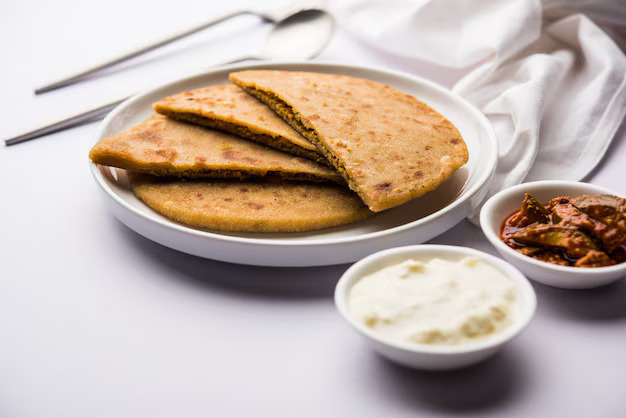
Sattu Paratha is the most satisfying way to eat sattu for breakfast. A stuffed whole wheat flatbread filled with spiced, garlicky, mustard-oil-laced sattu — roasted until golden, eaten with raw onion, green chili, and a squeeze of lemon — it is a breakfast that keeps you full, fueled, and genuinely happy from morning until afternoon.
This guide gives you the complete authentic recipe, the science behind sattu’s nutrition, detailed comparisons, and expert tips that make the difference between a good Sattu Paratha and an extraordinary one.
Why Sattu Is the Superhero of Indian Plant Proteins
The Protein Numbers Are Remarkable
100 grams of sattu contains about 20–25 grams of protein — more protein than eggs and dal, making it a great addition to your diet. This is not a supplement or a processed food — it is simply roasted gram, ground. The roasting process concentrates the nutrients without destroying them.
When that sattu becomes the filling of a whole wheat paratha, one medium Sattu Paratha (approximately 150g) can provide around 8–10 grams of protein, depending on the filling and preparation.
Slow Digestion = Sustained Energy
The high protein content of the sattu diet benefits muscle recovery and repair, helping you bounce back from physical activity and fatigue. The rich dietary fibre and prebiotic content in sattu make it a suitable option for gut health.
Since sattu is slow digesting, it provides long-lasting energy without sudden sugar spikes. It is low in fat and cholesterol-free, making it heart-friendly.
This slow digestion profile means Sattu Paratha acts as natural time-release energy — unlike a sugar or refined flour breakfast that spikes blood glucose and crashes by 10 AM, a Sattu Paratha breakfast provides a gradual, steady energy release that can sustain concentration and physical capacity for 4-5 hours.
Fibre for Gut Health and Satiety
The rich dietary fibre and prebiotic content in sattu promote the growth of beneficial gut bacteria, help relieve constipation, and ensure regular bowel movements. The soluble fibre in sattu also soothes irritation and prevents bloating, keeping your digestive system running smoothly.
Superior to Other Stuffed Parathas
Sattu Paratha is generally more nutritious than regular stuffed parathas because sattu is a rich source of protein, fiber, and essential micronutrients like magnesium and iron. In comparison, other stuffed parathas, like potato paratha (aloo paratha), are typically higher in carbs and lower in protein and fiber.
| Comparison | Sattu Paratha | Aloo Paratha | Gobi Paratha |
|---|---|---|---|
| Protein per paratha | 8–10g | 3–4g | 3–5g |
| Dietary Fiber | High | Low | Moderate |
| Carbohydrates | 40–50g | 45–55g | 40–48g |
| Satiety duration | 4–5 hours | 2–3 hours | 2.5–3 hours |
| Key nutrient | Plant protein + fiber | Potassium | Vitamin C |
| Best for | Protein goals, sustained energy | Quick energy | Light breakfast |
Full Nutritional Profile Per Sattu Paratha
| Nutrient | Per Paratha (approx. 150-172g) |
|---|---|
| Calories | 250–300 kcal |
| Protein | 8–12g |
| Carbohydrates | 40–50g |
| Fat | 8–15g (depends on ghee used) |
| Fiber | 5–8g |
| Iron | ~2mg (14% DV) |
| Magnesium | Significant |
| Phosphorus | Significant |
Calorie control tip: The calorie range depends almost entirely on how much ghee you use for roasting. One teaspoon of ghee per paratha adds ~42 calories. For a weight-loss version, use oil spray or just a thin brush of ghee — the paratha will still have excellent flavour from the mustard oil already in the filling.
Ingredients for Sattu Paratha — Authentic Bihar Style (Makes 4 parathas, Serves 2)
For the Whole Wheat Dough
- 1½ cups whole wheat flour (atta)
- ½ teaspoon salt
- 1 teaspoon neutral oil
- Warm water — as needed to knead a smooth, medium-soft dough (approximately ⅓–½ cup)
Dough note: The dough should be slightly softer than chapati dough but not as soft as naan dough. A medium firmness allows easy rolling and prevents the filling from breaking through.
For the Sattu Filling (the Heart of the Recipe)
- ¾ cup sattu (roasted black chana flour — available at all Indian grocery stores and online)
- 3–4 garlic cloves, finely minced or grated — do not skip; raw garlic is the defining flavour of authentic Bihar-style sattu paratha
- 1-inch fresh ginger, grated
- 2 green chilies, very finely chopped
- 1 small onion, very finely chopped
- 2 tablespoons fresh coriander, finely chopped
- ½ teaspoon ajwain (carom seeds) — aids digestion and adds the characteristic sattu paratha aroma
- ½ teaspoon kalonji (nigella seeds / onion seeds) — adds a distinctive flavour authentic to this region’s cooking
- 1 tablespoon mustard oil — non-negotiable for the authentic flavour; it adds a pungent, sharp warmth that no other oil replicates
- ½ teaspoon lemon juice or raw mango powder (amchur) — for a slight tang
- Salt to taste
- 2–3 tablespoons water — add gradually to bring the filling to the right consistency
For Roasting
- 1 teaspoon ghee per paratha (or oil spray for a lower-calorie version)
To Serve
- Raw onion slices
- Slit green chili
- Pickle (achar)
- Plain curd (yogurt)
The Filling: Understanding Its Unique Character
Before following the recipe mechanically, it helps to understand what makes the sattu filling of a genuine Bihar-style paratha different from anything else:
Raw garlic is used generously — not cooked, not sautéed, but raw and finely minced. It provides a sharp, aromatic heat that mellows beautifully when the paratha cooks on the tawa.
Mustard oil is used raw in the filling — again, not cooked. This is intentional. Raw mustard oil has a pungent, almost wasabi-like sharpness that is completely characteristic of this style of cooking. If the idea seems unusual, trust the process — it balances perfectly with the earthy sattu.
Ajwain and kalonji together are a combination found specifically in Bihari and UP cooking. The carom seeds support digestion (particularly appropriate given sattu’s high fibre content) and the nigella seeds add a faint onion-like bitterness.
The filling is dry to slightly moist — not wet or paste-like. It should hold together when pressed into a ball but crumble naturally. Too wet and it breaks through the dough during rolling. Too dry and it falls out when eating.
Step-by-Step: How to Make Authentic Sattu Paratha
Step 1 — Make the Dough
In a large bowl, combine the whole wheat flour, salt, and oil. Mix briefly. Add warm water gradually — start with ¼ cup — kneading as you go. Continue adding water tablespoon by tablespoon until you have a smooth, medium-soft dough. Knead firmly for 5–7 minutes.
Cover the dough with a damp cloth and rest for 20 minutes. This rest relaxes the gluten and makes rolling significantly easier.
Step 2 — Prepare the Sattu Filling
In a mixing bowl, combine the sattu, minced garlic, grated ginger, chopped green chili, finely diced onion, coriander, ajwain, and kalonji. Mix together.
Add the mustard oil and lemon juice. Mix thoroughly.
Add water one tablespoon at a time — mixing after each addition — until the filling comes together. It should feel like slightly damp sand: it holds its shape when you press a handful into a ball, but crumbles when you press a piece between your fingers. This is the correct texture.
Taste the filling before stuffing. The raw filling should taste intensely seasoned — it will mellow significantly during cooking. Adjust salt, garlic, and lemon as needed.
Step 3 — Divide and Stuff
Knead the rested dough once more briefly. Divide into 4 equal portions. Roll each into a smooth ball.
Take one dough ball. Roll it on a lightly floured surface into a circle approximately 5–6 inches in diameter. Place 2–3 tablespoons of filling in the centre — do not overfill.
Gather the edges of the dough circle upward over the filling, pleating as you go, and pinch firmly at the top to seal. Press the stuffed ball gently with your palm to flatten slightly.
Using a rolling pin, gently roll out the stuffed ball to approximately 7–8 inches in diameter. Roll with a light, even hand — too much pressure in one area will push the filling through. If a small crack appears at the edges, dab with a little water and press to seal.
Step 4 — Roast the Paratha
Heat a heavy iron tawa or cast-iron skillet over medium-high heat until very hot. Place the rolled paratha on the dry, hot tawa.
Cook for 60–90 seconds on the first side — until small bubbles appear across the surface and the underside develops light golden patches. Flip.
Brush or drizzle ½ teaspoon of ghee over the top surface. Cook the second side for 60–90 seconds. Flip again, and brush ghee on this side too.
Cook for a final 30–60 seconds per side — pressing gently with a flat spatula — until both sides are evenly golden with slightly darker spots.
The paratha should feel firm when pressed, with a crisp exterior and a fully cooked, aromatic interior. Remove and serve immediately.
Step 5 — Serve Authentically
The Bihar-style serving: a piece of raw onion, a slit green chili, a small bowl of achar (pickle), and a generous dollop of fresh curd. The contrasts are deliberate — the cool yogurt against the hot paratha, the sharp raw onion against the earthy sattu, the sour pickle against the pungent garlic filling.
5 Variations Worth Trying
Variation 1 — Sattu Paratha with Ajwain Water (Post-Workout)
Mix 1 tablespoon of extra sattu into a glass of cold water with a pinch of black salt and cumin powder. Drink alongside the paratha. This adds another 5g protein to your total breakfast protein in a format that is absorbed quickly — good timing for post-exercise nutrition.
Variation 2 — Sattu Paneer Paratha (Maximum Protein)
Add 3 tablespoons of crumbled, spiced paneer to the sattu filling. The combination raises the protein per paratha to approximately 15–18g and adds calcium alongside the plant protein of the sattu.
Variation 3 — Sattu Paratha with Flaxseeds (Omega-3 Boost)
Add 1 tablespoon of ground flaxseeds to the filling. This adds omega-3 fatty acids, additional fiber, and a slightly nutty flavour that complements the sattu beautifully.
Variation 4 — Sattu Methi Paratha (Iron-Rich)
Add 2 tablespoons of finely chopped fresh fenugreek (methi) leaves to the filling. Methi is exceptionally high in iron and folate — this variation is particularly valuable for women, pregnant individuals, and anyone with anaemia.
Variation 5 — Half Whole Wheat, Half Jowar Dough (Gluten-Reduced)
Replace half the whole wheat flour with jowar (sorghum) flour. Jowar is naturally gluten-free and adds additional fiber and minerals. The paratha will be slightly more delicate and requires gentler rolling, but the nutritional upgrade is meaningful.
Expert Tips for the Perfect Sattu Paratha
The filling consistency is the most critical factor. Too wet = filling breaks out while rolling; too dry = filling falls out while eating. The “slightly damp sand” consistency described above is the target.
Use raw mustard oil in the filling. Many cooks who are unfamiliar with this style of cooking instinctively want to cook the filling first. Do not. The filling is raw by design — the raw garlic, raw mustard oil, and raw spices all cook inside the sealed paratha as it roasts on the tawa, developing a completely different and more complex flavour than pre-cooked filling would produce.
Seal the paratha properly. Pinch the gathered dough edges firmly and press the ball flat before rolling. Even a small unsealed point will open during rolling and cause the filling to escape. If you see the dough cracking as you roll, the dough may be slightly too stiff — cover with a damp cloth for 5 minutes and try again.
High heat for the first flip. The tawa must be genuinely hot before the paratha goes on — medium-high heat. Too cool a surface produces pale, chewy parathas rather than golden, slightly crisp ones.
Rest 2 minutes before eating. A freshly-off-the-tawa Sattu Paratha is intensely hot inside. Give it 2 minutes before eating — the filling redistributes and the raw garlic aroma settles into the bread during this brief wait.
Storage and Meal Prep
Dough: Makes ahead for up to 24 hours, refrigerated and covered with a damp cloth.
Filling: Can be made 12 hours in advance and refrigerated. Bring to room temperature before stuffing — cold filling is harder to manage.
Cooked parathas: Wrap in aluminium foil while hot — the steam keeps them soft. Store at room temperature for up to 8 hours. Reheat on a dry tawa for 60–90 seconds per side. Can be refrigerated for up to 2 days.
Tiffin/lunchbox: Sattu Paratha is an excellent tiffin option — it holds well for 4–5 hours without refrigeration, stays firm, and does not become soggy.
Frequently Asked Questions
Q1. What is sattu and where can I buy it?
Sattu is roasted gram flour — specifically made from roasted black chana (Bengal gram). It has a distinctive nutty, earthy flavour and a slightly coarse texture that sets it apart from besan (unroasted gram flour). It is available at all Indian grocery stores across India, and increasingly at Indian supermarkets internationally and online. Look specifically for “sattu powder” or “sattu atta” — both refer to the same product. Do not substitute besan; unroasted chickpea flour has a very different taste.
Q2. Is Sattu Paratha good for weight loss?
Sattu benefits aid weight management in several ways. The high protein and fibre content increases feelings of fullness, curbing hunger cravings and preventing overeating. However, the overall health quotient of Sattu Paratha depends on the cooking method; pan-frying with excessive ghee or oil can add calories and fats. Opting for minimal oil makes Sattu Ka Paratha a guilt-free, balanced meal choice. Use oil spray or just ½ teaspoon ghee per paratha and limit to 1–2 parathas per meal.
Q3. Can I make Sattu Paratha without mustard oil?
Technically yes, but the flavour profile changes significantly. Mustard oil’s pungent warmth is what gives authentic Bihar-style Sattu Paratha its characteristic taste. For a milder version, use extra-virgin olive oil or sesame oil in the filling — both have distinctive flavours that work reasonably well as alternatives. Refined vegetable oil is a bland but functional substitute for those who find mustard oil’s sharpness too strong.
Q4. Is Sattu Paratha suitable for diabetics?
Indian recipes for people with diabetes that use sattu include sattu paratha, sattu drink, and sattu laddoo. Sattu’s high protein and fibre content helps slow glucose absorption, and since sattu is slow digesting, it provides long-lasting energy without sudden sugar spikes. For diabetics, use minimal ghee, pair with curd rather than pickle, and limit to one paratha — supplementing with a salad for volume.
Q5. How is Sattu Paratha different from Besan Paratha?
Sattu and besan (chickpea flour) look similar but are fundamentally different. Besan is made from unroasted raw gram — it has a slightly bitter, raw flavour and must be cooked before eating to become palatable. Sattu is made from roasted gram — the roasting process removes all raw bitterness and develops a nutty, toasty complexity. Besan paratha requires the filling to be cooked first; sattu paratha filling is used raw because the sattu is already cooked (roasted). The flavour of a Sattu Paratha is dramatically different from and more complex than a Besan Paratha.
Bihar’s Gift to Your Breakfast Table
Sattu Paratha does not need reinvention, trendy additions, or a social media makeover. It has been perfect for centuries, built for exactly the purpose you need it for: a breakfast that is nutritious, genuinely filling, affordable, and delicious enough to eat without reluctance.
Make it once this week — with raw garlic, with mustard oil, with the raw onion and curd on the side — exactly as Bihar has always made it. Then decide for yourself whether this is the breakfast your mornings have been missing.
Made this recipe? Share your results in the comments! Tell us whether you used mustard oil, how many you managed to eat, and what you served alongside. And if you have been making Sattu Paratha for years with a family variation, share that too.
Pairs perfectly with: Plain Curd | Mango Pickle | Raw Onion | Green Chili | Chaas (Buttermilk)
Also explore: Sattu Drink | Moong Dal Chilla | Besan Chilla | Aloo Paratha | Paneer Paratha