Some recipes never go out of style. They don’t need reinvention, flashy ingredients, or trends to stay relevant. Deviled eggs Recipe belong firmly in that category.
From family gatherings and holiday tables to potlucks and picnics, deviled eggs have quietly earned their reputation as one of the most loved appetizers of all time. They’re simple, comforting, and instantly recognizable. Yet, when made well, they feel special every single time.
What makes deviled eggs so appealing is their balance. The soft egg whites provide structure, while the creamy yolk filling delivers richness, tang, and subtle heat. When seasoned correctly, each bite feels indulgent without being heavy.
This guide will walk you through how to make deviled eggs recipe perfectly, while also explaining why certain techniques work better than others. You’ll learn how to avoid common mistakes, customize flavors, store them safely, and serve them with confidence.
What Are Deviled Eggs?
Deviled eggs are hard-boiled eggs that have been halved, with the yolks removed and blended into a creamy filling. That filling is then spooned or piped back into the egg whites.
The term “deviled” dates back to the 18th century and was used to describe foods that were highly seasoned or spiced. In modern deviled eggs, the “devil” usually comes from mustard, pepper, or paprika rather than intense heat.
Though the recipe appears simple, small details make a big difference in texture and taste.
Why Deviled Eggs Are Always a Hit
Deviled eggs succeed where many appetizers fail because they are familiar yet satisfying. People know what they’re getting, and when done well, they always reach for seconds.
They are easy to portion, naturally gluten-free, and adaptable to many dietary preferences. They can be made ahead of time, transported easily, and served cold without losing appeal.
Most importantly, deviled eggs offer comfort. They remind people of celebrations, shared meals, and familiar tables.
Ingredients Used in Classic Deviled Eggs
Core Ingredients
- Large eggs
- Mayonnaise
- Dijon or yellow mustard
- Salt
- Black pepper
Optional Flavor Enhancers
- White vinegar or lemon juice
- Paprika
- Garlic powder
- Smoked paprika or cayenne
These ingredients may seem basic, but quality matters. Fresh eggs, good-quality mayonnaise, and proper seasoning are what separate average deviled eggs from exceptional ones.
Choosing the Right Eggs
Egg quality affects both taste and ease of preparation. Slightly older eggs are actually better for boiling because they peel more easily than very fresh eggs.
Large eggs are the standard choice for deviled eggs. They provide enough white surface area to hold a generous amount of filling without becoming fragile.
How to Hard-Boil Eggs Perfectly
Perfect deviled eggs begin with properly cooked eggs. Overcooked eggs develop a green ring around the yolk and taste chalky. Undercooked eggs are difficult to peel and mix.
The goal is firm whites and fully set yolks with a creamy texture.
Cooking Method Explained
Eggs are placed in a single layer in a pot and covered with water. Once the water reaches a gentle boil, the heat is reduced and the eggs cook steadily. After cooking, the eggs are transferred to an ice bath to stop the cooking process immediately.
This cooling step is crucial. It improves texture and makes peeling significantly easier.
Peeling Eggs Without Frustration
Peeling eggs can be the most annoying part of making deviled eggs. Starting from the wider end of the egg helps, as that’s where the air pocket usually forms.
Peeling under running water or in a bowl of water allows the shell to release more easily from the egg white. Patience here prevents torn whites, which affect presentation.
Preparing the Deviled Egg Filling
Once the eggs are peeled, they are sliced lengthwise and the yolks are removed. The yolks are mashed until completely smooth before any wet ingredients are added.
Mayonnaise provides creaminess, while mustard adds tang and depth. Salt and pepper bring balance. Acid from vinegar or lemon juice brightens the flavor and prevents the filling from tasting flat.
The filling should be smooth, creamy, and easy to pipe or spoon.
Achieving the Perfect Texture
Texture is one of the most important elements of deviled eggs. A gritty or stiff filling feels unpleasant, no matter how well seasoned it is.
Mashing the yolks thoroughly before adding mayonnaise prevents lumps. Using a fork, potato masher, or food processor can all work, depending on preference.
The filling should hold its shape but still feel light when eaten.
How to Fill Deviled Eggs Neatly
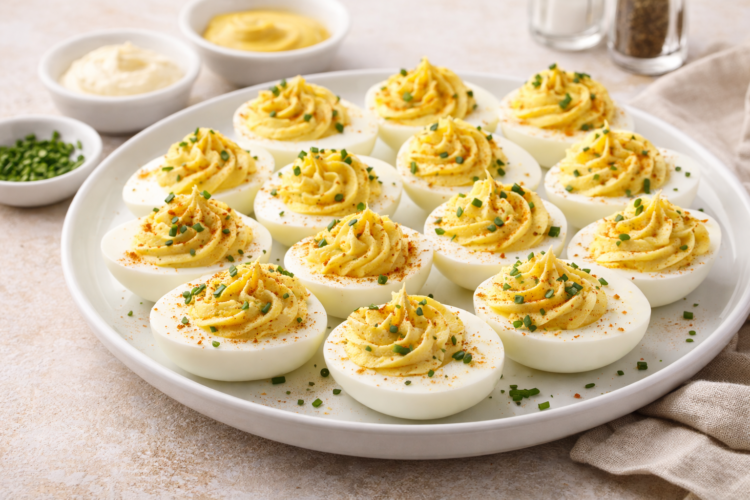
Deviled eggs can be filled using a spoon for a rustic look or piped for a more polished appearance. Piping creates clean lines and makes the eggs feel more refined, especially for parties or holidays.
Even spacing and consistent filling amounts make the final dish visually appealing.
Classic Garnishes That Work Every Time
Paprika is the traditional garnish for deviled eggs. It adds color without overpowering flavor. Fresh herbs like chives or parsley can add freshness and contrast.
A light garnish should enhance the egg, not distract from it.
Popular Deviled Eggs Variations
Classic Deviled Eggs
Creamy, tangy, and lightly seasoned. This version highlights simplicity and balance.
Smoked Deviled Eggs
Smoked paprika or smoked salt adds depth and warmth without overwhelming the eggs.
Spicy Deviled Eggs
Cayenne pepper or hot sauce introduces heat for those who enjoy bold flavors.
Avocado Deviled Eggs
Avocado replaces some or all of the mayonnaise, creating a lighter, greener filling.
Bacon Deviled Eggs
Crispy bacon adds crunch and savory richness.
Deviled Eggs vs Stuffed Eggs
The terms are often used interchangeably, but there is a subtle difference. Deviled eggs traditionally include mustard and seasoning, while stuffed eggs may simply be filled without spice.
In practice, most modern recipes fall under the deviled eggs category.
Nutritional Profile of Deviled Eggs
Deviled eggs are rich in protein, healthy fats, and essential vitamins like B12 and choline. Eggs support brain health, muscle repair, and satiety.
However, deviled eggs are also calorie-dense due to mayonnaise. Moderation is key, especially when serving larger portions.
Are Deviled Eggs Healthy?
Deviled eggs can fit into a balanced diet when enjoyed mindfully. Using lighter mayonnaise or Greek yogurt can reduce fat content. Adding herbs instead of extra fat enhances flavor without additional calories.
They are naturally low in carbohydrates and gluten-free.
Common Mistakes When Making Deviled Eggs
Overcooking eggs is one of the most common errors, leading to dry yolks and rubbery whites. Another mistake is under-seasoning, which results in bland filling.
Adding too much mayonnaise can make the filling loose and greasy. Skipping acid makes the flavor feel heavy.
Expert Tips for Foolproof Deviled Eggs
Always taste the filling before assembling. Chill the eggs before serving to allow flavors to settle. Use fresh garnishes just before serving to keep them vibrant.
Small adjustments make a noticeable difference.
Serving Deviled Eggs for Gatherings
Deviled eggs should be served chilled but not icy cold. A deviled egg tray or a lined platter helps keep them steady and presentable.
They work well as appetizers, brunch items, or part of a buffet spread.
How to Store Deviled Eggs Safely
Deviled eggs should be refrigerated and stored in an airtight container. They stay fresh for up to two days when properly chilled.
Transport them in a cooler if serving outdoors. Avoid leaving them at room temperature for extended periods.
Make-Ahead Tips
Eggs can be boiled and peeled a day in advance. The filling can also be prepared separately and assembled shortly before serving for best texture and appearance.
This approach saves time without sacrificing quality.
Why Homemade Deviled Eggs Are Worth It
Store-bought deviled eggs often lack freshness and balanced seasoning. Homemade versions allow control over texture, flavor, and quality.
They also allow creativity and customization based on personal taste.
Conclusion
Deviled eggs may look simple, but they reward attention to detail. When made with care, they deliver creamy texture, balanced flavor, and undeniable comfort.
Whether you keep them classic or explore variations, deviled eggs remain one of the most reliable appetizers you can serve. Master this recipe once, and you’ll always have a crowd-pleaser ready.
Try them for your next gathering and watch them disappear first.
FAQs
1. Why are my deviled eggs watery?
This usually happens when too much mayonnaise or liquid is added to the filling.
2. Can I make deviled eggs without mayonnaise?
Yes, Greek yogurt, avocado, or hummus can be used as alternatives.
3. How far in advance can deviled eggs be made?
They can be made up to one day ahead and stored refrigerated.
4. Why do my egg whites tear while peeling?
Very fresh eggs or improper cooling often cause tearing.
5. Are deviled eggs keto-friendly?
Yes, deviled eggs are low in carbohydrates and suitable for keto diets.
6. Can deviled eggs be frozen?
No, freezing ruins the texture of both whites and filling.
7. How do I make deviled eggs look professional?
Use a piping bag and consistent garnishing.
8. What makes deviled eggs taste bland?
Lack of salt, acid, or mustard usually causes blandness.
Also Try – Spicy Egg Masala Curry – Perfect with Rice, Roti & Biryani