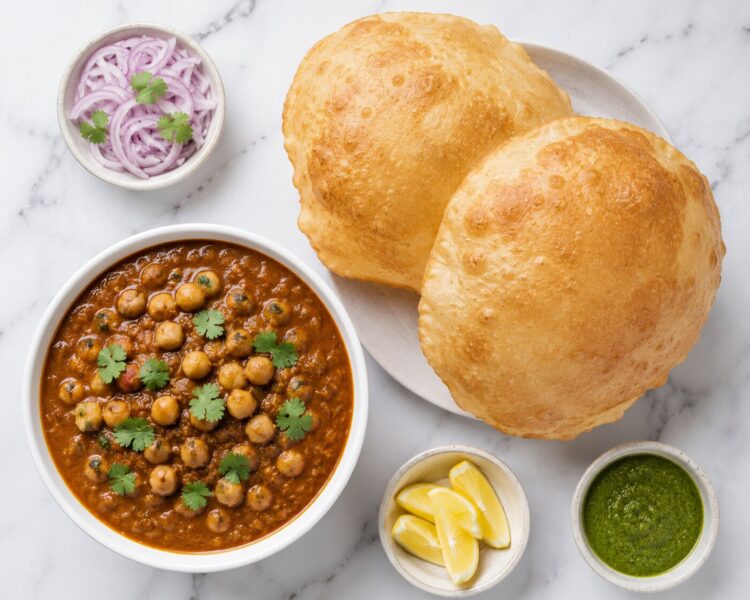
Ask anyone who grew up in Delhi or Punjab about their favourite comfort meal and nine times out of ten, the answer is the same: Chole Bhature. It’s the kind of dish that stops you mid-conversation. The moment a plate lands on the table — golden puffed bhature glistening beside a dark, fragrant chickpea curry — everything else can wait.
This is not just food. It’s a cultural ritual. Eaten at roadside dhabas, celebrated at Sunday brunches, devoured at weddings and street corners across North India, Chole Bhature is one of the most soul-satisfying meals the subcontinent has ever produced.
The good news? You can absolutely make it at home — and once you do, you’ll wonder why you ever ordered it from outside. This guide walks you through every detail: how to make the bold, spicy chole masala, how to get bhature that puff up perfectly every single time, and all the pro tips that separate a mediocre plate from a truly legendary one.
What Is Chole Bhature? (The Story Behind the Dish)
Chole Bhature (also written as Chana Bhatura) is a two-part Punjabi recipe:
- Chole — a robustly spiced, tangy chickpea curry made with an onion-tomato masala base, whole spices, and a hit of dry mango powder (amchur) for sourness
- Bhature — large, soft, slightly chewy deep-fried leavened bread made from maida (refined flour), yogurt, and a leavening agent
The combination is hearty and indulgent. Traditionally served for breakfast or brunch across Delhi and Punjab, it’s rich enough to keep you going for hours — which is probably why a post-Chole Bhature nap has become something of an unofficial tradition.
Where Did Chole Bhature Originate?
The dish is most strongly associated with the Punjab region and Delhi’s street food culture. Many food historians trace its roots to the Partition era of 1947, when Punjabi refugees brought their culinary traditions — including this hearty combination — to Delhi. Over the decades, it became the defining street food of Old Delhi, particularly in areas like Paharganj, Chandni Chowk, and Kamla Nagar.
Today, Chole Bhature is served everywhere from humble roadside stalls charging ₹30 a plate to upscale restaurants with elaborately garnished platters. But the soul of the dish remains the same: bold, unapologetic, deeply satisfying.
Chole vs. Chana Masala: What’s the Difference?
A lot of people use these terms interchangeably, but there are meaningful differences:
| Feature | Chole (for Chole Bhature) | Chana Masala |
|---|---|---|
| Chickpea color | White kabuli chana | White kabuli chana |
| Gravy texture | Semi-thick to thick | Medium gravy |
| Flavor profile | Spicier, tangier, bolder | Balanced, slightly tangy |
| Key souring agent | Amchur (dry mango powder) | Amchur or tamarind |
| Best paired with | Bhature, kulcha | Rice, roti, puri |
| Cooking style | Pressure-cooked, simmered in masala | Similar, sometimes lighter |
Chole made for Bhature tends to have a slightly drier, more intense gravy — perfect for scooping up with soft puffed bread.
Ingredients You’ll Need (Serves 4)
For the Chole (Chickpea Curry)
Chickpeas:
- 1 cup dried white chickpeas (kabuli chana), soaked overnight
- 3 cups water
- ¼ teaspoon salt
- Optional: a pinch of baking soda (for softer chickpeas)
The Masala Paste:
- 1 medium onion, roughly chopped
- 2 medium tomatoes, roughly chopped
- 1 green chili
- 4–5 garlic cloves
- 1-inch piece of fresh ginger
Whole Spices for Tempering:
- 1 teaspoon cumin seeds
- 1 large tej patta (Indian bay leaf)
- 2-inch cinnamon stick
- 2–3 cloves
- 2 green cardamoms
- 2–3 black peppercorns
Ground Spices:
- ½ teaspoon turmeric powder
- ¼ teaspoon red chili powder
- 1 teaspoon coriander powder
- 1 pinch asafoetida (hing)
- ½ to 1 teaspoon dry mango powder (amchur)
- 1 teaspoon garam masala or chana masala powder
Other:
- 2–3 tablespoons neutral oil
- 1 to 1½ cups water
- Salt to taste
- Fresh coriander leaves, slit green chili, ginger julienne (for garnish)
For the Bhature (Makes 8–10)
- 1½ cups maida (all-purpose flour / refined flour)
- ½ teaspoon baking powder
- A pinch of baking soda
- ½ teaspoon salt
- 1 teaspoon sugar
- 3 tablespoons yogurt (curd)
- 1 teaspoon oil (for the dough)
- Warm water, as needed (approximately ¼ to ⅓ cup)
- Oil for deep frying
Step-by-Step: How to Make Chole Bhature at Home
Part 1 — Soaking and Cooking the Chickpeas
The overnight soak is non-negotiable. Rinse 1 cup of dried white chickpeas several times until the water runs clear. Cover with plenty of cold water and soak for 7–8 hours minimum, or overnight. The chickpeas will nearly double in size — this is exactly what you want.
After soaking, drain and rinse them again. Transfer to a stovetop pressure cooker with 3 cups of fresh water and ¼ teaspoon salt. If you want ultra-soft, restaurant-style chickpeas, add a pinch of baking soda at this stage (optional but effective).
Pressure cook for 10–12 whistles on medium heat (about 15–20 minutes). Allow the pressure to release naturally — never force it. Once done, the chickpeas should be completely tender. Press one between your fingers — it should crush with almost no resistance. Drain and set aside.
No pressure cooker? Cook in a deep pot on the stovetop for 60–90 minutes, keeping the water topped up. Or use an Instant Pot on High Pressure for 40–45 minutes. The key is getting them properly soft — undercooked chickpeas will ruin the curry.
Part 2 — Making the Masala Paste
Combine the roughly chopped onion, tomatoes, green chili, garlic, and ginger in a blender. No water is needed — the tomatoes provide enough liquid. Blend into a smooth, fine paste and set aside.
This blended paste is the heart of the chole curry. Using fresh tomatoes rather than canned puree gives the gravy a more vibrant, natural flavor that develops beautifully as it cooks.
Part 3 — Building the Chole Gravy
Heat 2–3 tablespoons of oil in a heavy-bottomed pan or kadai over medium heat. Add the whole spices — cumin seeds, bay leaf, cinnamon, cloves, cardamoms, and black peppercorns. Fry for 60–90 seconds, stirring constantly, until fragrant and sizzling. Don’t walk away; burnt spices will make the whole dish bitter.
Pour in the blended masala paste and mix well into the spiced oil. This is where patience matters. Cook the paste over medium heat, stirring frequently, for 8–10 minutes. You’ll know the masala is ready when it darkens slightly, thickens, turns glossy, and the oil visibly separates and pools at the sides. This oil-separation is the most reliable indicator that the raw smell has cooked out and the flavors have properly developed.
Add the ground spice powders — turmeric, red chili powder, coriander powder, hing, and amchur. Stir thoroughly and cook for another 1–2 minutes until the spices are absorbed into the masala.
Now add the cooked chickpeas and mix until every one is coated. Pour in 1 to 1½ cups of water depending on how thick you want the gravy. Stir in salt to taste.
Simmer uncovered over low to medium heat for 12–15 minutes. As it cooks, mash 8–10 chickpeas against the side of the pan with the back of a spoon — this starchy mash naturally thickens the gravy without adding anything extra.
Add a slit green chili and garam masala or chana masala powder. Stir and simmer for another 2 minutes. Taste and adjust salt or amchur as needed. Garnish with fresh coriander, ginger julienne, and slit green chilies.
Pro insight: The amchur (dry mango powder) is what gives authentic Chole Bhature its signature sour punch. Start with ½ teaspoon and increase to taste. Some cooks also add a teaspoon of anardana (dried pomegranate powder) for a deeper, fruitier tang — try it if you can find it.
Part 4 — Making the Bhature Dough
In a large mixing bowl, combine the maida, baking powder, baking soda, salt, and sugar. Mix well. Add the yogurt and oil, then gradually add warm water a little at a time, working the dough with your hands.
Knead until you have a soft, smooth, slightly sticky dough — similar in texture to pizza dough. It should be softer than roti dough but not slack. Cover with a damp cloth or cling film and let it rest for 20–30 minutes. This resting time allows the gluten to relax and the leavening to begin working, which is what gives bhature their characteristic puff and chewiness.
Part 5 — Frying the Bhature
Heat enough oil for deep frying in a deep kadai or wok. The oil should be at roughly 175–180°C (350°F). To test: drop a tiny piece of dough in — it should sink slightly, then immediately rise to the surface and begin frying. If it stays submerged, the oil is too cold. If it browns in under 10 seconds, it’s too hot.
Divide the dough into 8–10 equal portions. Roll each into a smooth ball, then roll out on a lightly oiled surface (not floured — oil prevents sticking without making the dough stiff) into an oval about 5–6 inches long and ¼ inch thick.
Slide one bhatura into the hot oil. It will immediately begin to puff up. Gently press the surface with a slotted spoon to encourage even puffing. Flip and fry the other side for 30–40 seconds until golden. The whole process takes about 1.5–2 minutes per bhatura.
Drain on paper towels and serve immediately. Bhature are best eaten hot — they deflate and toughen as they cool, and there is absolutely no reviving them later.
How to Serve Chole Bhature the Right Way
A complete Chole Bhature plate always includes more than just the curry and bread. The accompaniments are essential:
- Sliced raw onions — their sharpness cuts through the richness of the curry
- Lemon or lime wedges — squeeze generously over the chole just before eating
- Green chutney or mint chutney — adds freshness
- Pickled green chilies (hari mirch ka achar) — for extra heat and brine
- Sliced cucumber and carrot — for crunch and cooling
A glass of cold lassi — sweet or salted — alongside a plate of Chole Bhature is the Punjabi ideal. It’s the perfect counterpoint to all that spice and heat.
Expert Tips for Foolproof Results
Soak the chickpeas long enough. Inadequately soaked chickpeas won’t cook evenly and will stay firm in the center. 8 hours is the minimum; overnight is ideal.
Don’t skip the oil-separation step. If you add chickpeas before the oil separates from the masala, the curry will taste raw and floury. Patience here directly affects the final flavor.
Rest the bhature dough. Skipping the rest means your bhature won’t puff properly and will be dense. 20–30 minutes is the minimum.
Oil temperature is everything for bhature. Too cool and they absorb oil. Too hot and they color before cooking through. Medium-high and steady is the target.
Mash some chickpeas for body. This trick is how street vendors get that thick, clingy gravy without using cornflour or other thickeners.
Use chana masala powder instead of plain garam masala if you want a more complex, restaurant-adjacent flavor. Brands like MDH Chana Masala or Everest Chole Masala work well.
Nutrition Snapshot (Per Serving, Approximate)
| Nutrient | Chole (1 serving) | 2 Bhature |
|---|---|---|
| Calories | ~220 kcal | ~280 kcal |
| Protein | 10g | 6g |
| Carbohydrates | 30g | 42g |
| Fat | 8g | 14g |
| Fiber | 8g | 1g |
Chickpeas are a nutritional powerhouse — rich in plant protein, dietary fiber, folate, iron, and manganese. The bhature are indulgent but a satisfying occasional treat, especially when made at home with quality ingredients.
Storage & Make-Ahead Tips
Chole curry stores very well. Refrigerate in an airtight container for up to 2 days. It actually tastes better the next day as the flavors deepen overnight. Reheat gently on the stovetop with a splash of water. It also freezes beautifully for up to 1 month.
Bhature dough can be made 4–5 hours in advance and kept refrigerated. Bring to room temperature before rolling and frying. Never store fried bhature — they must be made fresh and eaten immediately.
FAQs About Chole Bhature
Q1. What is the difference between Chole Bhature and Puri Chole?
Both feature chickpea curry, but the bread is different. Bhature is made from leavened maida dough, deep-fried to a large, soft, puffy oval. Puri is made from unleavened whole wheat dough and fried to a smaller, crispier round. Bhature are chewier and more filling; puri is lighter and crunchier. The chole served with bhature also tends to be spicier and thicker.
Q2. Can I make bhature without yogurt?
Yogurt plays a key role — it activates the leavening, adds slight tang, and makes the dough soft. If you need to skip it, substitute with an equal quantity of sour buttermilk, or use a mix of lemon juice and milk. The texture will be slightly different but still acceptable.
Q3. Why are my bhature not puffing up?
Three common culprits: the oil isn’t hot enough, the dough wasn’t rested long enough, or the bhatura was rolled too thick. Make sure the oil is properly preheated (test with a small dough piece), rest the dough for at least 20–30 minutes, and roll each bhatura to about ¼ inch thickness.
Q4. Can I use canned chickpeas instead of dried?
Yes, for a much faster version. Drain and rinse 2 cans (about 400g each) of cooked chickpeas. Skip the soaking and pressure cooking steps. The flavor is slightly less deep than with dried chickpeas, but the result is still very good. Reduce the simmering time since canned chickpeas are already fully cooked.
Q5. Is Chole Bhature healthy?
Chole is genuinely nutritious — high in fiber and plant protein, with a low glycemic index. The bhature, being deep-fried refined flour bread, is the indulgent part. For a lighter version, serve the chole with whole wheat kulcha or tandoori roti instead of bhature. You still get all the incredible flavor without the deep-fried component.
Final Thoughts — Make It This Weekend
Chole Bhature is one of those dishes that rewards the effort you put in. The soaking, the careful cooking of the masala, the proper resting of the dough — none of it is difficult, but each step matters. Get it right and you’ll produce something that feels genuinely celebratory, the kind of meal that makes everyone at the table slow down and appreciate what’s in front of them.
It’s more than a recipe. It’s a Sunday morning ritual, a family gathering centerpiece, a love letter written in spice and dough to one of the world’s great culinary traditions.
Try this Chole Bhature recipe this weekend and share your results in the comments — we’d love to hear how it turned out! If you loved it, pin it, share it, and tag us. Happy cooking!
Goes perfectly with: Sweet Lassi | Mango Pickle | Sliced Onions | Green Chutney | Cold Buttermilk
Also Try – Amritsari Chole Recipe – Tangy & Spicy Street-Style Chole