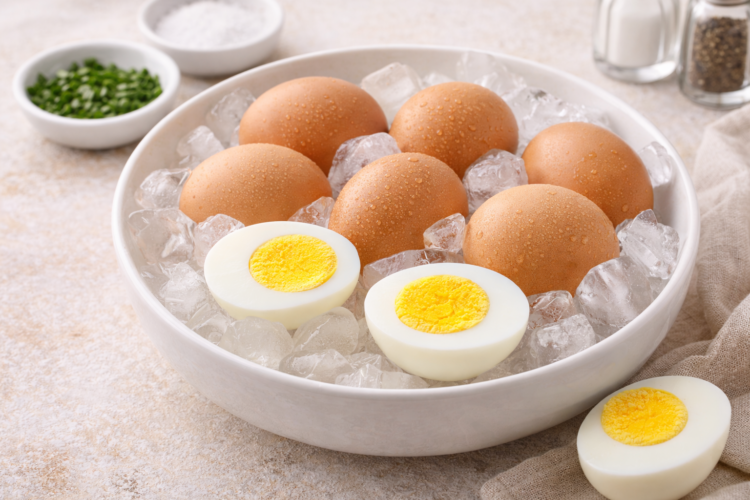
Hard boiled eggs look simple. After all, it’s just eggs and water. But anyone who has dealt with cracked shells, rubbery whites, gray-green yolks, or stubborn peeling knows the truth. Making perfect hard boiled eggs is more about technique than ingredients.
Eggs are one of the most versatile and affordable foods in the kitchen. They appear in breakfast bowls, salads, snacks, deviled eggs, sandwiches, and countless recipes. Knowing how to make hard boiled eggs properly gives you a reliable base ingredient that can elevate many meals.
This guide explains not just the steps, but the reasons behind them. You’ll learn how heat affects eggs, why cooling matters, how timing changes texture, and how to peel eggs cleanly without frustration. By the end, you’ll be able to cook hard boiled eggs confidently, consistently, and exactly the way you like them.
What Are Hard Boiled Eggs?
Hard boiled eggs are eggs cooked in their shells until both the whites and yolks are fully set. The whites become firm and opaque, while the yolks turn solid but should remain tender and creamy rather than chalky.
They are different from soft-boiled or medium-boiled eggs, which have partially set yolks. Hard boiled eggs are fully cooked and safe to eat cold, making them ideal for meal prep and storage.
Why Learning to Boil Eggs Properly Matters
Boiling eggs incorrectly leads to several common problems. Overcooked eggs develop dry, crumbly yolks and tough whites. Undercooked eggs may have translucent whites and loose centers. Poor peeling wastes edible egg white and creates an unappealing appearance.
When done right, hard boiled eggs should have smooth shells, intact whites, and evenly cooked yolks with a pleasant texture. Mastering this basic skill saves time, reduces waste, and improves every dish that uses eggs.
Choosing the Right Eggs
Egg selection plays a bigger role than most people realize. Very fresh eggs are excellent for frying or poaching, but they are harder to peel once boiled. Slightly older eggs peel more easily because the air pocket inside the shell has grown larger over time.
Large eggs are the standard size used in most cooking guides. If you use medium or extra-large eggs, cooking time may need slight adjustment.
Eggs should be free of cracks before cooking. Cracked shells allow water to seep in, causing uneven cooking and messy whites.
The Science Behind Boiling Eggs
Eggs contain proteins that change structure when heated. Egg whites begin to set at a lower temperature than yolks. As heat increases, the proteins tighten and firm up.
Cooking eggs too aggressively causes the proteins to contract too much, squeezing out moisture and making the egg rubbery. Gentle, controlled heat produces tender whites and smooth yolks.
The greenish ring sometimes seen around egg yolks is a sign of overcooking. It forms when sulfur from the whites reacts with iron in the yolk due to excessive heat and time.
Best Method to Make Hard Boiled Eggs
There are many ways to boil eggs, but one method consistently produces reliable results. It balances heat, timing, and cooling for the best texture and peelability.
Step 1: Start with Cold Water
Place eggs in a single layer at the bottom of a saucepan. Cover them with cold water so that the water level is about an inch above the eggs. Starting with cold water allows the eggs to heat gradually, reducing the risk of cracking.
Step 2: Bring to a Gentle Boil
Heat the pot uncovered over medium-high heat until the water reaches a rolling boil. Once boiling begins, reduce the heat slightly to maintain a steady simmer rather than a violent boil.
Step 3: Time the Cooking
For fully cooked hard boiled eggs, simmer for about ten to twelve minutes. Shorter times result in softer centers, while longer times increase the risk of overcooking.
Step 4: Ice Bath Cooling
Immediately transfer the eggs to an ice bath. Cooling stops the cooking process and helps separate the shell from the egg white, making peeling easier.
Why the Ice Bath Is Essential
Skipping the ice bath is one of the most common mistakes. Eggs continue to cook internally even after being removed from hot water. Rapid cooling prevents overcooking and improves texture.
Cold water also causes the egg to contract slightly inside the shell, creating a small gap that helps the shell release more easily during peeling.
How Long Should You Boil Eggs?
Cooking time depends on the desired yolk texture. While this guide focuses on hard boiled eggs, understanding timing variations helps avoid mistakes.
- Shorter cooking times produce creamy or jammy yolks
- Moderate times create fully set but tender yolks
- Excessive cooking dries out yolks and toughens whites
For classic hard boiled eggs, aim for a total simmering time of around eleven minutes, followed by immediate cooling.
How to Peel Hard Boiled Eggs Easily
Peeling is often the most frustrating part of boiling eggs. The goal is to remove the shell cleanly without tearing the white.
Begin peeling from the wider end of the egg. This area usually contains the air pocket, making it easier to slip a finger under the shell. Peeling under running water can also help wash away shell fragments and loosen stubborn spots.
Patience is important. Rushing often leads to damaged eggs.
Common Egg Boiling Problems and Fixes
Cracked shells usually result from rapid temperature changes or overcrowding the pot. Use gentle heat and give eggs enough space.
Rubbery whites are a sign of overcooking. Reduce cooking time slightly and cool eggs faster.
Difficult peeling often means the eggs were very fresh. Using eggs that are a few days old improves results.
Alternative Methods for Hard Boiled Eggs
Steaming Eggs
Steaming eggs instead of boiling them has gained popularity because it often results in easier peeling. Eggs are placed in a steamer basket over boiling water and cooked with steam heat rather than direct immersion.
Instant Pot Eggs
Pressure cooking eggs offers consistency and convenience. Eggs cook quickly and peel well, but timing and pressure release must be controlled carefully.
Oven-Baked Eggs
Some people bake eggs in muffin tins. While effective, this method requires careful temperature control and is less energy-efficient than stovetop cooking.
Hard Boiled Eggs for Meal Prep
Hard boiled eggs are ideal for meal prep because they store well and pair with many foods. They can be sliced into salads, mashed for sandwiches, or eaten whole as a snack.
Keeping the shells on until ready to use helps preserve freshness. Peeled eggs dry out faster and absorb refrigerator odors.
How to Store Hard Boiled Eggs
Hard boiled eggs should be stored in the refrigerator. Eggs in their shells can last up to one week. Peeled eggs should be used within two to three days and stored in an airtight container.
Never leave cooked eggs at room temperature for extended periods, especially in warm environments.
Nutritional Benefits of Hard Boiled Eggs
Eggs are rich in high-quality protein, vitamins, and minerals. They provide vitamin B12, vitamin D, choline, and antioxidants that support eye health.
Hard boiled eggs are filling and low in carbohydrates, making them suitable for many eating styles.
Are Hard Boiled Eggs Healthy?
When eaten in moderation, hard boiled eggs are a nutritious food. They support muscle repair, brain function, and satiety.
People concerned about cholesterol should focus on overall dietary balance rather than avoiding eggs entirely.
Using Hard Boiled Eggs in Recipes
Hard boiled eggs appear in a wide range of dishes. They are the foundation of deviled eggs, a key ingredient in egg salad, and a popular addition to grain bowls and salads.
They also work well as quick snacks with a pinch of salt or seasoning.
Expert Tips for Perfect Results Every Time
Consistency comes from repeating the same method. Use the same pot size, egg size, and timing whenever possible.
Keep notes if needed. Small adjustments based on your stove and cookware can make a big difference.
Conclusion
Learning how to make hard boiled eggs properly turns a basic ingredient into a reliable kitchen staple. With the right timing, gentle heat, and proper cooling, you can achieve smooth whites, creamy yolks, and shells that peel without frustration.
Once mastered, this skill saves time, reduces waste, and improves countless recipes. Try this method a few times, and perfect hard boiled eggs will become second nature.
Start boiling smarter today, and enjoy better eggs every time.
FAQs
1. Why do my hard boiled eggs crack while cooking?
Cracking usually happens due to sudden temperature changes or overcrowding the pot.
2. How do I prevent the green ring around yolks?
Avoid overcooking and cool eggs immediately after boiling.
3. Can I boil eggs straight from the fridge?
Yes, but allow gentle heating to reduce cracking.
4. Why are my eggs hard to peel?
Very fresh eggs peel poorly. Slightly older eggs work better.
5. Can I reuse the water from boiling eggs?
Yes, once cooled, it can be used to water plants.
6. Are hard boiled eggs safe to eat every day?
For most people, moderate daily consumption is fine.
7. Should eggs float before boiling?
Floating eggs may be old and should be checked before use.
8. Can I freeze hard boiled eggs?
Freezing whole hard boiled eggs is not recommended due to texture changes.