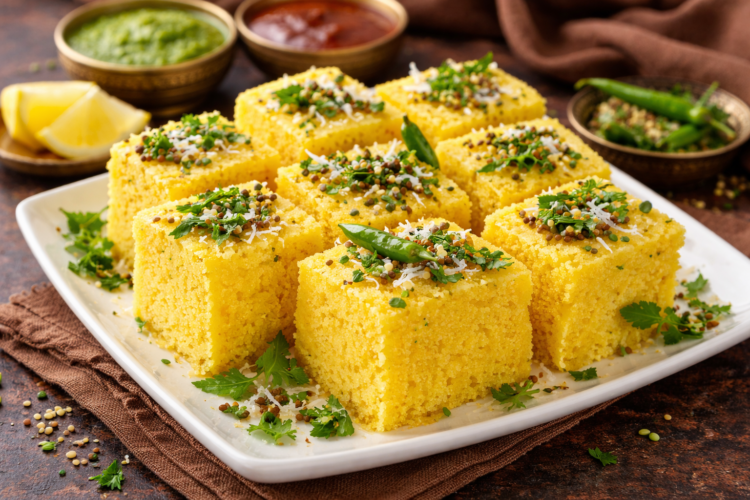
Some dishes instantly bring a sense of comfort, celebration, and nostalgia. Khaman Dhokla is one of them. Soft, fluffy, lightly sweet, and delicately spiced, this iconic Gujarati snack has earned its place not just in western India but across kitchens worldwide.
What makes khaman dhokla truly special is its balance. It is light yet filling, simple yet flavorful, and indulgent without being heavy. Unlike deep-fried snacks, khaman is steamed, making it a healthier option for breakfast, evening snacks, or even light meals.
This detailed guide to Khaman Dhokla will help you understand the dish beyond just a recipe. You will learn about its origins, texture secrets, ingredient science, variations, common mistakes, and expert tips to make restaurant-style khaman dhokla at home.
What Is Khaman Dhokla?
Khaman dhokla is a steamed savory cake made primarily from gram flour, also known as besan. It is known for its soft, spongy texture and mild sweetness balanced with tangy and savory notes.
Though often confused with dhokla, khaman is slightly different. Traditional dhokla is made using fermented rice and lentils, while khaman is made using gram flour and can be prepared instantly.
The dish is typically finished with a tempering of mustard seeds, curry leaves, green chilies, and sometimes sugar water, which enhances moisture and flavor.
The Cultural Roots of Khaman Dhokla
Khaman dhokla originates from Gujarat, where it is an everyday staple served in homes, tea shops, and festive spreads. In Gujarati households, khaman is more than food. It represents warmth, hospitality, and balance.
Traditionally, khaman was made through natural fermentation. Over time, instant versions evolved using leavening agents, making the dish quicker and more accessible without compromising taste.
Why Khaman Dhokla Is Loved Across India
Khaman dhokla has crossed regional boundaries because it meets modern food preferences effortlessly. It is light on the stomach, quick to prepare, and adaptable to different tastes.
People love khaman because it works equally well as a breakfast item, an evening snack, or a party appetizer. It pairs beautifully with green chutney, sweet chutney, or even plain tea.
Ingredients for Khaman Dhokla
For the Khaman Batter
- Gram flour (besan) – smooth, fresh, and lump-free
- Semolina (sooji) – optional, for extra softness
- Fresh yogurt – adds mild tang and moisture
- Sugar – for the signature light sweetness
- Salt – to balance flavors
- Turmeric powder – for natural yellow color
- Green chili paste – for gentle heat
- Ginger paste – for aroma and digestion
- Lemon juice or citric acid – for freshness and softness
- Water – to adjust batter consistency
Leavening Agents
- Fruit salt (ENO) or baking soda – for instant rise
- A few drops of water – to activate the leavening agent
For Tempering (Tadka)
- Oil – preferably neutral-flavored
- Mustard seeds – for crackling aroma
- Curry leaves – fresh for best flavor
- Green chilies – slit or chopped
- Sesame seeds – optional, for nuttiness
For Sugar Water (Optional but Recommended)
- Sugar – for moisture and balance
- Water – warm, not hot
For Garnish
- Fresh coriander leaves – finely chopped
- Fresh grated coconut – optional, for a traditional touch
Understanding the Texture of Perfect Khaman
A well-made khaman dhokla should be soft, porous, and springy to the touch. When pressed lightly, it should bounce back without collapsing.
If khaman turns dense, it usually indicates over-mixing or incorrect leavening. If it becomes crumbly, the batter may have been too dry.
Texture is the single most important marker of success in any khaman dhokla recipe.
How Khaman Dhokla Is Made – Step-by-Step Explanation
Preparing the Batter
The batter is made by mixing gram flour with water, yogurt or lemon juice, sugar, salt, and spices. The consistency should be smooth and flowing, without lumps.
The batter is allowed to rest briefly so the flour hydrates properly. Leavening agents are added just before steaming to ensure maximum aeration.
Steaming the Khaman
Steaming is the heart of this recipe. The batter is poured into a greased tray and placed in a preheated steamer. Consistent steam ensures even cooking and rising.
Khaman usually cooks within fifteen to twenty minutes. A knife inserted in the center should come out clean.
Tempering and Finishing
Once steamed, khaman is cut into squares. A hot tempering of mustard seeds, curry leaves, green chilies, and oil is poured over the surface. Sometimes a light sugar-water mixture is added to keep it moist.
Instant Khaman Dhokla vs Traditional Fermented Version
Instant khaman dhokla is quick and convenient, while fermented versions develop deeper flavor over time.
Instant khaman is ideal for busy kitchens and spontaneous cravings. Fermented khaman has a slightly stronger tang and traditional character.
Both versions have their place, but instant khaman has become more popular due to its ease and consistency.
Common Mistakes While Making Khaman Dhokla
Many people struggle with flat or dense khaman. This often happens when the batter is over-mixed after adding leavening agents.
Another common mistake is steaming on low heat, which prevents proper rise. Skipping preheating the steamer can also affect texture.
Overcooking can dry out khaman, while undercooking leaves it gummy in the center.
Expert Tips for Soft and Spongy Khaman
Always add leavening agents at the last moment. Mix gently and pour immediately into the steamer.
Ensure the steamer is hot before placing the batter inside. Maintain medium-high heat for consistent steaming.
Let the khaman rest for a few minutes after steaming before cutting. This helps it set properly.
Popular Variations of Khaman Dhokla
Nylon Khaman
This version is extremely soft and airy, almost melt-in-the-mouth. It uses finer gram flour and careful steaming.
Masala Khaman
Spices and crushed chilies are added to enhance heat and boldness.
Sandwich Khaman
Two layers of khaman are sandwiched with chutney in between, making it visually appealing and flavorful.
Cheese Khaman
Grated cheese is sprinkled on top for a modern twist.
Nutritional Profile of Khaman Dhokla
Khaman dhokla is relatively low in fat and high in protein compared to fried snacks. Gram flour provides plant-based protein and fiber.
Steaming preserves nutrients and makes khaman easy to digest. However, sugar and tempering oil should be used in moderation.
Is Khaman Dhokla Healthy?
When prepared at home with controlled oil and sugar, khaman dhokla is a healthy snack. It is suitable for children, adults, and elderly people alike.
It works well for those looking for lighter meal options or balanced snacks.
Serving Suggestions
Khaman dhokla tastes best when served warm or at room temperature. It pairs beautifully with green coriander chutney or sweet tamarind chutney.
It is often served with fried green chilies for contrast.
Storage and Shelf Life
Khaman dhokla stays fresh for one day at room temperature and up to two days in the refrigerator. Reheating should be done gently using steam or a microwave with moisture.
Avoid freezing, as it affects texture.
Why Homemade Khaman Dhokla Is Better
Homemade khaman allows control over ingredients, freshness, and sweetness. Store-bought versions often contain preservatives and excess oil.
Making khaman at home also ensures consistent softness and flavor.
Conclusion
A perfectly made Khaman Dhokla is a celebration of balance, texture, and simplicity. With the right technique and understanding, this classic Gujarati snack becomes easy to master at home.
Once you try this khaman dhokla recipe, it will quickly become a go-to dish for breakfasts, snacks, and gatherings.
Steam it fresh, serve it warm, and enjoy a timeless Indian favorite.
FAQs
1. Why does my khaman turn dense?
Dense khaman usually results from over-mixing or inactive leavening agents.
2. Can I make khaman dhokla without yogurt?
Yes, lemon juice or citric acid can be used as a substitute.
3. Is khaman dhokla gluten-free?
Yes, it is naturally gluten-free as it uses gram flour.
4. How do I know when khaman is cooked?
A knife inserted in the center should come out clean.
5. Can khaman dhokla be made vegan?
Yes, simply skip yogurt and use lemon juice.
6. Why is my khaman dry?
Over-steaming or skipping the sugar water can cause dryness.
7. Can I reheat khaman dhokla?
Yes, gentle steaming or microwaving with moisture works best.
8. What is the difference between khaman and dhokla?
Khaman uses gram flour and is usually instant, while dhokla is fermented.