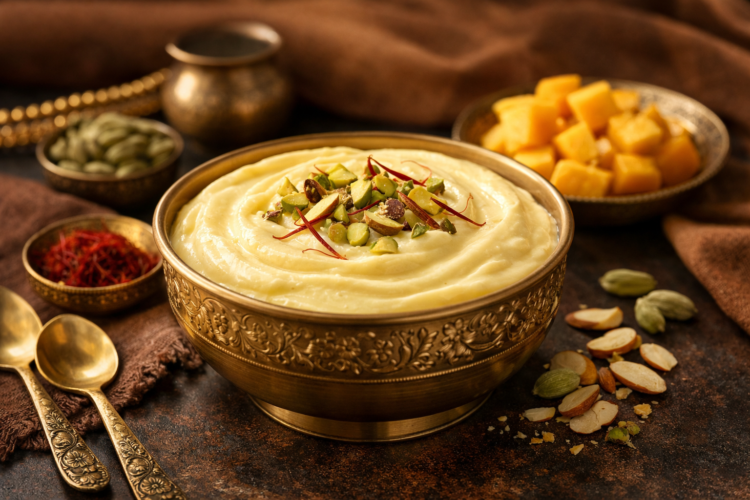
Some desserts don’t need drama. They don’t rely on layers, baking, or fancy techniques. They win hearts quietly, with texture, balance, and timeless flavor. Shrikhand is one such dessert.
This traditional Indian sweet, made from strained yogurt and sugar, has been prepared in homes for generations, especially in Gujarat and Maharashtra. A good shrikhand recipe is all about patience, quality ingredients, and understanding balance. When done right, shrikhand is silky, lightly tangy, gently sweet, and deeply aromatic.
In today’s fast-paced kitchens, shrikhand still holds its ground. It needs no oven, no complicated equipment, and no special skills. Yet, it delivers a restaurant-quality dessert that feels festive, cooling, and indulgent at the same time.
This detailed guide will walk you through everything you need to know, from selecting the right yogurt to mastering texture, avoiding common mistakes, exploring variations, and serving shrikhand like a pro.
What Is Shrikhand?
Shrikhand is a traditional Indian dessert prepared by straining yogurt to remove whey, then sweetening and flavoring the thickened yogurt. The result is a rich, creamy dessert that sits somewhere between a mousse and a thick custard, without using cream or eggs.
The base ingredient is hung curd, also known as chakka. This thick yogurt forms the foundation of every authentic shrikhand recipe.
Unlike many Indian sweets that depend on milk reduction or sugar syrups, shrikhand relies on natural fermentation and straining, which gives it a gentle tang and smooth mouthfeel.
Cultural Significance of Shrikhand
Shrikhand is deeply rooted in western Indian cuisine. It is commonly served during festivals, weddings, and religious celebrations. In Gujarat, it is often paired with puri, creating the famous puri-shrikhand combination. In Maharashtra, shrikhand is enjoyed as a standalone dessert, especially during summer months.
Historically, shrikhand was a way to preserve yogurt in hot climates. By removing excess whey and adding sugar, the yogurt lasted longer and became more flavorful. Over time, it evolved into a beloved dessert rather than a preservation technique.
Why This Shrikhand Recipe Works
This shrikhand recipe focuses on technique rather than shortcuts. It respects traditional methods while making the process approachable for modern kitchens.
It works because it emphasizes proper straining, controlled sweetness, balanced flavoring, and texture management. The result is shrikhand that is smooth, not grainy; rich, not heavy; and sweet, not cloying.
Ingredients Used in Shrikhand
The beauty of shrikhand lies in its simplicity. A handful of ingredients come together to create something extraordinary.
Fresh full-fat yogurt is the most important ingredient. The quality of yogurt directly affects the taste and texture of shrikhand. Thick, creamy yogurt with a mild tang works best.
Sugar adds sweetness and also softens the texture of strained yogurt. Powdered sugar blends more easily, but regular sugar can be used if mixed properly.
Cardamom powder provides warmth and aroma, while saffron adds color and a subtle floral note. Nuts like almonds and pistachios are optional but add texture and richness.
Choosing the Right Yogurt
Not all yogurt is suitable for making shrikhand. Thin or overly sour yogurt can ruin the final taste.
For best results, use fresh full-fat curd made from whole milk. It should be mildly tangy, not sour. Store-bought Greek yogurt can work in a pinch, but traditional curd gives better flavor depth.
Avoid low-fat or skim yogurt, as it results in flat taste and weak texture.
How Hung Curd Is Made
Hung curd is simply yogurt that has been strained to remove whey. This process thickens the yogurt naturally and concentrates its flavor.
To make hung curd, yogurt is placed in a clean cloth and hung over a bowl or sink. Over several hours, the whey drains out, leaving behind thick, creamy curd.
This step cannot be rushed. Proper straining is the backbone of any successful shrikhand recipe.
Step-by-Step Shrikhand Recipe
Step 1: Straining the Yogurt
Place fresh yogurt in a muslin cloth or clean cotton cloth. Tie it securely and hang it for six to eight hours, preferably in the refrigerator. This slow straining ensures thick, creamy chakka without excessive sourness.
Step 2: Preparing the Base
Transfer the hung curd to a mixing bowl. It should be smooth and firm, without any visible liquid.
Step 3: Sweetening
Add powdered sugar gradually while mixing. Taste as you go. Shrikhand should be mildly sweet, allowing the yogurt’s tang to shine through.
Step 4: Flavoring
Add cardamom powder and saffron soaked in warm milk. Mix thoroughly until everything is evenly combined.
Step 5: Final Mixing
Whisk or blend lightly until the mixture becomes smooth and glossy. Avoid over-beating, as it can loosen the texture.
Texture Matters More Than Anything
The hallmark of a perfect shrikhand recipe is texture. It should be smooth, creamy, and thick enough to hold shape when spooned.
If the shrikhand feels grainy, it usually means the yogurt wasn’t strained enough. If it turns runny, it may have been over-mixed or made with thin yogurt.
Popular Shrikhand Variations
Kesar Shrikhand
This is the most popular variation, flavored generously with saffron. It has a rich golden color and festive aroma.
Elaichi Shrikhand
Cardamom takes center stage in this version, offering a clean, classic taste.
Mango Shrikhand (Amrakhand)
Fresh mango pulp is added to the base, creating a fruity, vibrant dessert popular in summer.
Rose Shrikhand
Rose water or dried rose petals lend a delicate floral flavor.
Shrikhand vs Mishti Doi
Shrikhand and mishti doi are both yogurt-based desserts, but they differ significantly.
Shrikhand uses strained yogurt and added sugar, resulting in a thick texture and mild tang. Mishti doi is fermented with caramelized sugar and remains softer and more custard-like.
Nutritional Value of Shrikhand
Shrikhand is rich in calcium, protein, and probiotics. Because it is made from yogurt, it supports gut health and digestion.
However, it is also high in sugar and calories, so moderation is key. Homemade shrikhand allows better control over sweetness and portion size.
Is Shrikhand Healthy?
When consumed in moderation, shrikhand can be part of a balanced diet. It offers probiotics, healthy fats, and essential minerals.
To make it healthier, reduce sugar, avoid artificial colors, and add nuts for fiber and healthy fats.
Common Mistakes to Avoid
One of the biggest mistakes is using sour yogurt. Another is rushing the straining process. Adding too much sugar at once can overpower the natural flavor.
Over-mixing is another issue, as it can break the structure of hung curd.
Expert Tips for Perfect Shrikhand
Always chill shrikhand before serving. Cold temperature improves texture and flavor. Use powdered sugar for smoothness. Add saffron sparingly; it should enhance, not dominate.
How to Serve Shrikhand
Shrikhand is best served chilled. It can be enjoyed on its own or paired with puri for a traditional meal. Garnish with chopped nuts and a few saffron strands for presentation.
Storage and Shelf Life
Homemade shrikhand stays fresh for two to three days when refrigerated in an airtight container. Avoid freezing, as it affects texture.
Why Homemade Shrikhand Is Better
Making shrikhand at home gives you control over ingredients, sweetness, and freshness. Store-bought versions often contain stabilizers and excess sugar.
Conclusion
A well-made shrikhand recipe proves that simplicity can be luxurious. With just yogurt, sugar, and a few flavorings, you can create a dessert that feels celebratory, comforting, and timeless.
Once you master the technique, shrikhand becomes one of the easiest and most rewarding Indian desserts to prepare. Try it once, and it will become a permanent part of your dessert repertoire.
Make it today, chill it well, and enjoy a spoonful of tradition.
FAQs
1. Can I make shrikhand without hanging curd?
No. Straining yogurt is essential for achieving the correct texture and flavor.
2. Why is my shrikhand sour?
This usually happens when the yogurt used is already sour or strained for too long at room temperature.
3. Can I use Greek yogurt for shrikhand?
Yes, but traditional curd offers better flavor and authenticity.
4. How sweet should shrikhand be?
Shrikhand should be mildly sweet with a noticeable yogurt tang.
5. Can shrikhand be made vegan?
Yes, using thick plant-based yogurt, though texture and taste will differ.
6. Is shrikhand served hot or cold?
Shrikhand is always served chilled.
7. How long does homemade shrikhand last?
It stays fresh for up to three days when refrigerated properly.
8. What makes shrikhand grainy?
Improper straining or low-quality yogurt usually causes graininess.
Try Also – How to Make Soft and Juicy Gulab Jamuns at Home: A Complete Guide