Few Indian sweets are as elegant and universally loved as Kaju Katli. Thin, smooth, melt-in-the-mouth, and delicately sweet, this festive favorite holds a special place during celebrations like Diwali, weddings, and family gatherings.
Despite its premium appearance, kaju katli requires only a few ingredients. Yet many home cooks hesitate to try it because they believe it is difficult. The truth is simpler. When you understand the technique and sugar syrup stage correctly, making homemade kaju katli becomes straightforward and rewarding.
This comprehensive guide explains everything in detail — from selecting the right cashews to mastering sugar syrup consistency, kneading the dough, rolling it thin, and avoiding common mistakes.
If you have ever wondered how to make kaju katli that tastes just like store-bought sweets but fresher and cleaner, this guide is for you.
What Is Kaju Katli?
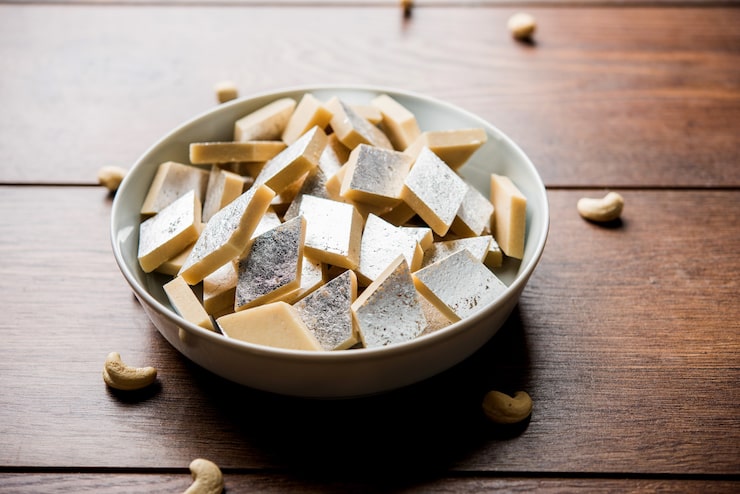
Kaju Katli, also called kaju barfi, is a traditional Indian sweet made primarily from cashew nuts and sugar. The mixture is cooked to a soft dough, rolled thin, and cut into diamond shapes.
Unlike many other sweets, kaju katli does not rely on ghee-heavy cooking. Its texture comes from proper grinding and sugar syrup precision.
The name “katli” refers to the thin slices or cuts. Traditionally, it is decorated with edible silver leaf for a festive finish.
Why Kaju Katli Is So Popular
Kaju katli is loved for several reasons. It has a smooth texture, subtle sweetness, and rich nutty flavor. It feels luxurious without being overwhelming.
It is also naturally gluten-free and egg-free, making it suitable for many dietary preferences.
Because it uses minimal ingredients, quality matters. Fresh cashews and correct technique define the final taste.
Ingredients for Kaju Katli
Main Ingredients
- Cashew nuts (whole, unsalted, high quality)
- Sugar
- Water
Optional Flavorings
- Cardamom powder
- Rose water
- Saffron
For Garnish
- Edible silver leaf (optional)
This simple ingredient list highlights how technique plays a bigger role than complexity.
Choosing the Right Cashews
Cashews are the heart of this recipe. Always choose fresh, premium-quality nuts. They should be ivory in color, not yellowish.
Avoid roasted or salted cashews. Raw, plain cashews work best.
Grinding cashews correctly is crucial. They must be powdered finely without releasing oil.
Grinding Cashews – The Most Important Step
Cashews contain natural oils. Over-grinding turns them into paste instead of powder.
To avoid this:
- Use dry, room-temperature cashews
- Pulse in short bursts
- Do not run the grinder continuously
The final texture should resemble fine flour, not sticky paste.
Sifting the powder ensures smooth texture.
Understanding Sugar Syrup Consistency
The success of your kaju katli recipe depends on sugar syrup stage.
You need a “one-string consistency.” This means when a small amount of syrup is pressed between fingers and stretched, it forms a thin single thread.
Undercooked syrup results in sticky dough. Overcooked syrup makes the sweet hard.
Precise timing is essential.
Step-by-Step Method to Make Kaju Katli
Step 1: Prepare Cashew Powder
Grind cashews into fine powder and sift. Keep aside.
Step 2: Make Sugar Syrup
Combine sugar and water in a pan. Heat until dissolved. Continue cooking until one-string consistency forms.
Step 3: Add Cashew Powder
Lower heat and add cashew powder gradually. Stir continuously to avoid lumps.
Step 4: Cook Until Dough Forms
Cook until mixture thickens and leaves sides of pan. It should form a soft dough but not dry.
Step 5: Knead the Dough
Transfer to parchment paper. Allow to cool slightly. Knead gently until smooth.
Step 6: Roll and Cut
Roll thin between sheets of parchment. Cut into diamond shapes.
Apply silver leaf if desired.
How Thin Should Kaju Katli Be?
Traditional kaju katli is rolled thin, about 2 to 3 millimeters thick. Thicker pieces taste heavier and less refined.
Rolling evenly ensures consistent texture and professional finish.
Common Mistakes to Avoid
One major mistake is overcooking the dough. This makes kaju katli dry and crumbly.
Another mistake is undercooking, which results in sticky texture.
Using oily cashew paste instead of powder affects smoothness.
Take your time with sugar syrup stage.
Kaju Katli vs Kaju Barfi – Is There a Difference?
Many people use both names interchangeably. Technically, katli refers to thin slices, while barfi can be thicker.
However, in most cases, both terms describe the same sweet.
Expert Tips for Perfect Homemade Kaju Katli
Use a heavy-bottomed pan for even cooking. Stir constantly to prevent sticking.
If the dough becomes too dry, sprinkle a few drops of water and knead again.
If sticky, cook slightly longer.
Temperature control is key.
Texture Check Guide
Perfect kaju katli should:
- Feel smooth
- Break cleanly without crumbling
- Melt in mouth
- Not stick to fingers
If it feels chewy, syrup may be undercooked.
Storage and Shelf Life
Store in airtight container at room temperature for up to one week.
Refrigeration extends shelf life but may firm texture slightly.
Avoid moisture exposure.
Is Kaju Katli Healthy?
Kaju katli contains healthy fats from cashews and minimal ingredients. However, it is calorie-dense due to sugar.
Moderation is recommended.
Compared to heavy syrup-soaked sweets, kaju katli feels lighter.
Variations You Can Try
Chocolate Kaju Katli
Add cocoa powder for layered effect.
Pistachio Kaju Katli
Mix pistachio powder for color and flavor.
Vegan Kaju Katli
Traditional recipe is already dairy-free unless ghee is added.
Why Homemade Kaju Katli Is Better
Store-bought sweets may contain preservatives and artificial flavors. Homemade kaju katli uses fresh ingredients and controlled sweetness.
It also feels more personal during celebrations.
Festive Significance of Kaju Katli
Kaju katli is widely gifted during Diwali and weddings. Its premium ingredient — cashew — symbolizes prosperity and celebration.
Serving homemade kaju katli adds warmth and authenticity to festivities.
Cost Comparison: Homemade vs Store-Bought
Homemade kaju katli can be more economical, especially during festive seasons when prices rise.
It also ensures quality and freshness.
Troubleshooting Guide
If too soft: cook slightly longer.
If too hard: knead with few drops water.
If oily: cashews were over-ground.
Small adjustments fix most issues.
Conclusion
This kaju katli recipe proves that elegance does not require complicated ingredients. With fresh cashews, proper sugar syrup, and careful cooking, you can create smooth, thin, melt-in-the-mouth kaju katli at home.
Master the syrup stage once, and this sweet becomes one of the easiest festive desserts to prepare.
Try making homemade kaju katli this season and experience the joy of crafting a timeless Indian classic in your own kitchen.
FAQs
1. Why is my kaju katli sticky?
Sugar syrup may be undercooked.
2. Why did it turn hard?
Overcooked syrup or dough.
3. Can I make kaju katli without sugar?
Traditional recipe requires sugar for texture.
4. How long does it last?
Up to one week at room temperature.
5. Can I freeze kaju katli?
Freezing is not recommended.
6. Why is it oily?
Cashews were ground too long.
7. Is silver leaf necessary?
No, it is optional.
8. Can beginners make it?
Yes, with careful attention to syrup stage.