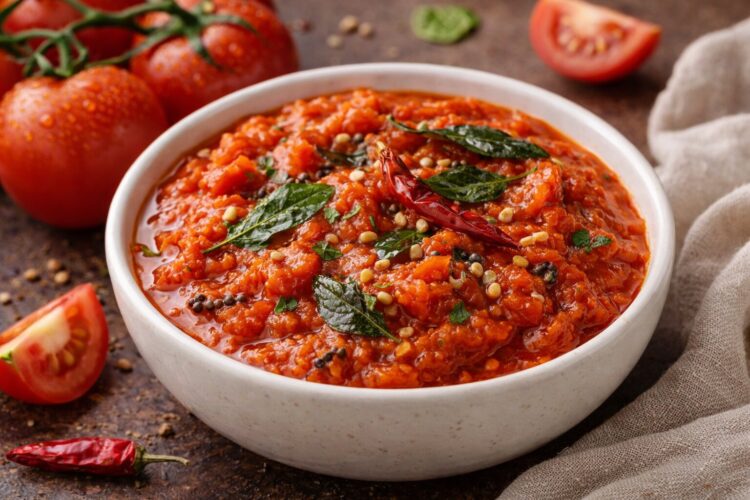
There are some recipes that instantly elevate even the simplest meal, and tomato chutney is one of them. With its bold tanginess, gentle heat, and rich aroma, this chutney turns plain idli, dosa, or even roti into a deeply satisfying experience.
Across Indian kitchens, tomato chutney is more than just a side dish. It is a staple condiment that adapts beautifully to regional tastes. Some versions are fiery and rustic, while others are mildly spiced and smooth. Yet, the essence remains the same — ripe tomatoes cooked with spices and blended into a delicious, versatile chutney.
What makes this tomato chutney recipe special is its balance. It combines acidity from tomatoes, warmth from spices, and depth from tempering. When prepared correctly, it delivers a bold flavor without overpowering the main dish.
In this comprehensive guide, you will learn everything about making perfect homemade tomato chutney, including ingredient selection, cooking science, variations, storage tips, and expert-level techniques that ensure consistent results every time.
What Is Tomato Chutney?
Tomato chutney is a savory condiment made primarily from tomatoes, spices, and tempering ingredients. It is commonly served in South Indian cuisine alongside breakfast dishes like idli, dosa, upma, and pongal.
Unlike raw chutneys, tomato chutney is typically cooked, which deepens its flavor and improves shelf life. The cooking process reduces the sharp acidity of tomatoes and enhances their natural sweetness.
Depending on preparation style, the chutney can be:
- Smooth and creamy
- Coarse and rustic
- Mildly spiced
- Fiery and bold
This flexibility makes it one of the most loved chutneys in Indian households.
Why This Tomato Chutney Recipe Works
This recipe focuses on proper flavor layering rather than just blending ingredients. Cooking tomatoes with spices before grinding creates a richer and more balanced chutney.
The key strengths of this method include:
- Enhanced depth of flavor
- Better texture
- Balanced tanginess
- Longer freshness
It avoids the common mistake of making chutney that tastes raw or overly sour.
Ingredients for Tomato Chutney
Main Ingredients
- Ripe red tomatoes
- Onions (optional but recommended)
- Garlic cloves
- Dried red chilies or green chilies
- Tamarind (optional for extra tang)
- Oil
- Salt
For Tempering
- Mustard seeds
- Curry leaves
- Urad dal (optional)
- Hing (asafoetida)
- Dried red chili
Each ingredient contributes to the chutney’s complexity. Tomatoes provide base flavor, chilies add heat, garlic enhances aroma, and tempering delivers the signature South Indian taste.
Choosing the Right Tomatoes
The quality of tomatoes directly impacts the final chutney. Always use ripe, juicy, and slightly sweet tomatoes for the best flavor.
Overly sour tomatoes can make the chutney too tangy. In such cases, balancing with a small pinch of jaggery helps.
Roma tomatoes and desi tomatoes both work well, but fresh, seasonal tomatoes produce superior taste.
Understanding the Flavor Profile
A well-made south indian tomato chutney should taste:
- Tangy but not sour
- Spicy but balanced
- Aromatic and savory
The sweetness of cooked onions and tomatoes naturally balances the heat from chilies.
Step-by-Step Method to Make Tomato Chutney
Step 1: Preparing the Ingredients
Wash and chop the tomatoes into medium pieces. Finely chop onions and garlic if using. Keeping ingredients ready ensures smooth cooking.
Step 2: Sautéing Aromatics
Heat oil in a pan and sauté garlic, chilies, and onions until fragrant. This step builds the flavor base and removes raw sharpness.
Step 3: Cooking the Tomatoes
Add chopped tomatoes and cook on medium heat. Stir occasionally until they turn soft and mushy. Cooking reduces acidity and intensifies natural sweetness.
Step 4: Cooling and Grinding
Allow the mixture to cool slightly before grinding. Blend to your preferred consistency, either smooth or slightly coarse.
Step 5: Tempering for Final Flavor
Prepare a tempering with mustard seeds, curry leaves, and hing. Pour it over the chutney to enhance aroma and taste.
Texture Variations: Smooth vs Chunky
Some prefer silky smooth chutney, while others enjoy a slightly textured version. Smooth chutney pairs well with dosa, while coarse chutney complements idli and rice beautifully.
Grinding time determines the final texture.
Common Mistakes to Avoid
One of the biggest mistakes is undercooking tomatoes, which results in a raw taste. Another common issue is using too many chilies, which can overpower the chutney.
Adding tempering to hot chutney ensures better flavor absorption.
Expert Tips for Perfect Tomato Chutney
Use medium heat while cooking to prevent burning. Always taste before grinding to adjust salt and spice levels. A small amount of oil enhances shelf life and richness.
Fresh curry leaves in tempering significantly elevate the aroma.
Regional Variations of Tomato Chutney
South Indian Tomato Chutney
Includes tempering with mustard seeds and curry leaves.
Andhra Style Tomato Chutney
Spicier with more red chilies and garlic.
Tamil Nadu Style Tomato Chutney
Balanced and slightly tangy, often served with breakfast items.
Instant Tomato Chutney
Made quickly without extensive sautéing.
Tomato Chutney vs Tomato Pickle
Tomato chutney is fresh and mildly spiced, while tomato pickle is heavily spiced and preserved with oil and vinegar. Chutney has a shorter shelf life and lighter flavor.
Health Benefits of Tomato Chutney
Tomatoes are rich in antioxidants like lycopene, which supports heart health. Garlic boosts immunity, while spices aid digestion.
Homemade tomato chutney is healthier than store-bought sauces as it contains no preservatives.
Is Tomato Chutney Good for Daily Use?
Yes, when prepared with moderate oil and salt, it is a nutritious addition to meals. It enhances appetite and complements balanced diets.
Serving Suggestions
Tomato chutney pairs wonderfully with:
- Idli
- Dosa
- Uttapam
- Pongal
- Rice
- Sandwiches
It can also be used as a spread or dip.
Storage and Shelf Life
Store the chutney in an airtight container in the refrigerator. It stays fresh for two to three days.
For longer storage, increase oil slightly and avoid adding water while grinding.
Creative Ways to Use Tomato Chutney
Tomato chutney is not limited to traditional meals. It can be used as:
- A sandwich spread
- A dip for snacks
- A base for wraps
- A topping for parathas
This versatility makes it a must-have condiment.
Why Homemade Tomato Chutney Is Better Than Store-Bought
Homemade chutney tastes fresher, contains no artificial preservatives, and allows complete control over spice and salt levels. It also preserves the natural flavor of tomatoes.
Conclusion
This tomato chutney recipe proves that simple ingredients can create extraordinary flavor when cooked with care and balance. With its spicy, tangy, and aromatic profile, tomato chutney enhances everyday meals effortlessly.
Once you master this recipe, you will always have a quick, flavorful side dish ready for breakfast, lunch, or dinner.
Try making this homemade tomato chutney today and experience how a single condiment can transform your entire meal.
FAQs
1. Why is my tomato chutney too sour?
Using overly sour tomatoes or undercooking them can cause excess sourness.
2. Can I make tomato chutney without onion?
Yes, it can be made without onion for a lighter flavor.
3. How long does homemade tomato chutney last?
It stays fresh for 2–3 days in the refrigerator.
4. Can I freeze tomato chutney?
Yes, freezing extends shelf life up to one month.
5. Which oil is best for tomato chutney?
Sesame oil or neutral cooking oil works best.
6. Is tomato chutney spicy?
Spice level depends on the number of chilies used.
7. Can I skip tempering?
Tempering enhances flavor but can be skipped if needed.
8. What dishes pair best with tomato chutney?
Idli, dosa, rice, and snacks pair exceptionally well.
Also Read – Schezwan Sauce Recipe – Bold, Spicy & Flavorful